










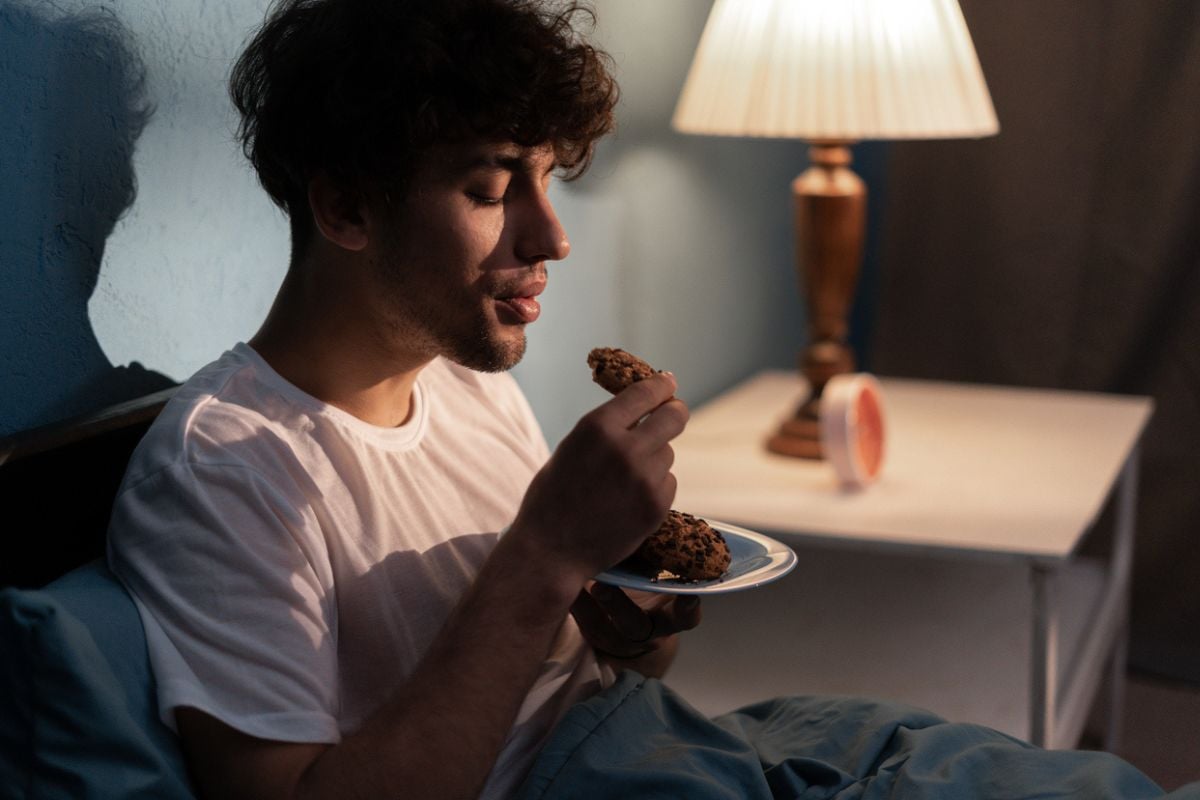
You had a long day, dinner is done, and now you’re reaching for a little evening treat before bed. Maybe it’s a square of dark chocolate, maybe a glass of wine, maybe a bag of chips while you watch one more episode. These feel like harmless rituals – small rewards we’ve earned. But what if these very habits are the reason you keep staring at the ceiling at 2 a.m.? The link between what we eat at night and how we sleep is far more direct than most of us realize, and some of the worst offenders are foods we’d never suspect.
Why what happens while you sleep matters more than you think
Many of us underestimate the importance of sleep. While we’re out for the night, complex and fundamental processes take place inside the body. One of the most critical is the renewal of muscle cells and tissues. To stay healthy and recover from the flood of stimuli we absorb during the day, our bodies need deep, uninterrupted nighttime rest. It is during those quiet hours that the body strengthens and regenerates, preparing itself to face a brand-new day.
So what happens when that deep rest never quite arrives? When insomnia becomes chronic, the health consequences can grow significantly more serious. If the body cannot recharge and deliver the energy we need, more complex conditions – ones that are harder to manage – can emerge over time. That alone should make us reconsider what ends up on our plates after sundown.
The nighttime foods that are quietly keeping you awake
Let’s start with a fan favorite: dark chocolate. For many of us it feels like an innocent indulgence, but dark chocolate is a stimulant, much like coffee. Eating it in the evening before bed keeps us alert and undoubtedly promotes insomnia. All chocolate contains caffeine, and the purer the chocolate, the higher the caffeine content. The smarter move, according to nutritionists, is to enjoy 20 grams of dark chocolate in the morning at breakfast, where it can give your body a genuine energy boost instead of sabotaging your rest.
And while we’re on the subject of caffeine: if you think switching to decaf in the evening solves the problem, think again. A cup of decaf can disrupt your sleep just as much as regular coffee. The caffeine content may be lower, but it is still present – and still active enough to interfere with your ability to fall and stay asleep.
Then there’s alcohol. A glass of wine or a cocktail might make you drowsy, but that drowsiness is deceptive. Alcoholic beverages do not promote quality sleep. Over the long term, they can damage the deepest phase of sleep – the stage during which important processes at the cellular level take place. On top of that, alcohol causes dry mouth and thirst, which can wake you up in the middle of the night. It can also trigger gastrointestinal problems, adding yet another obstacle between you and a restful night.
Fried foods deserve a mention too. Nutritionists agree that the occasional indulgence is perfectly fine. However, eating an entire bag of chips shortly before bed is a real blow to your digestion. Especially when dinner is not followed by a quick walk, these kinds of heavy, greasy foods are best avoided in the evening hours altogether.
Finally, consider red meat dishes served with spicy sauces, dips, and various spices. These are far from ideal if you plan on heading to bed soon after eating. A better alternative is grilled, oven-baked, or parchment-cooked white meat with a light dressing of extra virgin olive oil. The goal is to keep the digestive workload as low as possible so your body can shift its energy toward rest and repair rather than processing a heavy meal.
Small swaps that protect your night
The good news is that none of this requires a dramatic lifestyle overhaul. It’s about timing and substitution. Move your dark chocolate to breakfast. Replace that evening glass of wine with a non-caffeinated herbal option. Swap the chips for something gentler on the stomach, and trade the spice-laden red meat for a lighter protein prepared simply with olive oil.
If your evening meal tends to be on the heavier side, even a brief walk afterward can help ease digestion and set the stage for better sleep. These are modest adjustments, but they address the exact mechanisms – caffeine stimulation, disrupted deep sleep phases, digestive overload – that quietly erode sleep quality night after night.
The bottom line for better rest
You now know that dark chocolate, decaf coffee, alcohol, fried snacks, and spicy red meat dishes can all undermine the deep, restorative sleep your body depends on. The renewal of muscle cells and tissues, the recharging of your energy reserves – all of it hinges on uninterrupted nighttime rest. The simplest takeaway is this: treat your evening plate as part of your sleep routine, not separate from it. What you eat in those final hours before bed is, quite literally, shaping the quality of tomorrow.


