










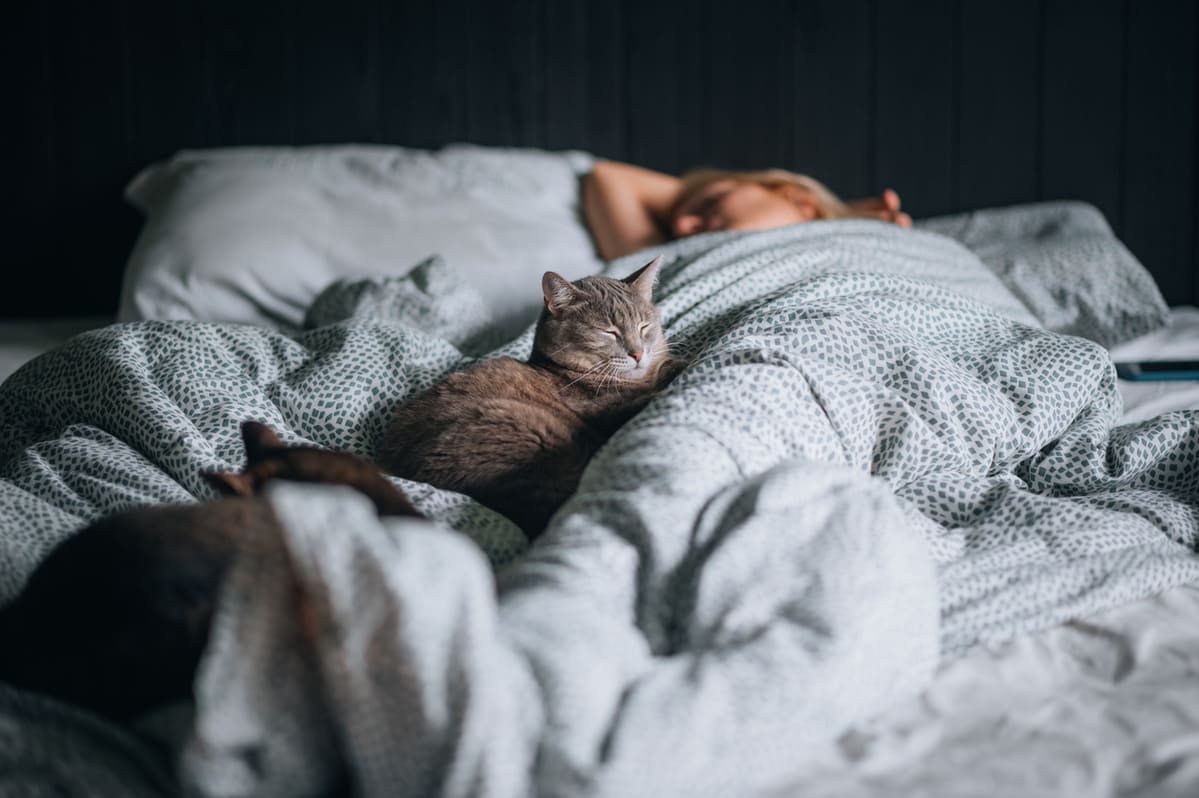
You probably do it without thinking – glance over at your cat mid-sleep and notice it has wedged itself behind your knees, or parked squarely on your ribcage, or settled at the very edge of the mattress with its back turned. It looks random. It feels random. But according to veterinary behaviorists, every one of those nightly arrangements is a deliberate choice your cat is making about safety, warmth, and how much it trusts you. The spot your cat picks is, in many ways, the most honest thing it will ever tell you.
Why where your cat rests is never accidental
In the wild, a sleeping cat is a defenseless cat. That instinct has never left our domestic companions, which means a cat chooses its sleeping spot based on how safe it feels and who it trusts. When your cat selects a position on, near, or touching you, it is making a calculated decision: you are warm, you are safe, and you belong to its inner circle.
Closeness generally maps to trust. Vulnerability – like an exposed belly – maps to even deeper security. But personality, warmth, and plain physical comfort play roles too. A cat curled at your feet is not loving you any less than one draped across your chest; it may simply prefer a bit of independence or a quicker exit. So how do you read each arrangement?
Decoding the most common positions
A cat that settles on your chest or stomach has chosen one of the most intimate spots available. Your torso is warm, it rises and falls with your breathing, and it carries the steady rhythm of your heartbeat – a cadence many cats find deeply soothing because it echoes the closeness they knew as kittens pressed against their mother. Chest-sleepers often knead, purr, and even dribble contentedly before drifting off. If your cat only claims this spot occasionally, do not read too much into the off nights; cats rotate sleeping places for warmth, light, and comfort, and what matters is the overall pattern.
A cat by your head or on your pillow is following scent. Your head and hair carry your most concentrated personal smell, and cats bond through scent, so sleeping there lets your cat soak up your smell while layering its own onto you, creating one shared family scent. There is a temperature bonus as well: you lose a lot of body heat through your head, keeping the pillow zone pleasantly warm. A cat that claims your pillow has essentially found the penthouse suite of the bed – warm, scent-rich, and low-traffic since your head stays relatively still compared to restless legs.
The foot-of-the-bed cat still wants your company, just on more independent terms. This spot offers closeness plus a clear escape route: from the edge of the mattress, a cat can slip away instantly without climbing over you. Many cats treat the foot of the bed as a guarding post, maintaining a wide view of the room and the door. This arrangement is especially common with cats that are still building confidence, or in multi-pet homes where a quick line of retreat matters if another animal wanders in.
Between your legs? That warm, enclosed pocket bordered by your body on both sides recreates the snug, den-like security cats instinctively seek. Cats run warmer than we do and actively chase heat, so much of this position is practical. But it is still a trust behavior: your cat is boxing itself into a spot it cannot bolt from quickly, something it would never do near someone it did not feel safe with. Small and slender cats tend to favor this pocket most, while larger cats may drape across your shins instead. Either way, the message is the same.
A spooning cat – pressed along your back or curled into your spine – is treating you like a trusted fellow cat. Free-living cats that get along sleep piled together for warmth and safety, so a spooning cat has folded you into its social colony. Some behaviorists note that a cat facing outward in this position may also be taking sentry duty, watching the room while you rest facing the other way.
Then there is the belly-up sprawl beside you: the loudest trust signal a cat can send. The belly guards vital organs and is nearly impossible to defend quickly, so exposing it means your cat feels it has nothing to fear. A newly adopted cat may take weeks or months before it sprawls belly-up in your company. When it finally does, consider it a milestone. Just remember that an exposed belly is usually a trust display, not an invitation for a belly rub.
When a change in position is worth watching
The position itself is almost never a concern. A sudden change from your cat’s normal pattern is the thing to pay attention to. A cat that has always slept curled against your chest and abruptly retreats to hide under the bed or in a closet deserves a closer look, especially if the shift is out of character. Cats instinctively hide when they feel unwell, so withdrawal from your bed can be an early clue that something is off. A cat in pain may also adopt a tense, hunched posture instead of its usual relaxed sprawl.
The reverse can happen too. A cat that suddenly becomes much clingier – insisting on being pressed against you when it never used to – may be seeking comfort because it feels unwell. Older cats in particular may cling more as arthritis, cognitive changes, or failing senses make the world feel less secure. A vet conversation is warranted when a change in sleeping habits appears alongside hiding, lethargy, loss of appetite, labored or open-mouthed breathing, crying out when touched, or noticeably more sleep than usual. Open-mouthed breathing in a resting cat is an emergency and should not wait.
Not every shuffle is medical, though. Cats also rotate spots for seasonal, comfort, and territorial reasons, so a warm night or a new detergent on your sheets can explain a lot. Cats strongly dislike citrus, menthol, eucalyptus, most essential oils, mint, vinegar, and pungent spices, so a new air freshener could easily drive your cat away from a favorite spot.
What all of it really means
Whether your cat is on your chest, at your feet, spooning your back, or sitting beside you without quite touching, it is answering the same set of instincts: warmth, scent-based reassurance, safety in numbers, and genuine emotional bonding. Sleeping on or near you is one of the clearest signs a cat has chosen you, and it rarely appears alone. Look for the accompanying cluster – slow blinks, head-butts, kneading, following you room to room, greeting you with an upright quivering tail. The more of those behaviors you see, the deeper the bond.
You can answer back in your cat‘s own dialect. The slow blink – meeting its gaze, then slowly closing and reopening your eyes – is the most reliable way to say I love you in cat language. Respect its boundaries, let it set the pace, keep the home calm and predictable, and never force contact. The more secure your cat feels, the more often it will choose you as its favorite place to sleep. Every position, from the chest snuggler to the arm’s-length companion, is the same message in a slightly different accent: it feels safe with you.


