










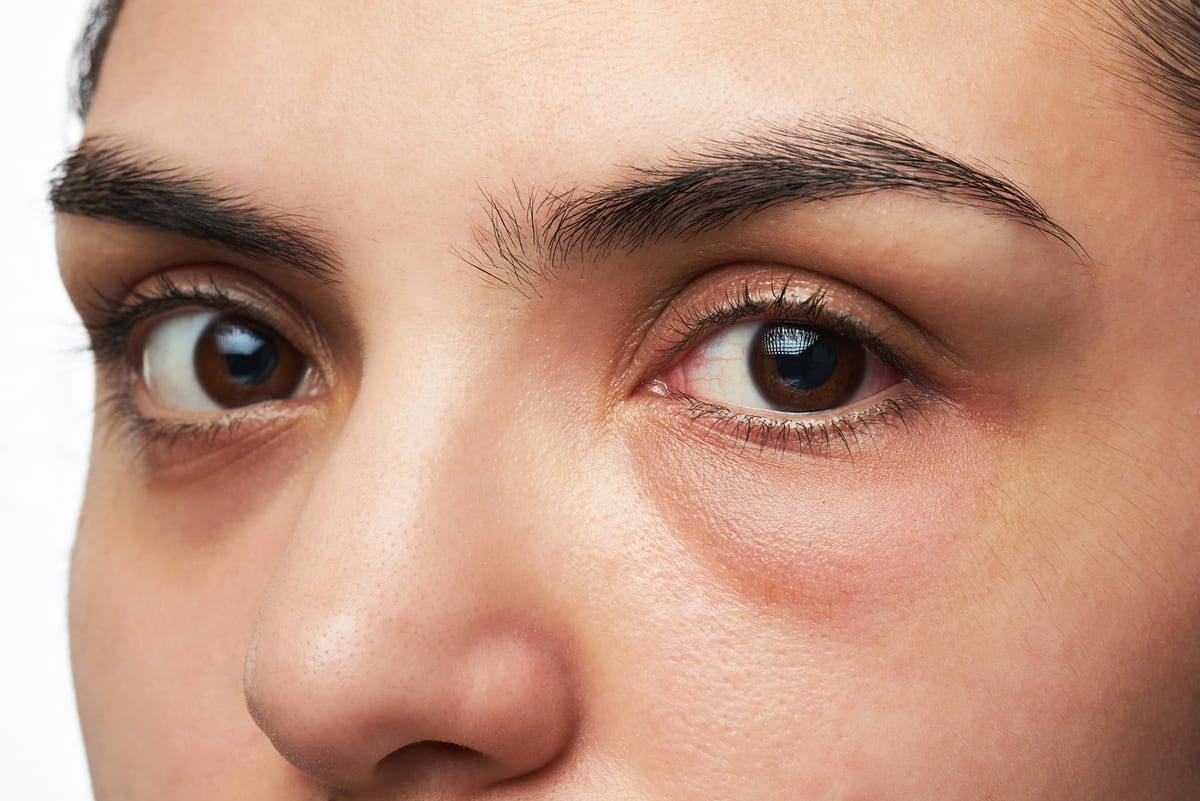
You glance in the mirror first thing in the morning and there they are – swollen, slightly tender undereye bags staring back at you. Maybe you had a rough night, maybe you ate too much takeout, or maybe you genuinely have no idea what went wrong. The frustrating part is that puffy eyes seem to have a mind of their own, and the advice floating around online ranges from cucumber slices to expensive serums. So what actually causes that morning puffiness, and more importantly, what do dermatologists and aestheticians say works fastest to get rid of it?
Why your eyes look swollen before you’ve even had coffee
The list of triggers behind puffy eyes is longer than most of us realize. Crying, an overly salty dinner, allergies, eye rubbing, lack of sleep and even underlying medical causes can all contribute to that inflated look. Sometimes your body is simply telling you to drink more water or cut back on sodium. Other times, the culprit is something you would never suspect.
One of the most common reasons is purely mechanical. According to Dr. Boakye, puffiness tends to be most noticeable in the morning because blood flow and lymphatic drainage around the eyes slow down significantly while you sleep. When you spend hours lying still, fluid that normally circulates throughout the day pools in the delicate tissue beneath your eyes. The result? That familiar swollen appearance before you have even reached for your phone.
So if you are waking up puffy despite getting a full night of rest, it does not necessarily mean something is wrong. It may just mean your body needs a little help getting that fluid moving again once you are upright.
Fast fixes that actually deflate undereye bags
The good news is that several smart tricks can visibly reduce morning puffiness in almost no time. Cold therapy is one of the simplest approaches – the cool temperature helps constrict blood vessels and push excess fluid away from the area. Strategic use of cosmetics can also smooth out the appearance while your body catches up with its natural drainage process.
When it comes to over-the-counter products, certain ingredients stand out. Dr. Boakye recommends looking for formulas that contain green tea or caffeine, both of which are known to help tighten and de-puff the skin around the eyes. Whether you reach for an eye cream, undereye patches or a targeted serum, those two ingredients are a strong starting point. You can even experiment with at-home remedies using items already sitting in your kitchen, making the whole routine more accessible and budget-friendly.
The key is speed. Most of these solutions work best when applied right after waking, while the puffiness is still fresh and fluid has not yet settled deeper into surrounding tissues. A few minutes of cold application combined with a caffeine-infused product can make a noticeable difference before you head out the door.
When creams aren’t enough – professional treatments worth knowing about
For some people, topical products and cold compresses only go so far. If you are dealing with chronic or pronounced undereye bags, professional treatments may be the next step – though they come at a cost.
Injectable fillers are one option. According to Dr. Zeichner, filler can be placed in the area between the undereye and the top of the cheek, effectively smoothing the transition zone and minimizing the visible puffiness. This approach does not eliminate the bags themselves but changes the contour enough to make them far less apparent.
Another route is platelet-rich fibrin, commonly called PRF. As Staines explains, a small amount of blood is drawn and processed to extract this healing substance, which is then injected into the undereye area to stimulate collagen and elastin production. The goal is a more refreshed appearance with reduced dark circles and wrinkles over time. However, Dr. Zeichner notes that results from PRF can be mild and often require multiple sessions before a meaningful change becomes visible.
In the most persistent cases, the only lasting solution is blepharoplasty, a surgical correction typically performed by plastic surgeons. During this procedure, the fat compartments beneath the skin are either removed or repositioned, according to Dr. Zeichner. It is the most definitive fix, but obviously the most invasive. If your undereye puffiness has become a constant concern, consulting a physician to map out the best treatment plan is a worthwhile step.
What this means for your morning routine
Morning puffiness is rarely a mystery once you understand the mechanics behind it. Reduced circulation during sleep, dietary salt, dehydration, allergies and even habitual eye rubbing can all play a role. The encouraging part is that most cases respond well to simple, immediate interventions like cold therapy and caffeine-based products. For deeper, long-standing bags, professional options ranging from fillers to PRF to surgery exist – each with its own trade-offs in cost, commitment and results. You do not have to accept puffy eyes as an inevitability. You just need the right tool for the severity of the problem.


