










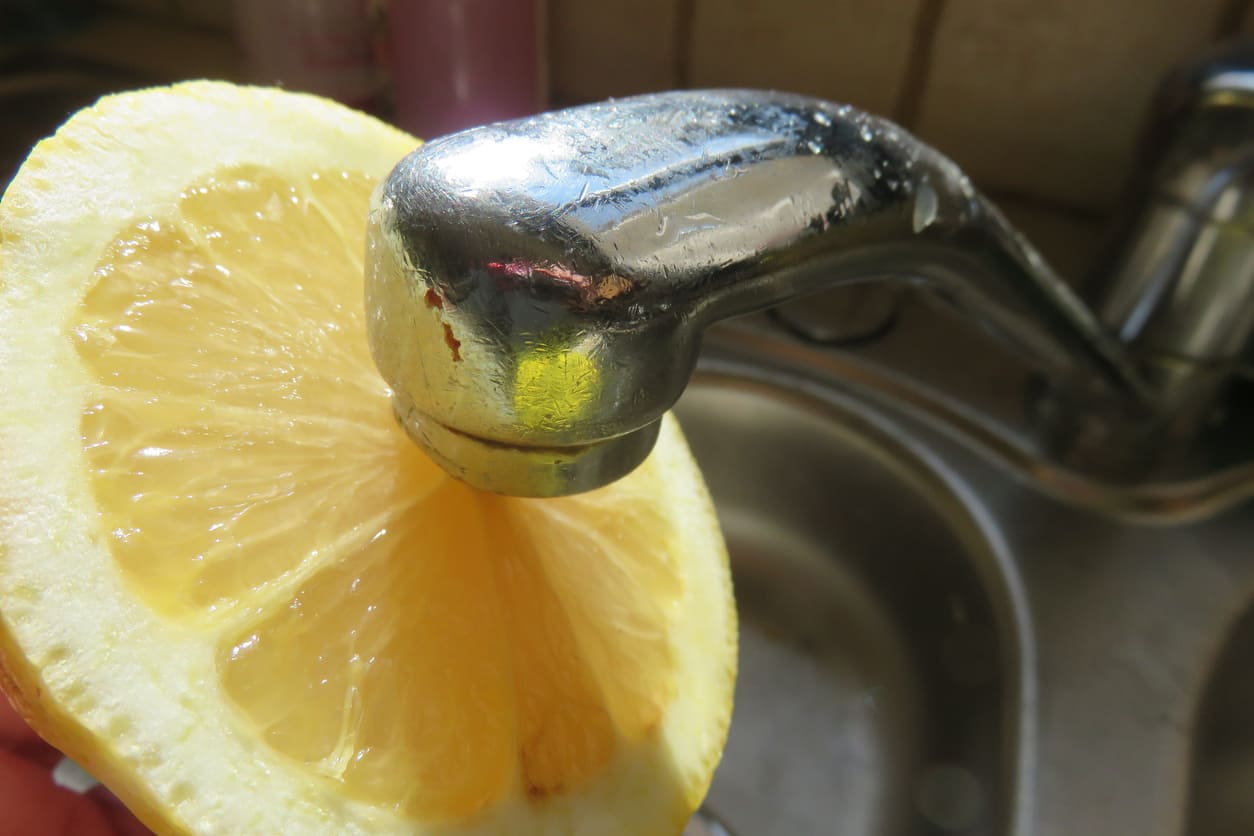
You squeeze half a lemon into your water, toss the rind into the trash, and move on with your morning. Meanwhile, the kitchen faucet behind you is quietly collecting another layer of water spots and soap film. What if the thing you just discarded could have fixed that dull, streaky finish in seconds? Most of us never think twice about a spent lemon peel, but it turns out the part we throw away may be the most useful part of all – at least when it comes to keeping metal fixtures looking fresh.
Why your faucets lose their shine in the first place
Both the bathroom faucet and the kitchen one face the same daily assault. Water, soap, and other residue make contact with the metal surface over and over again. That repetition matters. Over time, those deposits accumulate, leaving behind visible stains and gradually stripping the material of its natural shine.
Think about it: how many times a day does water hit your kitchen faucet alone? Every rinse, every hand wash, every fill of the coffee pot leaves behind trace minerals and soap particles. The buildup is so gradual that you barely notice it until one day you realize the fixture looks flat and lifeless compared to the day you installed it.
The surface dirt itself is usually light – water droplet marks, thin soap residue, the kind of grime that does not necessarily require heavy-duty chemical cleaners. And yet, most of us reach for a bottle of something strong, or we simply ignore the problem and let it compound. Neither approach feels particularly satisfying, which is exactly why a low-effort, no-cost alternative has quietly gained traction among people who prefer a simpler routine.
The kitchen scrap that doubles as a cleaning tool
Here is the trick, and it is almost absurdly simple: take a lemon peel – the leftover rind you would normally toss – and rub it directly over the surface of a metal faucet. That single motion can help loosen residue, add shine, and leave behind a pleasant citrus scent.
The reason it works comes down to what the peel is actually made of. The outer part of the rind contains essential oils, such as limonene, a naturally occurring compound found in citrus skin. The inner part, the white pith side, retains small amounts of citric acid. When you rub the peel against the faucet, these two components work together to help lift surface residue from the metal.
This is not a deep-clean solution. It is specifically useful for removing light stains caused by water droplets and for reducing soap residue and surface dirt. But for those everyday marks that make a faucet look neglected, the peel handles the job surprisingly well. Once you have rubbed the surface, a quick follow-up wipe with a cloth becomes noticeably easier, because the compounds in the peel have already done the preliminary loosening work.
The result is a faucet that regains some of its original shine without requiring you to buy a specialized product or dedicate serious scrubbing time. It is the kind of trick that feels almost too easy to be effective – until you actually try it and see the difference on the metal.
A practical habit that costs nothing
Beyond the cleaning benefit, there is a satisfying logic to the whole approach. Reusing the lemon peel gives it a second purpose before it ends up in the bin. You have already used the juice for cooking, flavoring, or drinking. Now the rind gets one more job before you discard it. Nothing wasted, nothing extra purchased.
Many people consider this a practical and economical alternative for the daily maintenance of metal surfaces. It fits naturally into a kitchen routine – you finish with a lemon, you give the faucet a quick rub, you wipe it down, and you move on. The whole process takes moments and requires zero additional supplies.
It is worth noting that this trick is best suited for regular upkeep rather than tackling heavy mineral deposits or serious corrosion. Its strength lies in consistency. A quick pass with a lemon peel every few days can help prevent the gradual dulling that makes faucets look older than they are. Think of it as maintenance, not restoration – a small habit that keeps you ahead of the buildup instead of chasing it after the fact.
The citrus scent is a bonus that many people appreciate, especially in a kitchen where competing odors are a constant reality. A faucet that looks clean and smells fresh simply makes the whole sink area feel more polished.
What to take away from all of this
The next time you use a lemon, pause before you throw the peel away. That rind contains limonene and citric acid – two compounds that can help lift light stains, reduce soap residue, and restore some shine to metal faucets. It costs nothing, takes seconds, and turns kitchen waste into a genuinely useful cleaning step.
You do not need a new product. You just need to stop discarding something you already have.


