










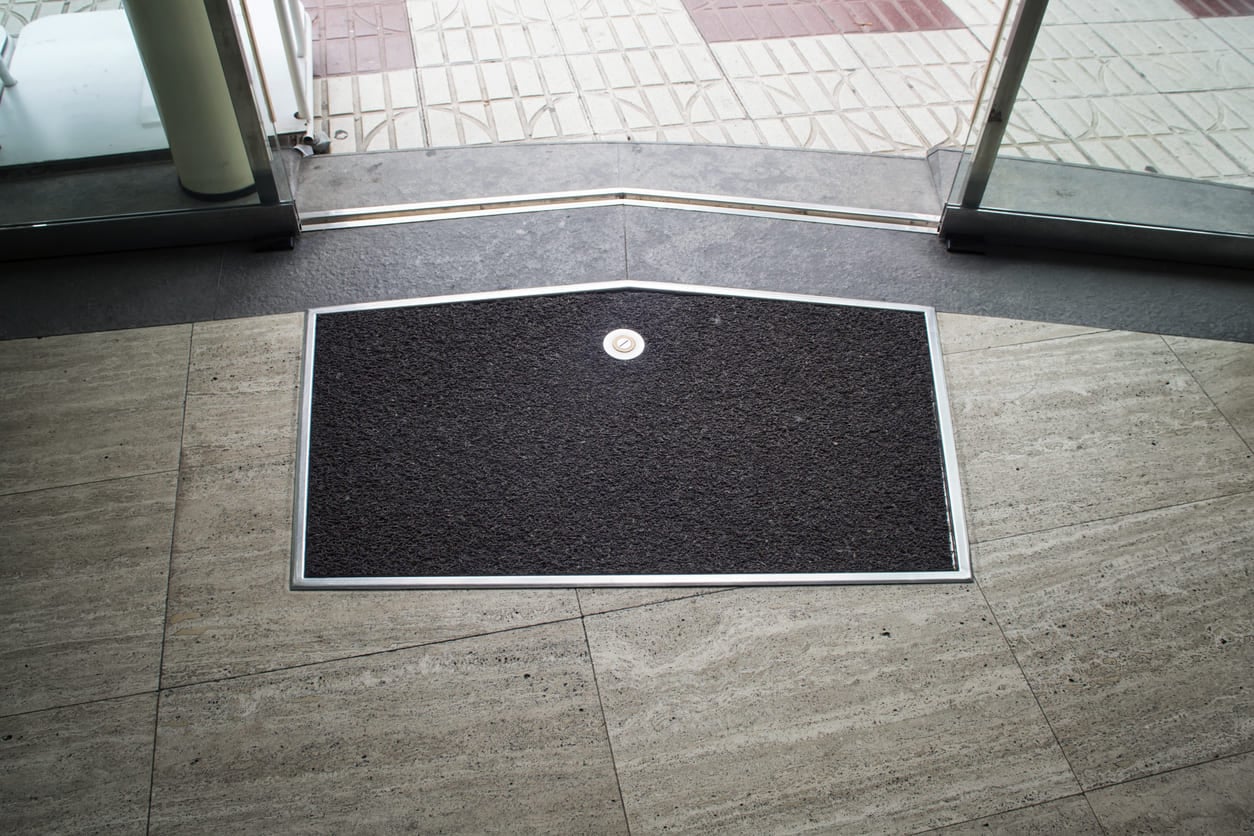
You have probably walked past it a thousand times without giving it a second thought. That scratchy rectangle of coir fiber sitting in front of your door – slightly askew, collecting dust, fraying at the edges. It does the bare minimum, and frankly, it looks like it. But what if the very first thing guests see when they arrive at your home could feel intentional, seamless, almost invisible? Interior designers are now reviving a forgotten detail from 1970s entryways that does exactly that, and it might just retire the traditional doormat for good.
Why the classic doormat no longer works
For years, we accepted the standard doormat as a non-negotiable fixture. It sat on the floor, it caught some dirt, and we moved on. But in today’s interiors, where clean lines and refined materials set the tone, that rough rectangle has become a visual disruption. Placed directly on a beautiful hardwood floor or graphic tile, a loose doormat slides around, sheds fibers, traps dust underneath, and breaks the aesthetic flow of a carefully designed space.
There is also the question of continuity. A well-designed entryway should feel like a natural extension of the rest of your home. The conventional doormat does the opposite – it reads as an afterthought, an awkward patch that undermines all the care you have put into your decor. So it makes sense that design-minded homeowners are looking for something more integrated, more fluid, and nearly invisible.
The seventies solution making a quiet comeback
The answer comes from an era that knew how to blend comfort with boldness – the 1970s. During that decade, entryways in upscale homes and renovated apartments embraced an ingeniously simple technique: a mat recessed directly into the floor, set flush with the threshold and perfectly aligned with the surrounding flooring material.
This detail, once reserved for elegant building lobbies and grand private residences, is finding its way back into residential projects this year. Set into a purpose-built recess, the mat forms a clean rectangle that sits perfectly level with the floor. It is typically finished in natural fibers like coir or sisal, though more contemporary versions use brushed aluminum for a sleeker look. The effect is immediate – the transition from outdoors to indoors becomes visually unbroken, smooth, and completely intentional.
This revival is no accident. Seventies design is influencing interiors once again with its generous volumes, warm tones, and appreciation for functional details. A recessed doormat checks every one of those boxes: practical, discreet, and quietly sophisticated. It is the kind of design move that people notice without being able to pinpoint exactly why the space feels so polished.
How to get it right – materials, sizing, and mistakes to avoid
Contrary to what you might expect, installing a recessed mat does not necessarily require a major renovation. Two options are available depending on your entryway configuration and floor type, making this upgrade accessible even outside of a full remodel.
Material choice is where the real impact lies. Coir remains a reliable go-to for its effectiveness, but high-end synthetic fibers are gaining traction for their durability and wider range of colors. For an especially polished result, some homeowners opt for aluminum slats paired with built-in brushes – a hallmark of hotel lobby design. When it comes to dimensions, the mat should be wide enough to cover at least two full steps, which is essential for it to actually function as a dirt-catcher rather than just a decorative accent.
Getting the details wrong, however, can undermine the whole concept. The most common mistake is undersizing the mat. Too short, and it loses all utility, becoming purely ornamental. The frame matters just as much – a poorly proportioned or garishly colored profile can ruin the streamlined effect you are after. Finishes in brushed brass, matte stainless steel, or black aluminum keep things graphic and understated.
The depth of the recess deserves careful attention too. It must correspond precisely to the thickness of the mat to prevent any lip or gap, which can cause tripping hazards and trap dirt. Maintenance is straightforward but important: vacuum the mat regularly, and look for removable models that can be lifted out for a thorough cleaning – a detail worth confirming before you buy.
To complete the look, consider pairing the recessed entry with a few curated pieces: a slim fluted-wood console, a rounded mirror with seventies flair, or a pendant light in pleated paper or rattan. Together, these elements transform your entryway into a true prelude to the rest of the home – cohesive, welcoming, and unmistakably current.
A small change with a lasting impression
By swapping a loose doormat for a flush-mounted version, your entryway gains both crispness and character. This idea borrowed from the seventies is a reminder that the best design trends are often the ones that marry beauty with common sense. You now know that a single recessed detail at the threshold can set the tone for your entire home. And once you have experienced that seamless feeling underfoot, you may start wondering whether the same logic could elevate other transitional spaces – hallways, landings, and every in-between zone we tend to overlook.


