










You hit pause
on texting first and your phone stays silent. Psychologists explain
why, for many older Americans, that silence is the sharpest kind of
loneliness.
You stop texting first as a tiny act of rebellion. No more “Drinks this week?” follow-ups, no “Just checking on you” voice notes. You close the apps and wait, expecting at least a couple of “Hey, stranger” pings to roll in.
Instead, your phone goes quiet. Days slip into weeks, and your chat history starts to look like a museum of unanswered blue bubbles with your name on every last line. Psychologists would tell you that the loneliest part of getting older is not being alone on a Friday night. It is realizing which “friendships” evaporate the second you stop doing all the emotional admin.
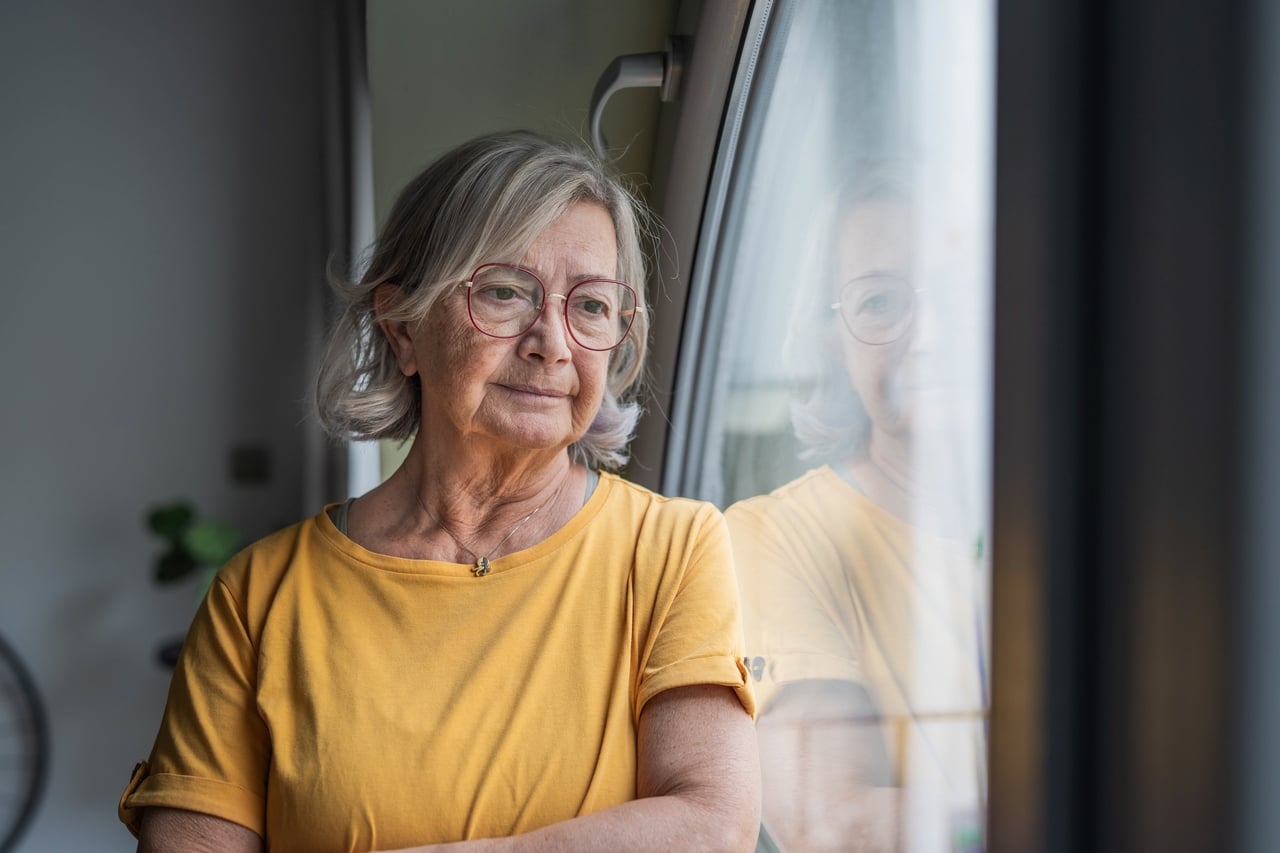
The Loneliness That Arrives When The Messages Stop
Loneliness is not a headcount, it is a gap. The National Academies describe it as the distance between the connection you want and the connection you feel you have. Their 2020 report estimated that about 24 percent of Americans aged 65 and older are socially isolated, while 43 percent of adults over 60 say they feel lonely.
That feeling spikes when a friendship dies quietly. No fight, no dramatic final call, just a slow fade once you stop sending “We should catch up” texts. Psychologists sometimes talk about ambiguous loss and disenfranchised grief – losses that do not get named or publicly mourned. When a friend slips out of your life because you stopped arranging every brunch, it can ache like a breakup nobody else even registers.
One woman in her seventies told me she realized it after a brief hospital stay. “I stopped hosting, because I literally could not stand,” she said. “A few people kept calling. Most just… disappeared.” That is not drama, it is data.
Why One Sided Friendships Cut Deeper As You Age
Social psychologists use equity theory to explain why this stings. Relationships feel healthiest when the give-and-take seems roughly fair over time. Not split-the-check-with-a-calculator fair, but “we both show up” fair.
In friendship, the giving is usually invisible. Remembering the biopsy date. Sending the first text. Being the one who always suggests dinner, books the table, and remembers who drinks what. When you are the permanent planner, the friendship can start to feel like an unpaid side job.
An MIT team led by Abdullah Almaatouq mapped friendship networks and found that only about 53 percent of the ties people named were actually reciprocal. In some datasets, reciprocity dipped closer to one in three. Translation: we routinely assume a bond is more mutual than it is. When you stop initiating in midlife or later, you are not breaking your friendships. You are just removing the scaffolding that was hiding the imbalance.

The Hidden Emotional Labor Of Being The Glue
If you have spent years as “the glue,” you know the script. You remember everyone’s birthdays. You schedule the group chat dinner. You notice when someone has gone quiet and reach out first. Often, women do this at home, at work, and then again in their social lives, so it just feels normal.
The problem is that being the social engine can disguise how little fuel other people would bring if you ever stepped back. When you finally let the group text sit unanswered to see what happens, you are not being petty. You are measuring how much of the relationship was actually shared, and how much was you doing emotional CrossFit on behalf of the whole crew.
How Aging Quietly Rewrites Your Social Circle
Earlier in life, friendship gets constant free boosts from proximity. You see the same people at school, at the office, on the sidelines of soccer games. Even a lopsided friendship can limp along because life keeps tossing you into the same room.
Later, that scaffolding collapses. Retirement, caregiving, illness, divorce, or a cross country move strip away those default touchpoints. A meta-analysis of 277 studies, including more than 177000 people, found that social networks tend to shrink across adulthood, especially around big life transitions.
Stanford psychologist Laura Carstensen calls it socioemotional selectivity. When time feels expansive, you collect experiences and people. When time feels shorter, you prune. You choose fewer, more emotionally meaningful ties. That can be deeply healthy. It also means that when you discover a long running friendship was actually one sided, it hurts more, because it was taking up one of your few precious spots.
The Moments When The Truth Shows Up
The reveal often arrives at flashpoint moments. You retire and realize no one from the office calls once you stop organizing the happy hours. You become a caregiver and do not have the energy to chase people, so your world narrows to the friends who insist on coming to you. A pandemic, a surgery, a move – each one is a stress test that shows who considers you optional.

The Problem With Testing People By Going Silent
Plenty of people run the “stop texting first” experiment and watch what happens. It can feel brutally clarifying. Psychologists caution that it is also a very blunt instrument. Silence can mean indifference, yes. It can also mean depression, burnout, a new baby, a parent in hospice, or someone simply assuming you are busy and they do not want to add pressure.
Instead of turning one quiet month into a verdict, look for patterns. Over the span of a year, do they ever initiate? When you are struggling, do they step in at all? And crucially, is the friendship strong enough to handle an honest conversation about how connected you feel?
Better Questions Than Who Texted First
- When I reach out, do they respond with warmth and, at least sometimes, make the next move themselves?
- When something hard is happening in my life, do they show up in any form – a call, a ride, a casserole, a meme at midnight?
- Can I say, “I have noticed I am usually the one initiating and I really value you. How can we make this feel more mutual?” without the whole relationship collapsing?
If the honest answer is no across the board, you are not obligated to keep pouring energy into that connection. You can let it become a fond memory instead of a current commitment.
Building A Smaller, Sturdier Crew On Purpose
The research is kind here. A 2023 review in Frontiers in Psychology looked at adult friendship across 38 studies and found that quality and ongoing effort mattered far more for well-being than how many contacts someone had. The long running Harvard Study of Adult Development says the same thing from another angle. “Taking care of your body is important, but tending to your relationships is a form of self-care too,” Robert Waldinger says.
Public health officials now talk about loneliness with the same seriousness as smoking, because it raises the risk of heart disease, stroke, depression, and dementia. The National Institute on Aging nudges older adults toward multiple routes of connection: walking groups, faith communities, classes, volunteering, intergenerational programs. Think of it as a friendship portfolio. A core circle you would truly grieve. A few newer ties you are consciously nurturing. And the high drain, low return connections you gently release.
Yes, the loneliest part of getting older can be realizing who disappears when you stop reaching out. The quiet upside is the clarity that follows. You get to stop being the cruise director for people who never boarded the boat and put your time, and your heart, into the ones who are still rowing beside you.


