










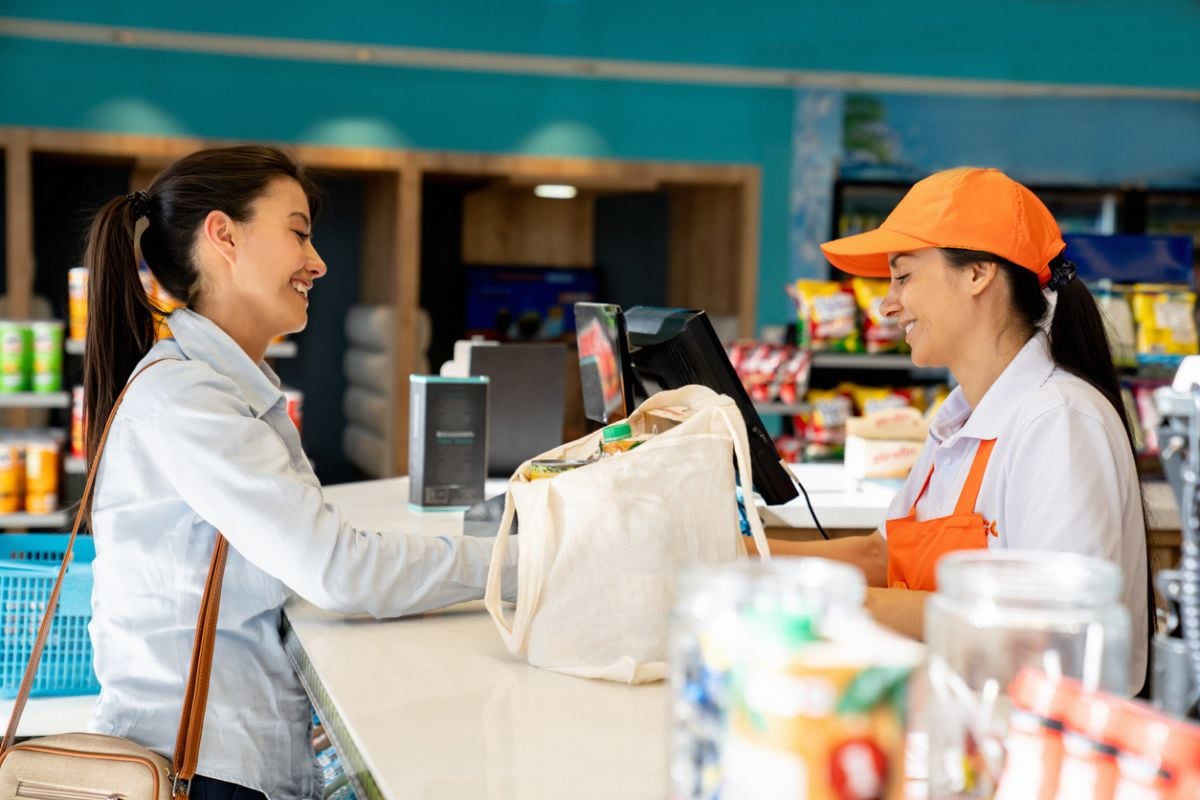
A smile, a few words and eye contact: the small exchange that research says is worth more than the minute it costs. The self-checkout line is shorter. The app lets you order without saying a word. Everything about modern shopping is designed to be fast and frictionless. And yet some people still walk to the register, ask the cashier how their day is going and leave with a smile.
Psychology suggests they are onto something. In a study published in Social Psychological and Personality Science in 2014, researchers Gillian Sandstrom and Elizabeth Dunn tested what happens when we turn a quick transaction into a tiny social moment. Their paper had a pointed title: “Is Efficiency Overrated?”
The Coffee-Shop Experiment
The researchers sent participants to buy a drink at Starbucks. Some were randomly asked to treat the barista like an acquaintance: smile, make eye contact and have a brief conversation. Others were asked to be as efficient as possible, getting in and out without any unnecessary interaction.
The results were clear. People who smiled, made eye contact and chatted briefly with the barista “experienced more positive affect than people who were as efficient as possible,” the authors wrote. In other words, they left in a better mood. And there was more: “they left feeling a greater sense of belonging,” Dunn explained.
Why Small Talk With Strangers Matters
Psychologists call these people “weak ties”: the barista, the cashier, the neighbor you wave to. They are not close friends, but they still affect how connected we feel. The study found initial evidence that the boost in mood came through that feeling of belonging. “Humans are designed to have social interaction,” Dunn said, adding that “even the smallest ones can make a difference.”
The surprise is that many of us avoid these moments. The authors noted that people are often reluctant to have genuine interactions with strangers, even though they are happier when they treat them like weak ties. Efficiency feels productive. Connection, it turns out, feels better.
How to Bring It Into Your Day
You do not need to give up self-checkout entirely. Choose one place a day for a real exchange: the coffee shop, the grocery register, the pharmacy counter. Look up from your phone, smile and use the person’s name if they wear a name tag. Ask one simple question, “How’s your day going?”, and listen to the answer. Say thank you and mean it. If you are in a hurry, even eye contact and a sincere smile count. Psychologists have found that kindness tends to grow with age, as research on adults over 55 who help more shows. And other everyday habits carry more meaning than they seem, like why some people walk with their hands behind their back. The lesson worth borrowing is that a minute of warmth is rarely a minute wasted.
The Bottom Line
People who still chat with the cashier instead of using self-checkout tend to leave happier. A coffee-shop study by Sandstrom and Dunn found that smiling, eye contact and a brief chat lifted mood and belonging more than being efficient.


