










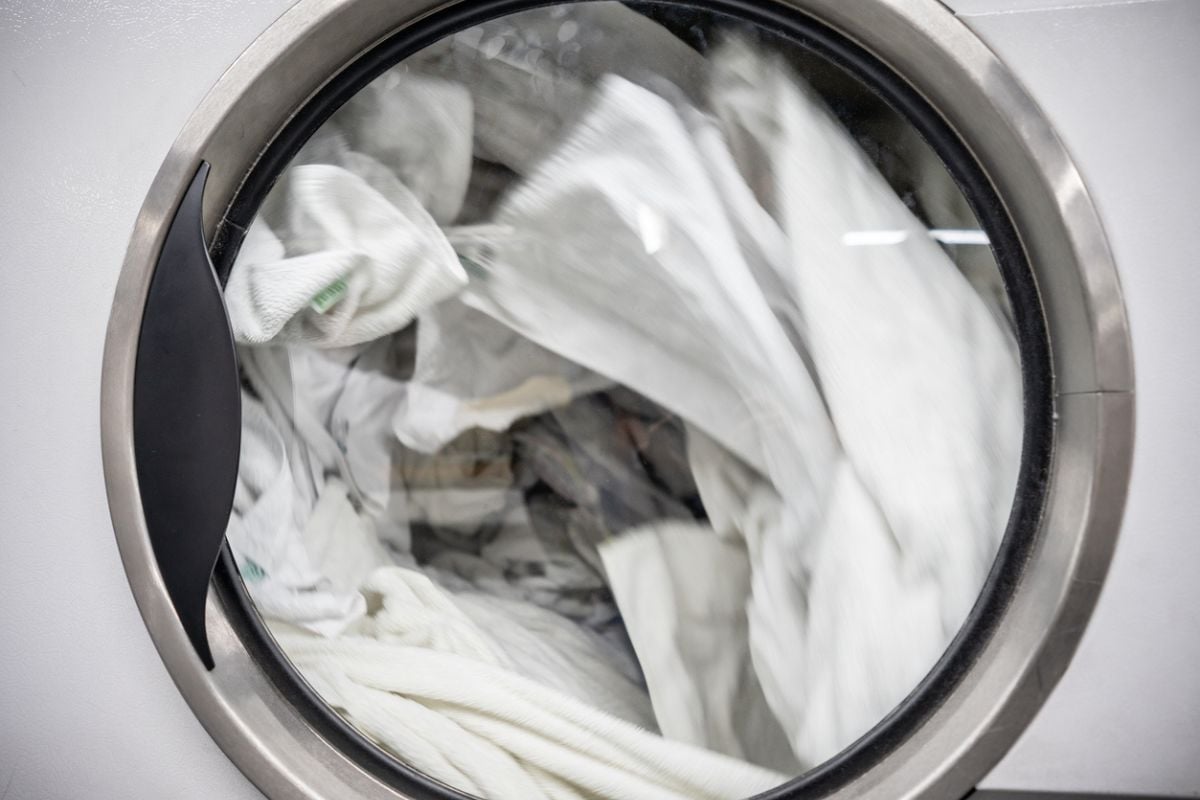
You sort your whites from your darks before tossing everything into the washing machine. Maybe you learned it the hard way – a beloved white tee turned a splotchy pink after sharing a cycle with a red hoodie. That much feels second nature by now. But what happens once those freshly washed clothes move to the dryer? If you’re like most people, every clean item goes in together, no questions asked. Turns out, that single habit could be the reason your wardrobe never looks quite as crisp as it should.
Why your dryer deserves the same sorting rule as your washer
We tend to think of the dryer as the low-maintenance part of laundry day. The washing machine handles the heavy lifting – stain removal, odor control, dye bleeding prevention – so the dryer is just there to, well, dry. It’s easy to assume that once clothes are clean, mixing them in a hot tumble won’t cause any harm. But that assumption overlooks two things that are still very much at play inside a running dryer: loose dye and lint.
Carolyn Forté, the former executive director of the Home Care and Cleaning Lab, points out that residual dye can still rub off dark garments onto lighter ones as items tumble against each other in the dryer. The friction and heat don’t stop just because the wash cycle is over. And the issue isn’t limited to color transfer alone. Light-colored fabrics can shed lint onto dark pieces, leaving them looking dull and worn – and that kind of lint buildup can be surprisingly stubborn to remove. Lint travels in both directions, too, from dark to light and light to dark, so no garment is safe when loads are mixed.
So why doesn’t everyone already do this? Probably because it feels like one more chore wedged into an already tedious process. When you’re racing through laundry day, adding an extra dryer cycle can seem like a luxury you can’t afford. But the payoff, according to experts, is well worth the modest time investment.
Smaller loads, faster drying, better results
Here’s where the practical benefit really clicks. When you separate lights and darks for the dryer, you’re automatically working with smaller loads. Smaller loads give items more room to tumble freely, which means hot air circulates more evenly around each piece. The result is that everything dries faster and more efficiently – no more pulling out a load only to find half the items still damp in the center.
Beyond speed, this simple split helps preserve the vibrancy of your clothes. Bright colors stay bright. Whites and pastels stay clean and sharp instead of gradually picking up a grayish or dingy cast from stray lint and pigment. It’s one of those small adjustments that quietly extends the life of your wardrobe without requiring any special products or equipment.
Forté also recommends choosing dryer cycles based on the types of fabrics and garments in each load. For specific guidance, she suggests checking the care and fiber labels on your clothes, which are usually located on seams, at the back of the neck, or near the back waist of garments. Matching the right heat and tumble settings to the right fabrics makes the whole process more effective.
How to sort – and actually stick with it
If you’re wondering where to draw the line between lights and darks, the breakdown is straightforward. Anything dyed in deep blue, black, red, brown, or dark gray counts as a dark. Garments in pastel shades, cream, beige, and light gray belong with your whites. For those tricky in-between pieces – think lavender, pink, orange, light blues, and greens – the safest move is to group them with your colors rather than your whites.
The harder part, of course, is turning a new rule into a lasting habit. Forté suggests that the best approach is doing smaller loads more frequently rather than trying to cram everything into one oversized run. It feels counterintuitive when you’re short on time, but smaller loads actually move through both the washer and dryer more quickly, so you’re not necessarily adding hours to your routine.
One practical hack she recommends is placing separate sorting bins in your laundry room or in each bedroom. When the sorting happens at the moment you take clothes off – rather than in a frantic pile on laundry day – the whole process becomes almost effortless. It also makes it easier to get everyone in the household on board, since the bins serve as a built-in visual reminder.
A tiny tweak that keeps your clothes looking new
Most of us already know the basics of laundry sorting, but we stop applying that logic the moment the wash cycle ends. Extending the lights-and-darks rule into the dryer is one of the simplest upgrades you can make to your routine. It reduces lint transfer, guards against lingering dye bleed, speeds up drying time, and helps every piece in your closet hold onto its original color and texture a little longer. No new gadgets, no expensive detergents – just one extra sort that quietly pays for itself every time you get dressed.


