










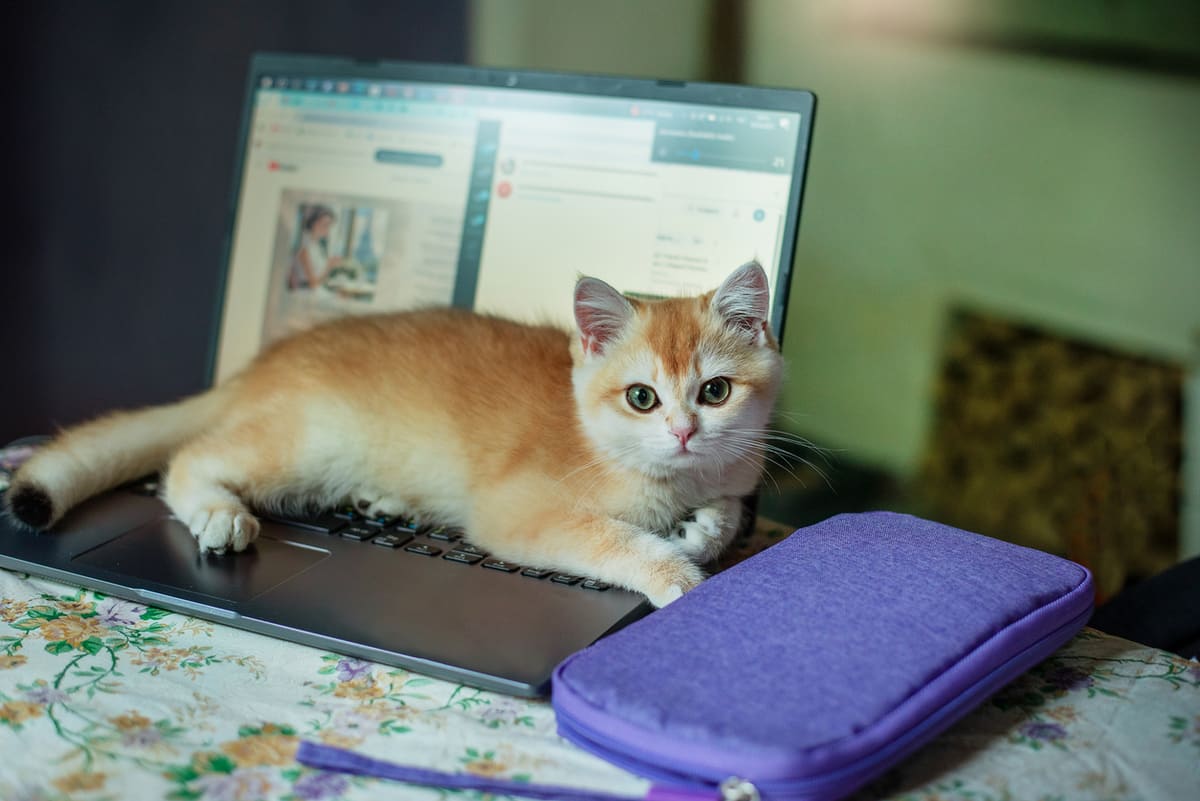
You just set your phone down for two seconds. Maybe you placed your reading glasses on the coffee table or left a sweater draped over the arm of the couch. You turn around, and there it is – your cat, sitting directly on top of the very thing you need. It happens so reliably that you might start to wonder whether your feline roommate is doing it on purpose. According to veterinary professionals and animal behaviorists, the answer is more layered – and more endearing – than you might expect.
Why your cat ignores every bed you buy
If you have ever scrolled past an ad for a gorgeous cat bed and felt a pang of guilt, you are not alone. Many cat owners invest in plush lounging spots, handmade options, and even repurposed stuffed animals, only to watch their cats bypass all of it in favor of a warm laptop or a journal left open on the kitchen counter. A glance at Reddit’s r/cats forum confirms the phenomenon is practically universal. Cat parents report their pets parking themselves on mail mid-opening, board games in progress, and just about anything else a human hand has recently touched.
So what is going on? The short answer is that the objects we are actively using offer three things a standard cat bed simply cannot compete with: warmth, scent, and undivided attention. Each of those draws on deep feline instincts, and understanding them can actually change the way you interact with your pet.
Warmth, scent, and the science of sitting
The first driver is pure temperature. Dr. Nita Vasudevan, a veterinary consultant for Embrace Pet Insurance, explains that items we handle frequently – phones, laptops, warm laundry, freshly used towels – give off residual body heat that cats find irresistible. Cat behaviorist Stephen Quandt sees this play out daily with his own cat, Jenny, who has been blind from birth. Quandt describes warming up the sofa for her before he stands up, and Jenny will transfer from his lap to the pre-warmed cushion almost immediately. Laptops are especially popular, he notes, because they combine warmth with the lingering smell of our fingers.
That scent factor is the second big reason. According to Dr. Vasudevan, notebooks, glasses, dusting cloths, and similar everyday items all carry your personal scent. When a cat settles onto one of these objects, it is seeking closeness and blending its own scent with yours. Quandt adds that this behavior is fundamentally a sign of trust and safety. He puts it in playful perspective by imagining a world in which humans descended from cats – we would all be sitting on each other at restaurants and attending cuddle parties as a matter of course.
The third mechanism is territorial marking. Dr. Geri Katz, a veterinary advisor at Pet Honesty, points out that cats possess scent glands that allow them to claim ownership of the things they sit on, giving them a sense of comfort and security. Quandt specifies that these scent glands are located on a cat’s paws, cheeks, forehead, and rear end. When you notice your cat rubbing any of those body parts against your belongings, it is essentially placing territorial markers – asserting that those objects belong to the cat, too.
The real headline: they want you to look at them
Warmth and scent aside, the most straightforward explanation may also be the most powerful one. Attention-seeking is likely the number-one reason cats plant themselves on whatever you are using, according to Quandt. Cats are perceptive enough to notice where your focus goes, and if that focus is on a book, a phone, or a knitting project, your cat recognizes the object as important – and decides to insert itself between you and your distraction.
Dr. Katz agrees, noting that cats seem wired to interrupt us the moment we engage in anything other than playing with them. They will sit on papers we are reading or knock pens off the counter, which is textbook attention-seeking behavior. Dr. Vasudevan adds that cats do not limit themselves to sitting on objects, either. They will also position themselves directly in your line of sight, because that strategy tends to earn them the eye contact they are after.
If you are desperate to finish a task without a furry interruption, Dr. Vasudevan recommends placing a decoy object nearby – something like an old notebook or a folded blanket that already carries your scent. It may lure your cat away just long enough for you to get through an email or two.
What this means for you and your cat
The next time you find your phone wedged under a sleeping cat, remember that three instincts are at work: a love of warmth, a desire to mingle scents as a sign of trust, and a straightforward bid for your attention. None of it is spite, and all of it is rooted in the fact that your cat genuinely wants to be near you. If the decoy trick does not work, that might be your cue to set the to-do list aside and spend a few minutes playing. Think of it as work-life balance – and it is certainly cheaper than yet another fancy cat bed that never gets used.


