










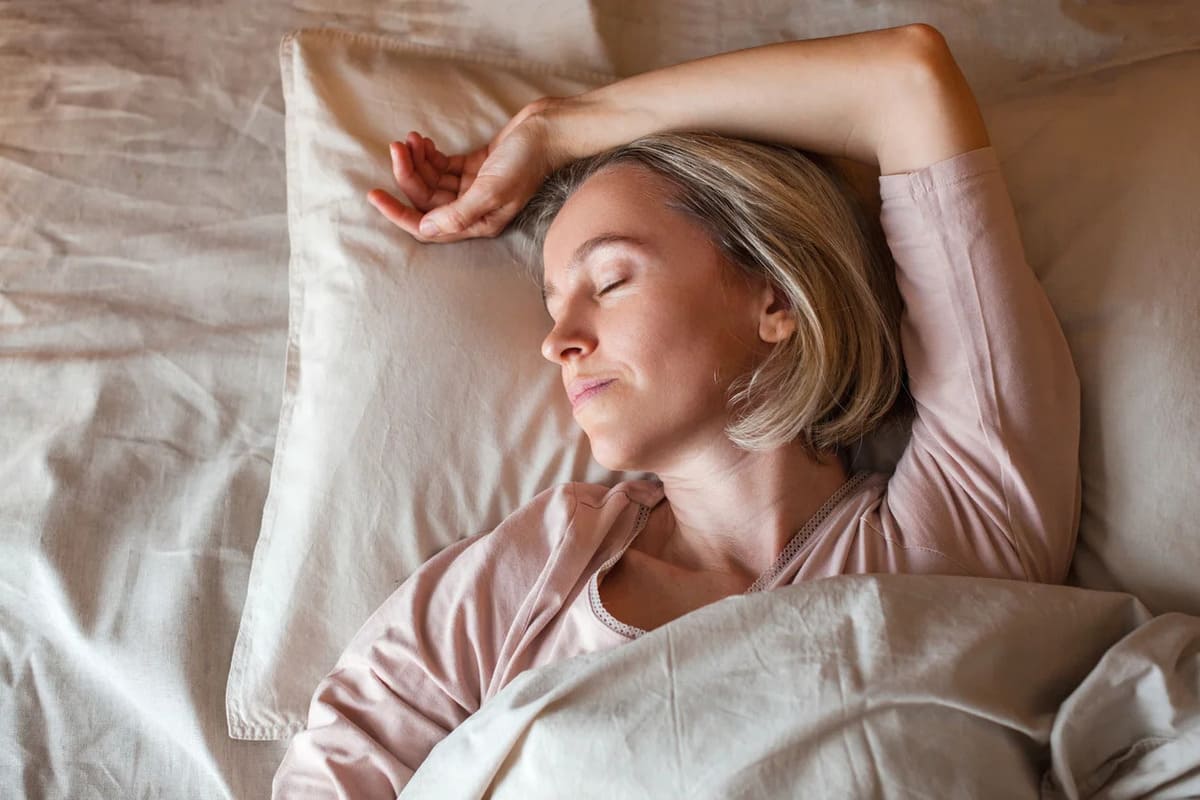
You apply your retinoid. You layer on vitamin C. You never leave the house without SPF. By every modern skincare standard, you are doing the work. But then you climb into bed, press one side of your face into a pillow, and stay there for seven to eight hours. What if that nightly habit is quietly undermining the routine you have spent real money and real discipline building? New research suggests it almost certainly is – and the mechanism has nothing to do with the muscles Botox targets.
The wrinkles your skincare routine cannot reach
Roughly 65% of us sleep on our side. It is the most common position by a wide margin, and most of us have never questioned it. But a study published in the Aesthetic Surgery Journal found that side and stomach sleeping generates compression, shear and stress forces against facial skin that gradually create permanent creases. These are not the fine lines you get from laughing or squinting. They are mechanically distinct.
The difference matters more than you might expect. Expression lines form because muscles contract repeatedly over the years. Sleep wrinkles form at sites where the skin is anchored to underlying bone by retaining ligaments, and they are the result of your face being folded against a surface for thousands of cumulative hours. Botox works by relaxing muscles, so it has no effect on lines that are not caused by muscular movement in the first place. You could have every injectable on the market and still develop deeper creases simply from the way you sleep.
So why do these creases seem to appear more aggressively after a certain age? Younger sleepers shift positions about 27 times per night, distributing pressure across the face more evenly. Older adults shift roughly 16 times. Fewer shifts mean longer, uninterrupted compression on the same facial areas – which is part of why sleep wrinkles deepen noticeably after your 30s.
Why the timing of this conversation matters
This research is arriving at a moment when the skincare world is already pivoting toward prevention. The concept of prejuvenation – preventive anti-aging that begins in your 20s and 30s – is a leading dermatology trend heading into 2026. If the strategy is to get ahead of aging rather than chase it, then sleep position belongs in the same conversation as SPF and retinoids.
Consider the practical economics, too. Night serums, retinoids and moisturizers are designed to absorb into your skin overnight. When you sleep face-down on a pillowcase, a portion of that product transfers to the fabric instead. If you are spending $30 to $100 or more on a nightly treatment, keeping it where it belongs is a straightforward return on investment. Flipping onto your back ensures your cheeks, forehead and jawline stay off the pillow entirely, which eliminates the mechanical folding that creates sleep wrinkles over time – and lets your products do what you paid them to do.
One popular workaround deserves a reality check. Silk pillowcases carry appealing marketing claims, but clinical evidence that they prevent sleep wrinkles is essentially nonexistent. Silk may reduce hair friction, which is a legitimate benefit, but it does not solve the compression problem. Only keeping your face off the pillow does that.
Beyond skin – what back sleeping does for the rest of your body
The case for back sleeping extends past your complexion. Lying on your back places your head, neck and spine in a neutral position, supporting overall spinal alignment. A 2019 review found that back and side sleeping produce significantly less spinal pain than stomach sleeping. Harvard sleep specialist Dr. John Winkelman has noted that back sleeping avoids sideways force on the spine entirely, making it one of the most structurally sound positions available.
With slight head elevation, back sleeping can also help manage acid reflux by keeping stomach acid from flowing into the esophagus, per the Sleep Foundation. That same gentle incline helps drain sinus congestion from seasonal allergies, turning one small adjustment into relief on multiple fronts.
If the idea of training yourself to sleep on your back feels daunting, give yourself grace. Adults shift 11 to 45 times per night, so nobody maintains a single position from lights-out to sunrise. Even partial back sleeping counts. Habit formation research suggests it takes anywhere from 18 to 254 days to lock in a new behavior. If you wake up on your side, simply roll back and keep going. Progress, not perfection, is the goal.
The overnight step most routines are missing
We tend to think of a skincare routine as something that ends the moment we close the last jar. In reality, it continues for the next seven to eight hours depending on what your face is pressing against. Every product you applied is either absorbing into your skin or transferring to your pillowcase. Every hour you spend with your cheek compressed against a surface adds to a cumulative mechanical load that no serum can undo.
Back sleeping is one adjustment – free, requiring no new product and no appointment – that protects everything you have already invested in. Your retinoid works better. Your SPF investment during the day is not offset by overnight damage. And the lines that form on your face will be the ones that tell a story of expression, not compression.


