










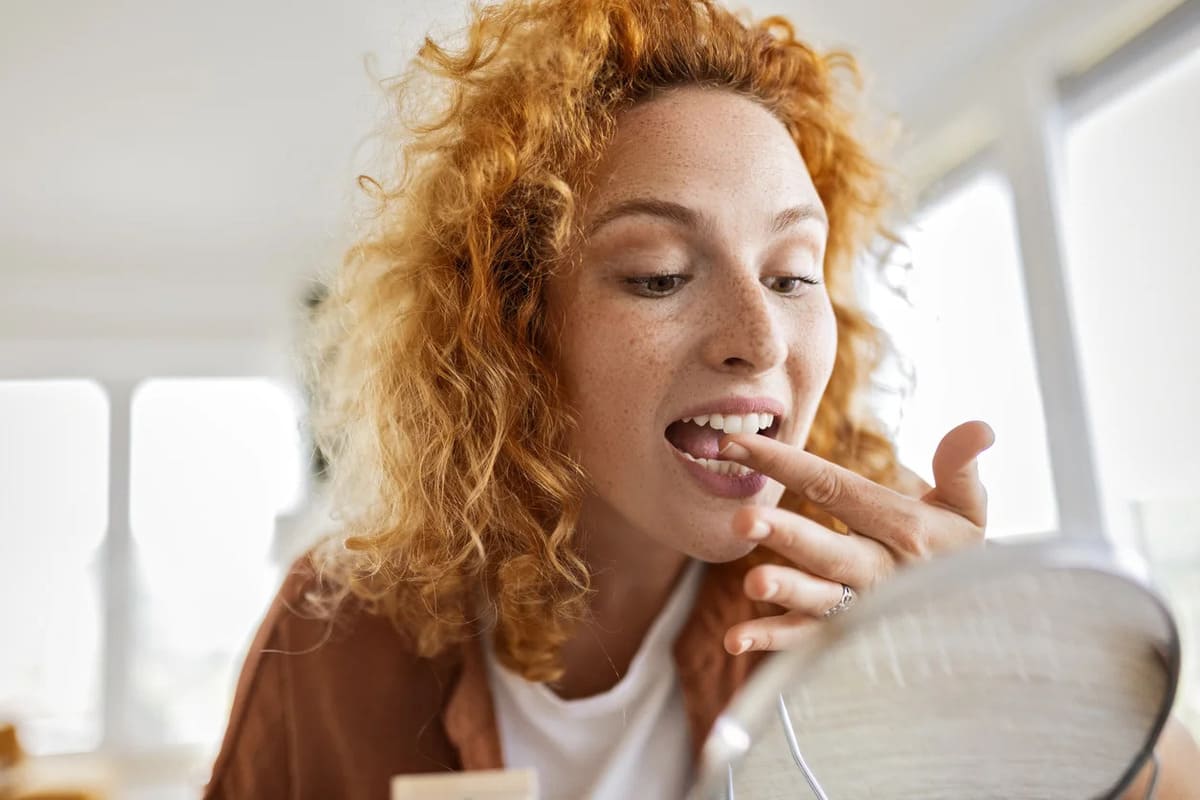
You have probably scrolled past at least one impossibly bright smile on social media today. Maybe you even paused, ran your tongue across your own teeth, and wondered whether a whitening kit might be worth trying. The promise of a dazzling grin is everywhere – from pharmacy shelves stacked with strips and gels to trendy salon pop-ups advertising quick transformations. But before you reach for that over-the-counter box or book a session at the nearest beauty bar, it is worth understanding what these products actually do to your teeth and where the line sits between a healthy glow and potential harm.
Why the ingredient label matters more than you think
Most teeth-whitening products rely on the same core chemistry. The active ingredient in the vast majority of them is hydrogen peroxide, or a compound that releases hydrogen peroxide when mixed with water or air. That is why the process has long been referred to as teeth bleaching – the mechanism is, quite literally, a controlled bleach reaction on tooth enamel.
Here is where it gets tricky. Many outlets offering whitening treatments advertise their formulas as peroxide-free. On the surface, that sounds gentler. But consumers should ask exactly what those products contain, because some of them are technically free of peroxide before use yet release hydrogen peroxide once they are activated. The label might be accurate in the narrowest sense, but the chemical reality on your teeth is the same. So is the question you should be asking: what am I actually putting in my mouth?
It does not take much searching to find a huge range of home remedies floating around the internet, either. From rubbing banana peel on your teeth to brushing with a mixture of lemon juice and bicarbonate of soda, quick-fix solutions abound. Their popularity does not mean they are effective or safe – it simply means the desire for whiter teeth is powerful enough to make people try almost anything.
What a dentist does differently – and why it matters
The core advantage of having a dental professional handle your whitening comes down to precision and strength. Dentists can use stronger products than those available over the counter, and they are more likely to understand what is achievable with each type of whitening, whether that is an office-based procedure or a supervised at-home system.
One key difference is the custom fit. A dentist will take a mould of your teeth and use that to create a whitening tray shaped specifically for your mouth. This ensures the whitening agent touches your teeth only and not your gums, reducing the risk of irritation or chemical burns on soft tissue. A generic, one-size-fits-all tray from a store simply cannot replicate that level of accuracy.
There is also the safety net. If anything goes wrong – sensitivity spikes, uneven results, gum irritation – a dentist can help more effectively because they understand the chemistry involved and have the clinical tools to intervene. Researchers have suggested that even home whitening systems should be used under the supervision of a dentist, because over-the-counter whitening products, when used excessively, could lead to damage to teeth over time. That word excessively is important. A single use is unlikely to cause lasting harm, but the temptation to keep reapplying is real, especially when results are subtle.
Setting realistic expectations for your smile
One of the most common misconceptions about whitening is that you need to keep doing it indefinitely to maintain results. That is not quite how it works. Once teeth have been whitened, you do not have to keep whitening them. However, the effects will gradually fade over time, typically lasting 6 to 12 months depending on your brushing habits and diet. Coffee lovers and red-wine enthusiasts may find the brightness fades a bit faster, while diligent brushers might enjoy the results closer to the longer end of that range.
There is also a limitation that catches many people off guard. Dental restorations – tooth-coloured fillings, veneers, and crowns, sometimes called caps – will not change colour during a whitening treatment. The process only takes effect on natural teeth. That means if you have a filling on a front tooth, whitening the surrounding enamel could actually make the colour mismatch more noticeable rather than less. Knowing this ahead of time can save you both disappointment and money.
This is another reason professional guidance matters. A dentist can assess your specific situation, flag any restorations that might create uneven results, and recommend a realistic shade goal that works with the teeth you actually have rather than an Instagram filter ideal.
The brighter picture
Whitening your teeth is neither dangerous nor inherently vain – it is simply a cosmetic choice that benefits enormously from a little knowledge. The active ingredient in most products is hydrogen peroxide, even when the packaging suggests otherwise. Over-the-counter kits can work, but excessive use without professional oversight carries real risks. Results last roughly 6 to 12 months, and restorations will not lighten alongside your natural enamel. The smartest move you can make is to loop in your dentist before you start, not after something feels wrong. A well-informed smile is always the most attractive one.


