










You bought a pair of jeans that pool around your ankles. Maybe you ordered online and the inseam ran long, or maybe you just grabbed your usual size without thinking twice. So you fold the hem up once, hope for the best, and walk out the door. But that fold – that seemingly insignificant detail – can completely change the way your jeans look and feel on your body. The difference between a sloppy bunch of fabric at your ankle and a clean, intentional silhouette often comes down to how you handle those last few inches of denim.
Why the way you fold matters more than you think
Cuffs, also called turn-ups, are simply the folded-over sections at the hem of your jeans. They let you adjust the length without cutting or sewing, and they can add shape, contrast, and character to an otherwise straightforward pair of jeans. It sounds simple enough, but there is a logic to it that most people skip over entirely.
The key principle is that your cuff should correspond with the fit of your jeans. Loose fit jeans can handle bigger cuffs, while slim and skinny fit jeans call for smaller, more restrained folds. Ignore this, and you end up with a proportion that feels off – even if you can’t quite pinpoint why. So what separates a well-executed turn-up from one that just looks like you forgot to visit a tailor?
A fold for every fit and every mood
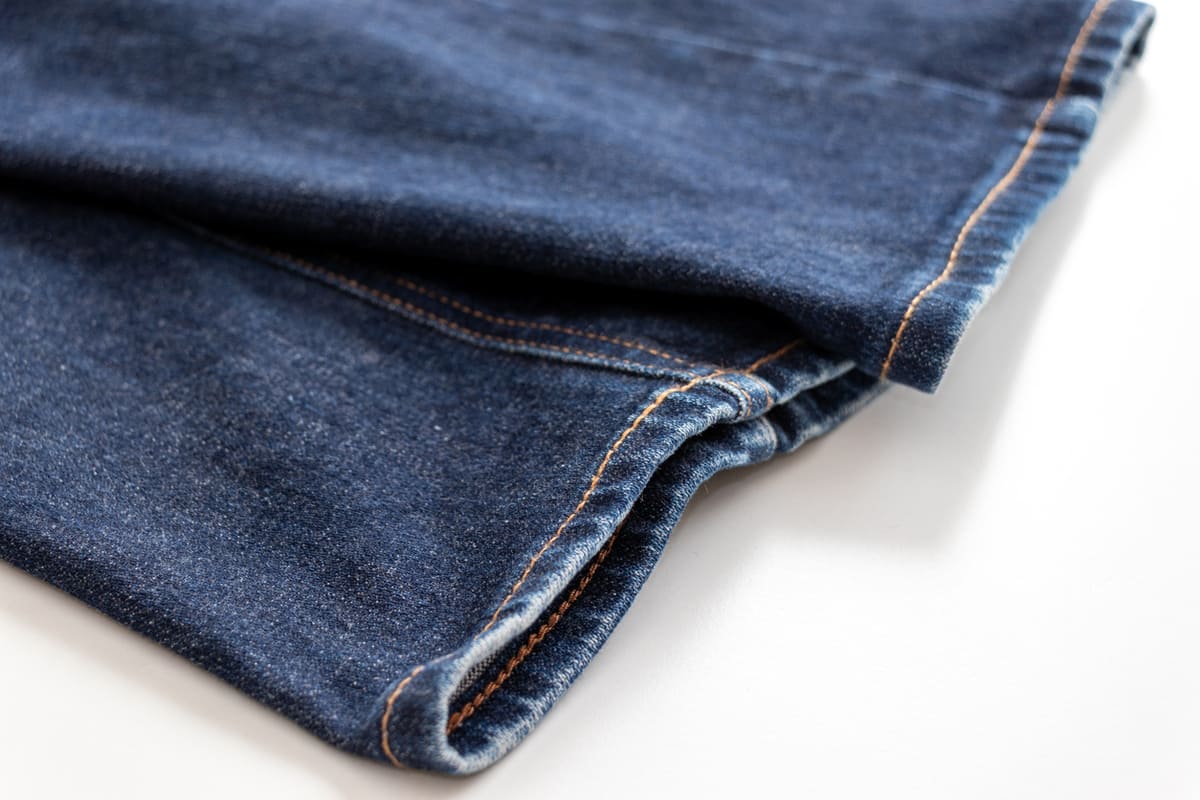
Let’s start with one of the most precise options: the single cuff. Ideally, you want the top edge of this cuff to line up just below the stitching of the hem. This particular fold is often used to show off the hem stitching, especially when it is the chain-stitched kind – a detail that denim enthusiasts consider a hallmark of quality construction.
Then there is the Japanese cuff, a two-step fold with real heritage appeal. It is a favorite among denimheads, those deeply dedicated denim collectors and connoisseurs. This style works perfectly when you have plenty of extra length or you want a slightly cropped look that sits above the shoe. It is deliberate, structured, and carries a certain quiet confidence.
On the opposite end of the spectrum sits the casual, slightly messy cuff. This one is meant to look a little undone, like you just got out of bed and didn’t overthink it. It works best with roomier fits, and it is perfectly fine for lightweight denims too. Not everything needs to be precise to look good.
For those who prefer a polished silhouette, the inside-out cuff stands apart. Unlike all the other methods, you don’t see the inside of the denim with this approach. Instead, you get a clean and more tailored look, and it works great with slimmer fits and darker denims. It is the kind of detail that reads as sophisticated without being fussy.
And then there is the mega cuff – a bold, wide fold that is genuinely hard to pull off with style. It usually requires a looser fit and some relatively heavy denim that will stay up on its own. It is not recommended for shorter guys, either, as it tends to make your legs look shorter. This one is reserved for those who know exactly what they are doing and have the frame to carry it.
How cuffing affects the life of your jeans
Here is something most people never consider: cuffing creates creases, and the fabric will get more wear along those creases. Over time, this makes the denim wear out quicker than the rest of the garment. This is especially the case with unwashed, raw denim, where the fabric has not been softened or pre-stressed by washing.
The easy fix is surprisingly straightforward. Change up your cuffs every once in a while. Try a different fold, switch from a single to a Japanese cuff, or let your jeans hang uncuffed for a few weeks. Your jeans will last a little longer, and you might discover a new style you actually prefer. It is one of those rare situations where variety is not just the spice of life – it is also practical garment care.
Understanding the difference between raw and selvedge denim can also help you make better decisions about which jeans to invest in and how to treat them. Factors like brand, weight, and fabric construction all play a role in how your denim responds to folding and everyday wear. Heavyweight denim, for instance, is a test of patience, comfort, and commitment, but it tends to hold a cuff more firmly than its lighter counterparts.
The detail that changes everything
What you now know is that a cuff is never just a cuff. It is a finishing touch that interacts with your fit, your fabric weight, and even the longevity of your jeans. Matching your fold to your silhouette keeps proportions balanced, while rotating your cuff style can prevent premature wear along those fold lines. The next time you pull on a pair of jeans that are a little too long, remember that you have more options than a single hasty roll – and each one tells a slightly different story.


