










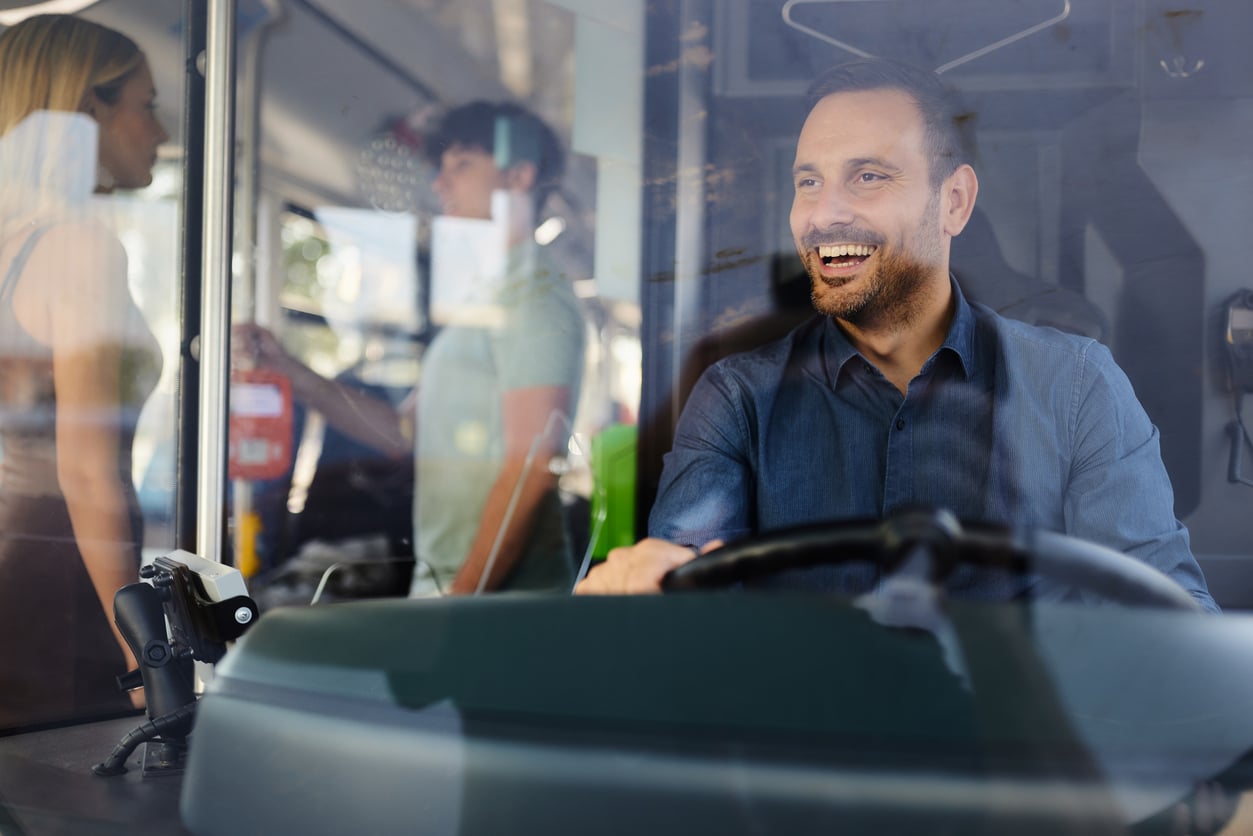
The doors open, the bus slows to a stop and, just before stepping off, some passengers turn toward the front and say “thank you.” Others walk out without a word. It’s a tiny gesture, but psychologists say it is worth a closer look.
In short
- Thanking the bus driver is a small courtesy, and Spanish psychology writers describe it as a form of “micro-kindness.”
- Studies show that gratitude makes people more willing to help others, even at a cost to themselves.
- Being thanked makes people feel socially valued, which doubled their willingness to help again in one experiment.
A one-second habit with a meaning
The gesture has been discussed widely in Spanish-language media, which describe it as one of those everyday “micro-kindnesses” that make people feel more connected. Thanking the driver acknowledges a person who is often invisible, even though their work gets dozens of people where they need to go.
The analysis comes with an honest caveat. As Okdiario points out, saying thank you does not by itself prove that someone is more empathetic, and a passenger who stays silent may simply be distracted or in a hurry.
What gratitude does to the person who feels it
Research on gratitude explains why the habit matters. In a 2006 study published in Psychological Science, Monica Bartlett and David DeSteno found that people who felt grateful made more effort to help others, even when helping was costly to them.
In other words, the people who notice the driver may also be the ones more likely to hold a door, give up a seat or help a stranger with a stroller.
What it does to the person who hears it
The other side of the exchange is just as interesting. In a series of experiments published in 2010, psychologists Adam Grant and Francesca Gino found that being thanked made people far more willing to help again. In one study, the share of participants who helped a second time rose from 32% to 66% when their first effort had been acknowledged, as Psych Central summarizes. The reason: feeling socially valued.
For a driver who hears dozens of thank-yous a day, that may be a small but real boost, and a reminder that the job is noticed by the people it serves.
Part of a bigger pattern
This is the same kind of everyday behavior psychologists love to decode, from people who help waiters clear the table to those who walk with their hands behind their back.
How to make it a habit
- Make eye contact, even briefly: it turns a reflex into a real exchange.
- Use the driver’s name if it’s displayed.
- Extend it to other invisible jobs, from delivery drivers to cleaning staff.
The limit
None of the studies cited here looked specifically at bus passengers, and a single gesture says little about someone’s personality on its own.
The bottom line
Thanking the bus driver takes one second. Science suggests it makes both of you a little more likely to be kind to the next person.


