










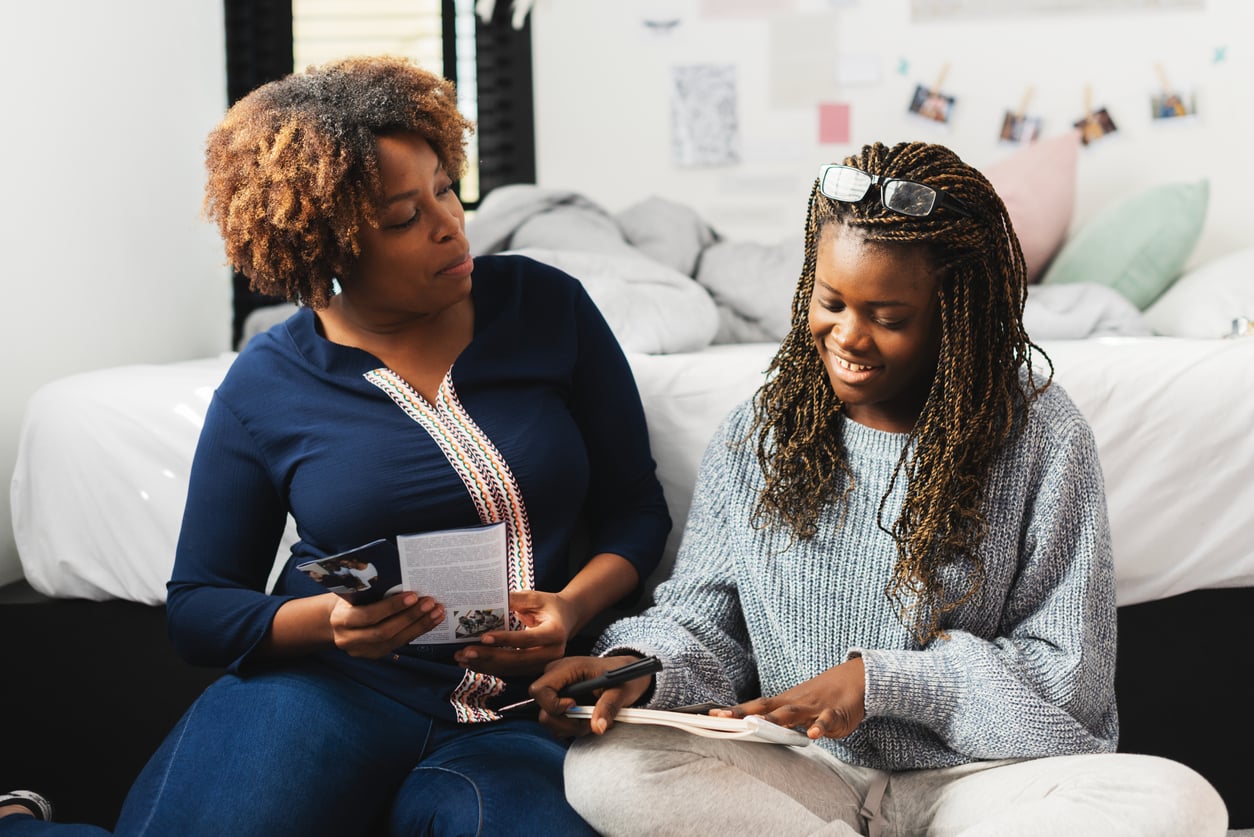
You ask a question, and before answering, the other person looks down at the table or away to the side. Many of us read it as shyness, discomfort or even dishonesty. Psychology suggests something else entirely: it is often a sign that the person is thinking.
In short
- Psychology articles widely shared in Spain argue that people who look down while talking often do it to take their time before answering, not out of shyness.
- A 2016 study found that eye contact makes it harder to find the right words on difficult tasks.
- Looking away may help the brain free up resources to think.
Picture this
You’re having coffee with a friend and ask her what she really thinks about her new job. She pauses, looks down at her cup for a second, then gives you a thoughtful answer. She wasn’t avoiding you. She was working out what to say.
Not shyness, but time to think
The idea has been circulating widely in Spanish-language media. As the newspaper El Economista puts it, psychologists agree that people who look down while talking to others “don’t do it out of shyness, but because they prefer to take their time before answering.”
In other words, the gesture is often a pause button. By breaking eye contact for a moment, the person gives themselves room to reflect before responding.
What a study from Japan found
Science supports the idea. In a study published in 2016 in the journal Cognition, researchers Shogo Kajimura and Michio Nomura asked 26 participants to come up with verbs linked to nouns they heard, while looking at a face on a screen.
When the face looked straight at them, participants were much slower, but only on the hardest version of the task. As the British Psychological Society’s Research Digest explains, the researchers concluded that eye contact drains general mental resources, leaving less capacity for difficult thinking. The same digest had earlier reported research suggesting that young children can benefit from being taught to look away when they think.
Why the brain needs a break
A face, and especially a pair of eyes, is one of the most demanding things the brain can process. Looking away for a second reduces that load, which may explain why so many people instinctively glance down when a question gets complicated.
It is the kind of everyday behavior psychologists love to decode, like thanking the bus driver or helping waiters clear the table.
How to read it better
- Notice when it happens: looking down before a thoughtful answer usually means reflection.
- Give the person a moment instead of filling the silence.
- Don’t use it as a lie detector: the gesture alone says little about honesty.
The limit
The 2016 study was small and measured performance on a word task, not real conversations. Looking down can also reflect fatigue, cultural habits or genuine discomfort, so context matters.
The bottom line
The next time someone looks down before answering you, don’t assume they’re shy. They may simply be giving your question the attention it deserves.


