










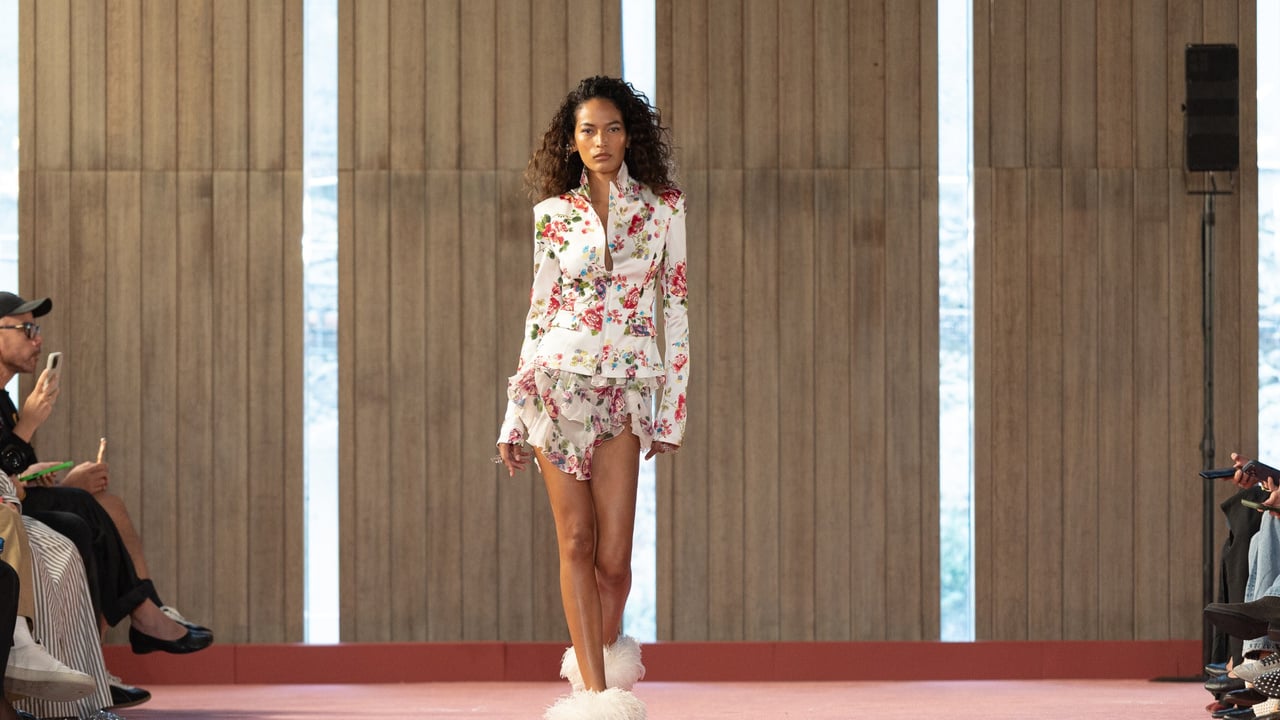
Two brands born twelve months apart met on a Milan runway last week, and the encounter was stranger than either résumé suggests. Blumarine opened in Carpi in 1977, founded by Anna Molinari alongside her husband Gianpaolo Tarabini. Her roses soon became a signature recognizable at fifty paces, and the house spent the following decades perfecting a particular brand of unapologetic femininity. Ugg, meanwhile, arrived a year later on the other side of the world. An Australian surfer named Brian Smith started selling sheepskin boots in California to men who needed warm feet after a cold session in the Pacific. One house therefore built an empire on glamour, while the other built one on pure physical comfort. Few pairings in fashion begin further apart. For spring 2027, however, David Koma decided the two vocabularies deserved a proper conversation. He took California heritage as his starting point, which is precisely where Ugg comes from, and filled the runway accordingly. Minidresses arrived heavy with feathers and crystal, followed by statement tulle and ruched skirts in lilac and yellow recalling the house’s roses. Irina Shayk opened the show in a ruffled black gown, and a baby blue version of the same dress then appeared on a dozen models afterwards. Tiered tulle skirts in powdery tones came styled with varsity shirts from the early 2000s. Ugg ruled Los Angeles during that same decade, worn with denim miniskirts, so the partnership looks far less improbable than it first appears. The shoes themselves were created exclusively for the show.
The Crystal Version of the Enwrap Clog
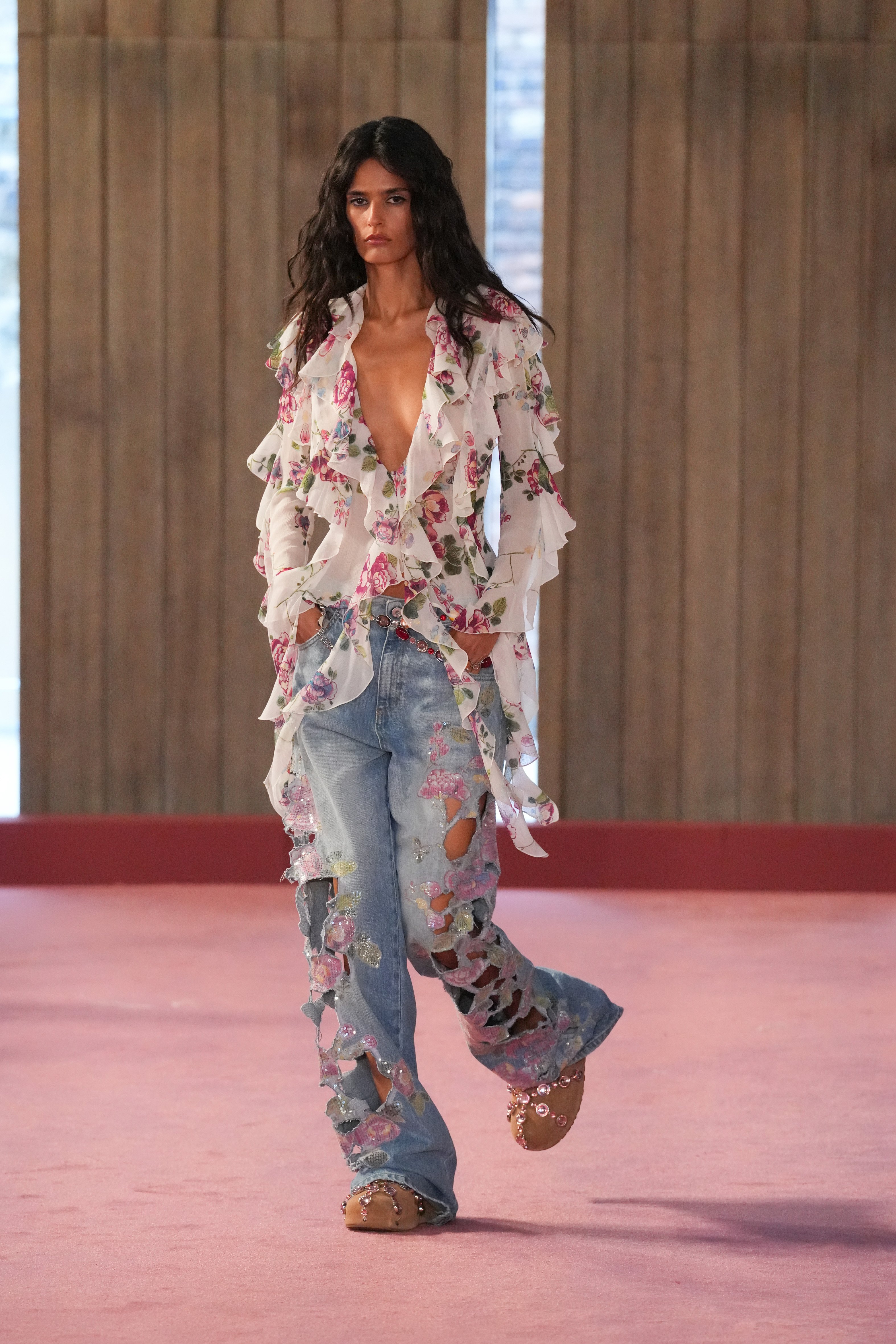
At the center sits the Enwrap clog, a slip-on with
suede wrapped around a low platform. The silhouette keeps its lines
clean, which is partly why it suited the exercise. It had already
appeared in the brand’s Born to Feel campaign with
Emily Ratajkowski. For Milan, Koma framed it with
a silver-galvanized metal structure that works like a cage. That
detail in turn echoes the jewelry running through the rest of the
collection. Across the frame he then scattered cabochon
stones in crystal, pink and multicolor.
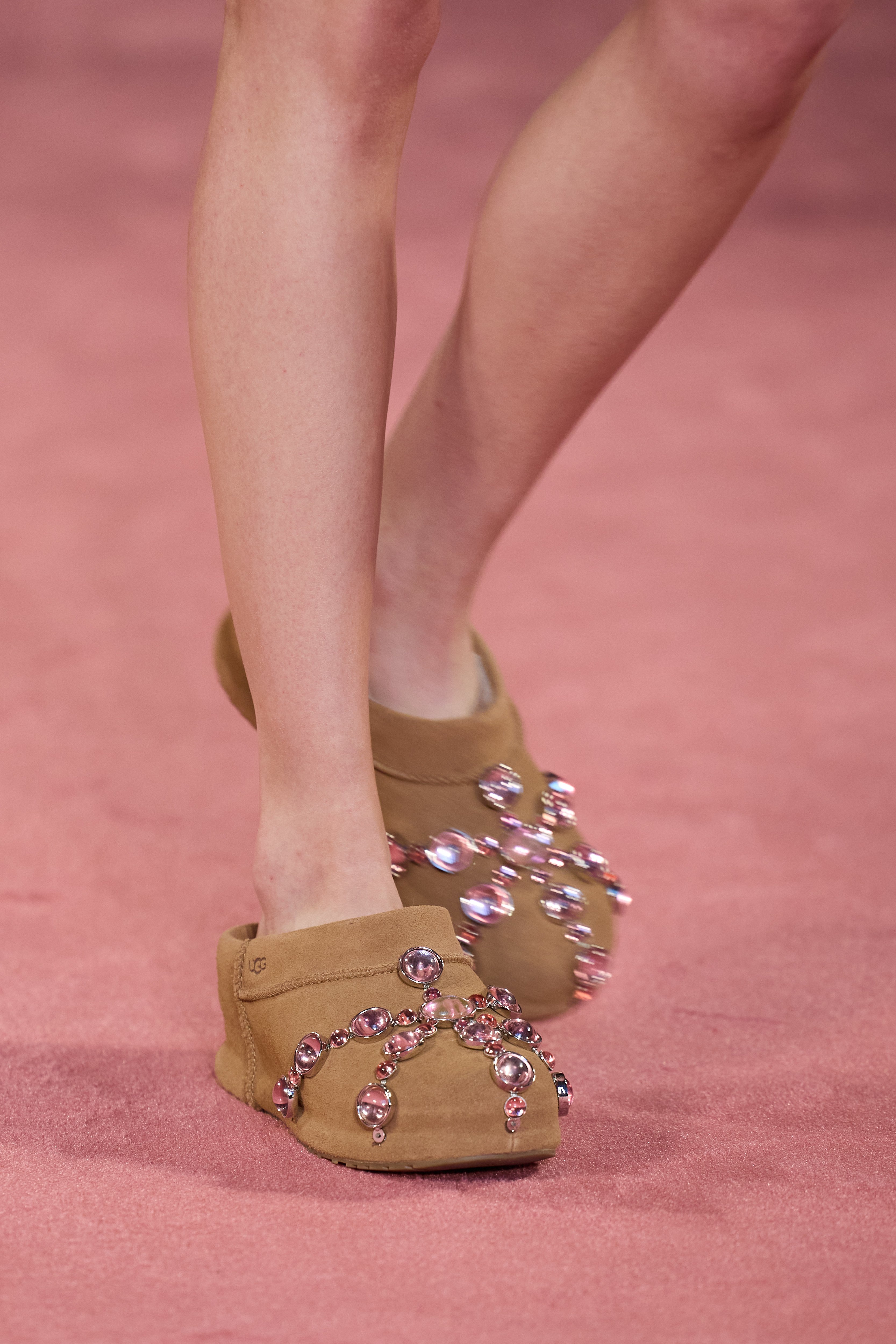
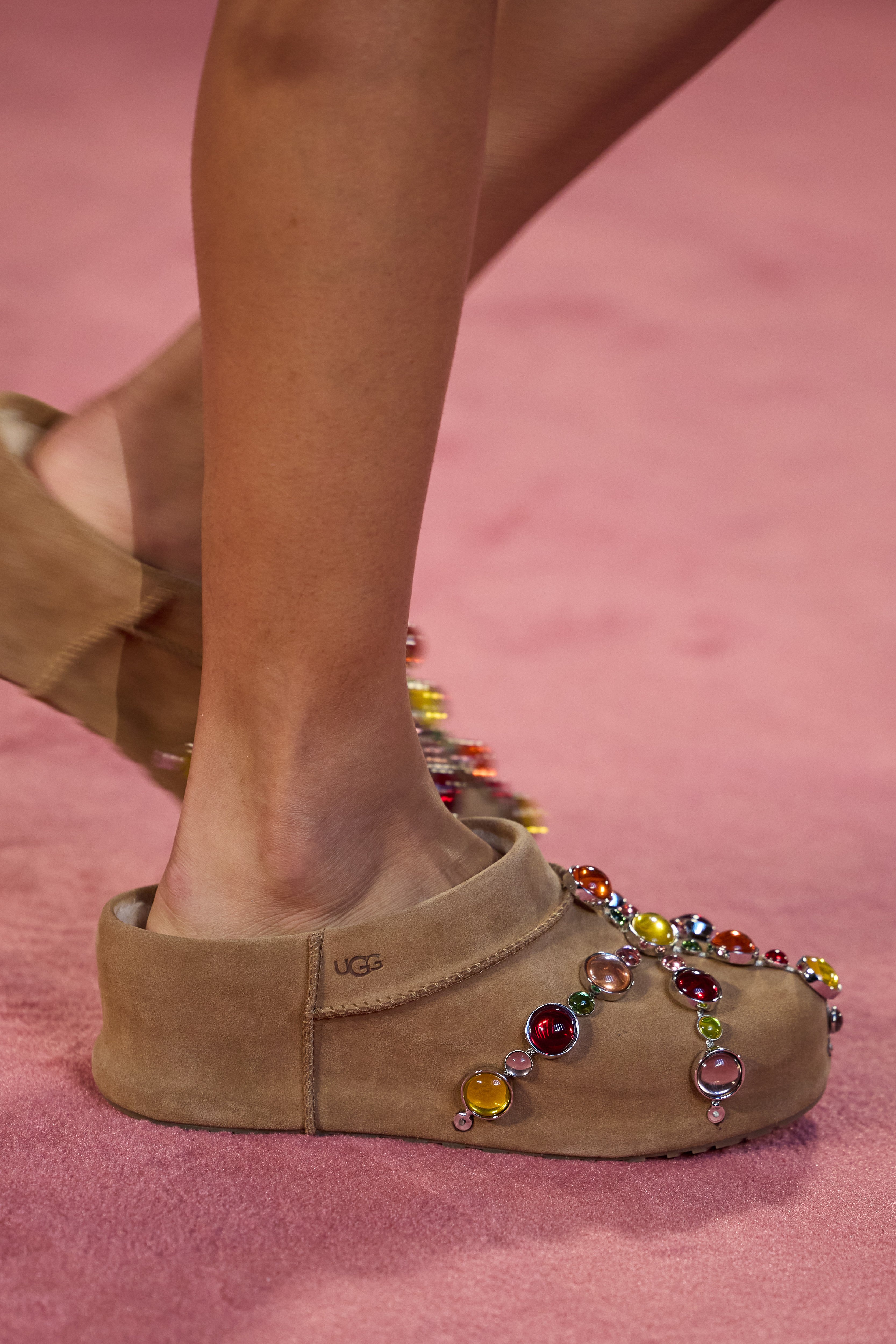
Cabochons are polished rather than faceted, so each one reads as a drop of water. Jewelers have favored the cut since antiquity, long before anyone learned to facet a gem. As a result, a shoe invented for warmth now resembles an ankle bracelet.
The Feathered Version of the Collaboration
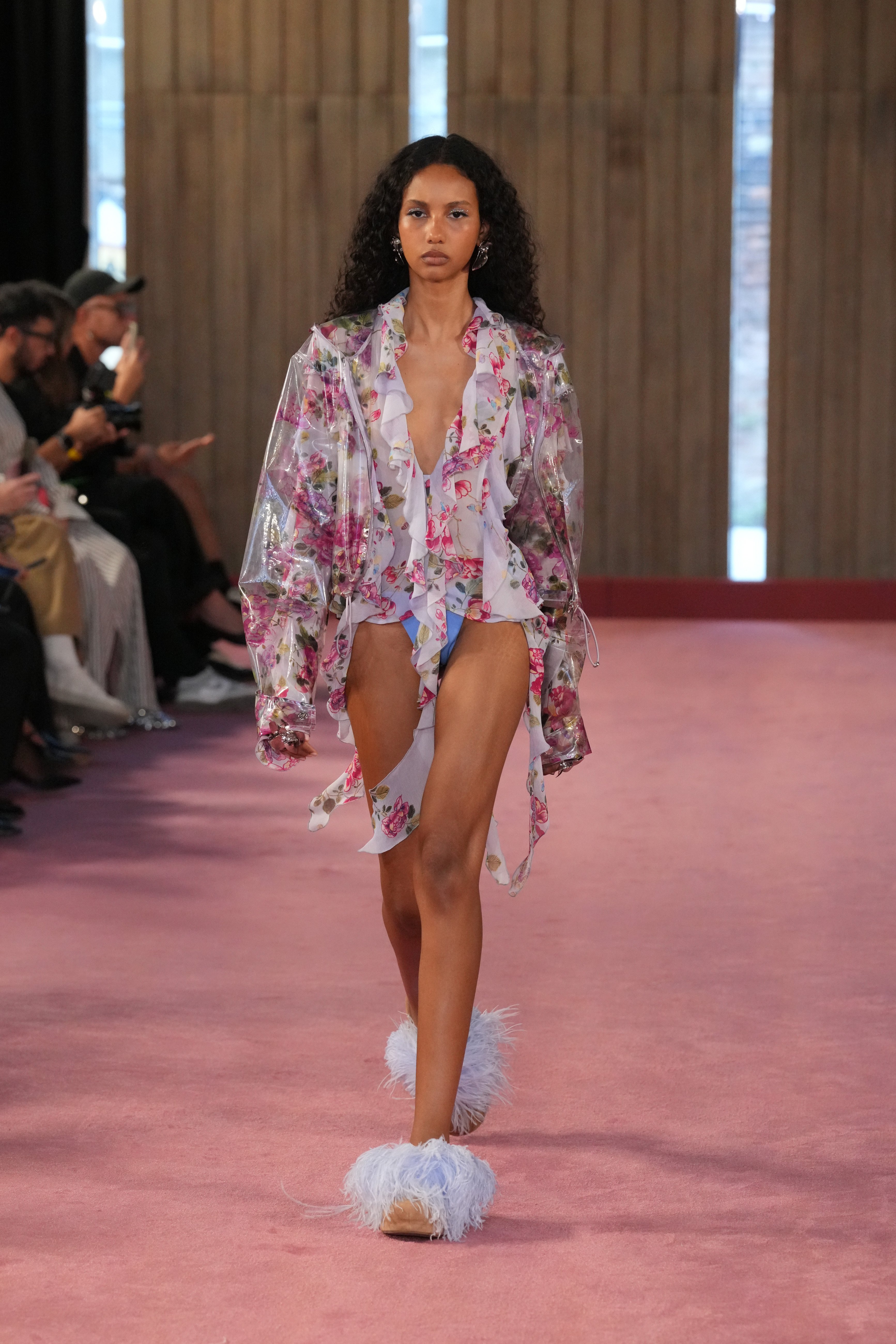
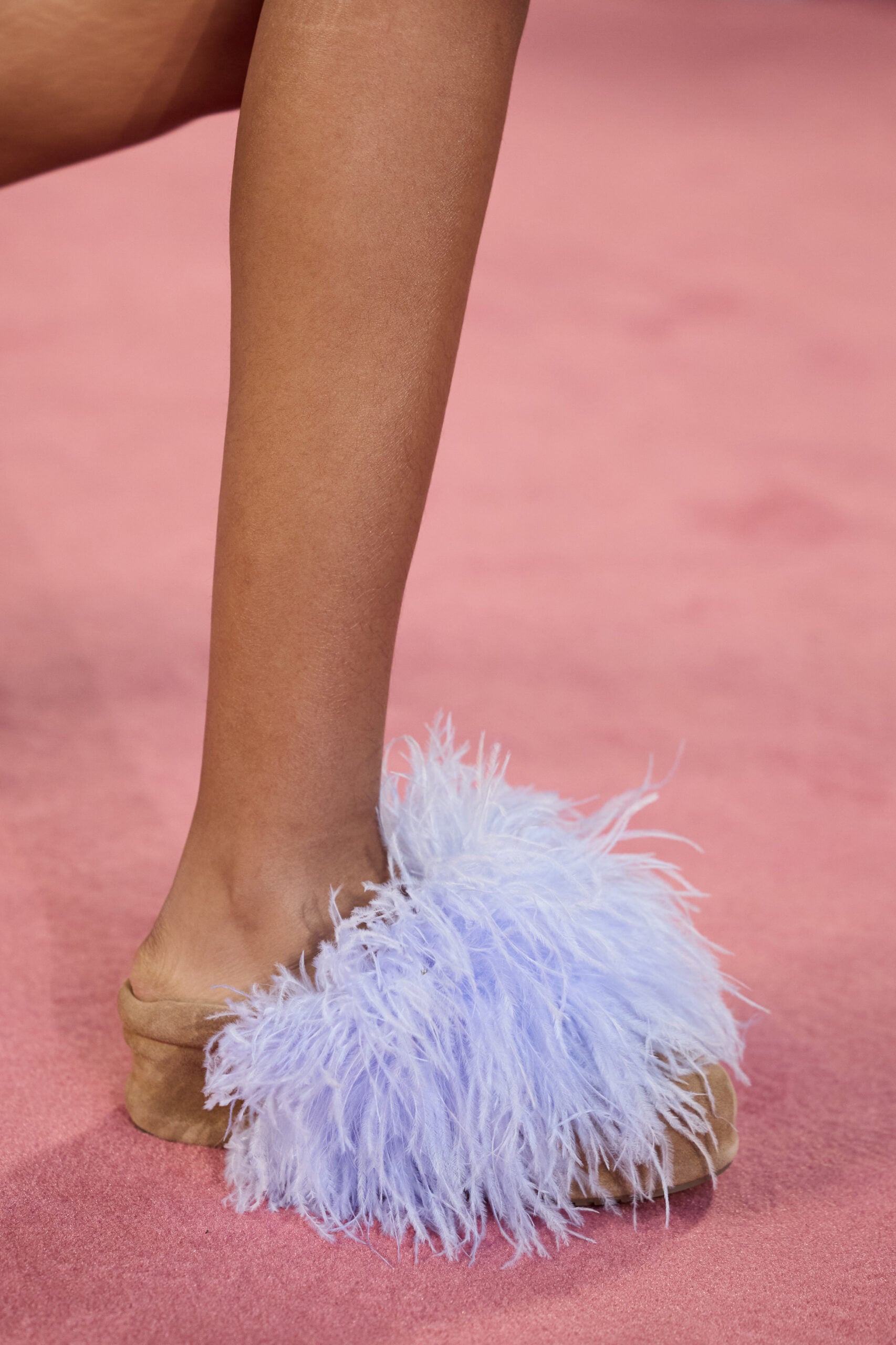
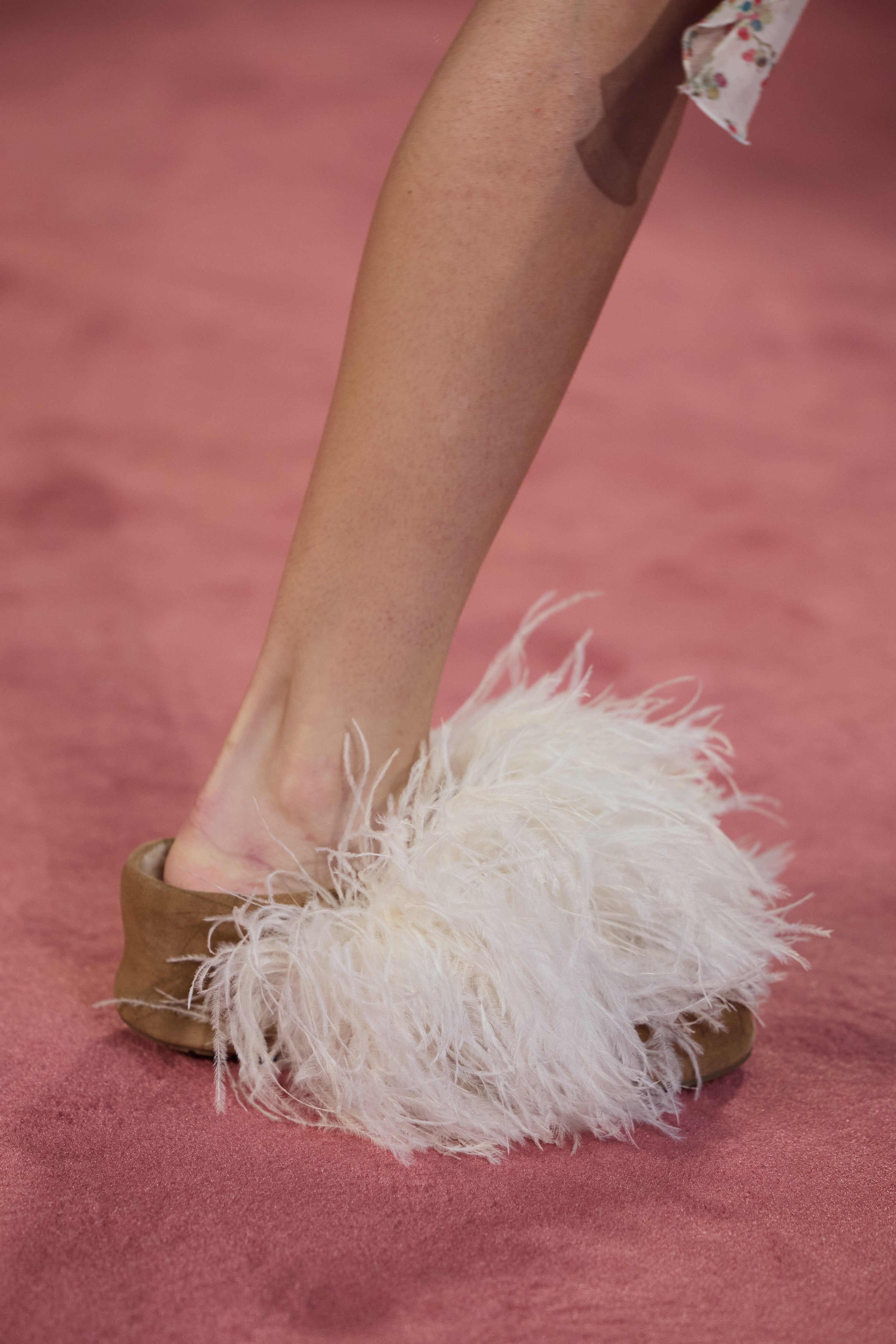
A second iteration instead swaps the stones for ostrich
feathers in natural white and palest lavender. Here,
naturally, the Blumarine instinct becomes unmistakable. Ostrich
behaves in a particular way on a runway, since it moves a beat
behind the body and keeps moving once the wearer has stopped.
Designers have exploited that lag since the Belle Époque, when
plumes arrived on everything from fans to hat brims. Every step
consequently acquires a small delay that reads as glamour.
Pair that quality with the sturdiest silhouette in the Californian wardrobe, and the contrast does the rest. Koma himself called the custom pieces delicate details meeting a more relaxed spirit. The logic holds because both houses trade in a kind of ease, though each arrives at it from an opposite direction. Somewhere a surfer from 1978 is looking at a feathered clog, meanwhile, deciding the century turned out stranger than promised.


