










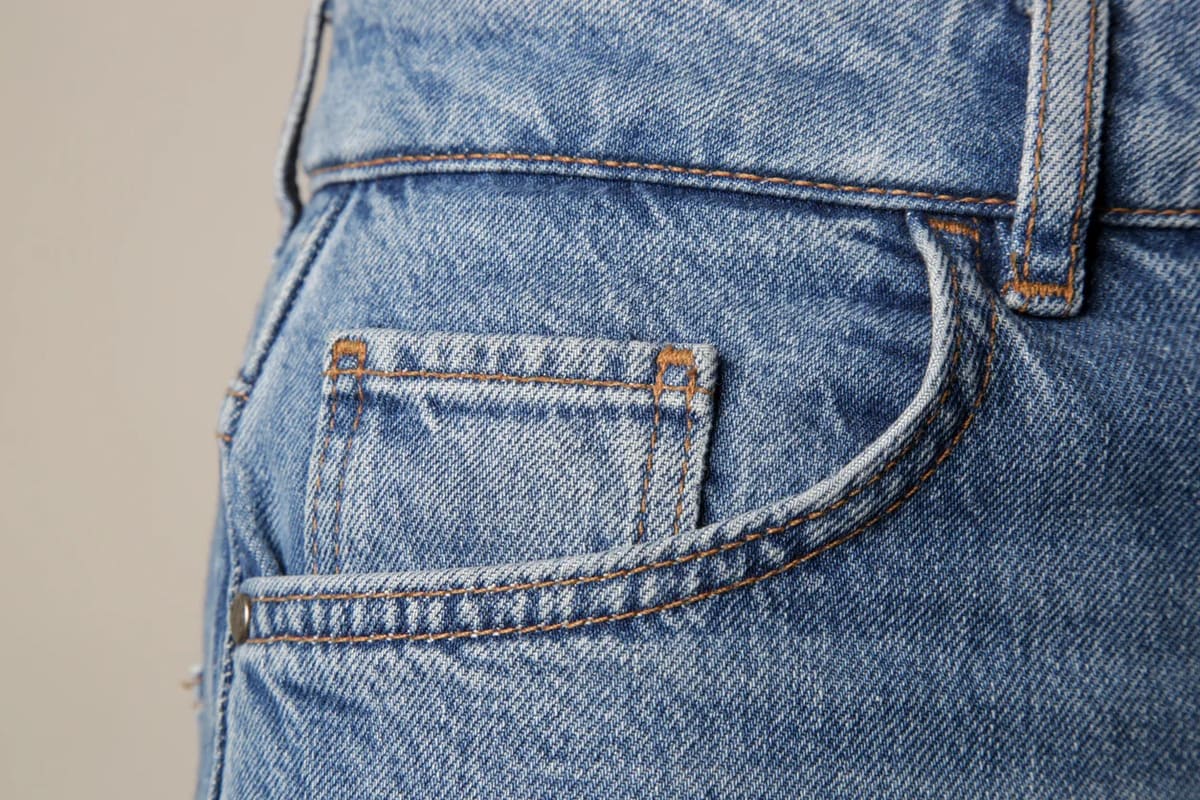
That tiny pocket in your jeans has been there for 200 years – and its original purpose has nothing to do with coins or lighters
You have definitely noticed it. That miniature pocket sitting inside the right front pocket of your jeans, too small for a phone, barely useful for a card, and seemingly designed to confuse everyone who reaches for it. Most people assume it’s decorative, or at best a convenient spot for a stick of gum. The real answer goes back nearly two centuries – and involves cowboys.
A 19th century problem, sewn into modern denim
The tiny pocket has a name that most people have never heard: the watch pocket, or “gousset” pocket in French. It dates back to the 1800s, when Levi Strauss first developed workwear denim for laborers and cowboys in the American West. At the time, pocket watches were the standard way to tell time – but they were also fragile, expensive, and easily damaged when worn on the wrist or left loose in a larger pocket during physical work.
The watch pocket was the solution. Small, secure, and positioned exactly where a cowboy could reach it quickly, it kept the watch protected during long days on horseback. The design worked so well that it stayed in the garment long after pocket watches disappeared from everyday life.
How Levi Strauss describes it today
Levi Strauss themselves have addressed the question directly on their website, noting that the pocket was originally designed to hold cowboys’ watches, and that today it can fit coins, cash, a lighter, a condom, or anything else small enough to slide in. The function has evolved – the pocket itself hasn’t changed at all.
It remains one of the few design features in modern clothing that has survived completely intact from its original form, across nearly 200 years and countless denim reinventions.
The bottom line
That pocket isn’t decorative, vestigial, or a manufacturing quirk. It is a 19th century watch-storage solution that outlived the watches it was built for. Next time someone asks what it’s for, you now have the full story – and it’s a considerably better one than “spare change.”


