










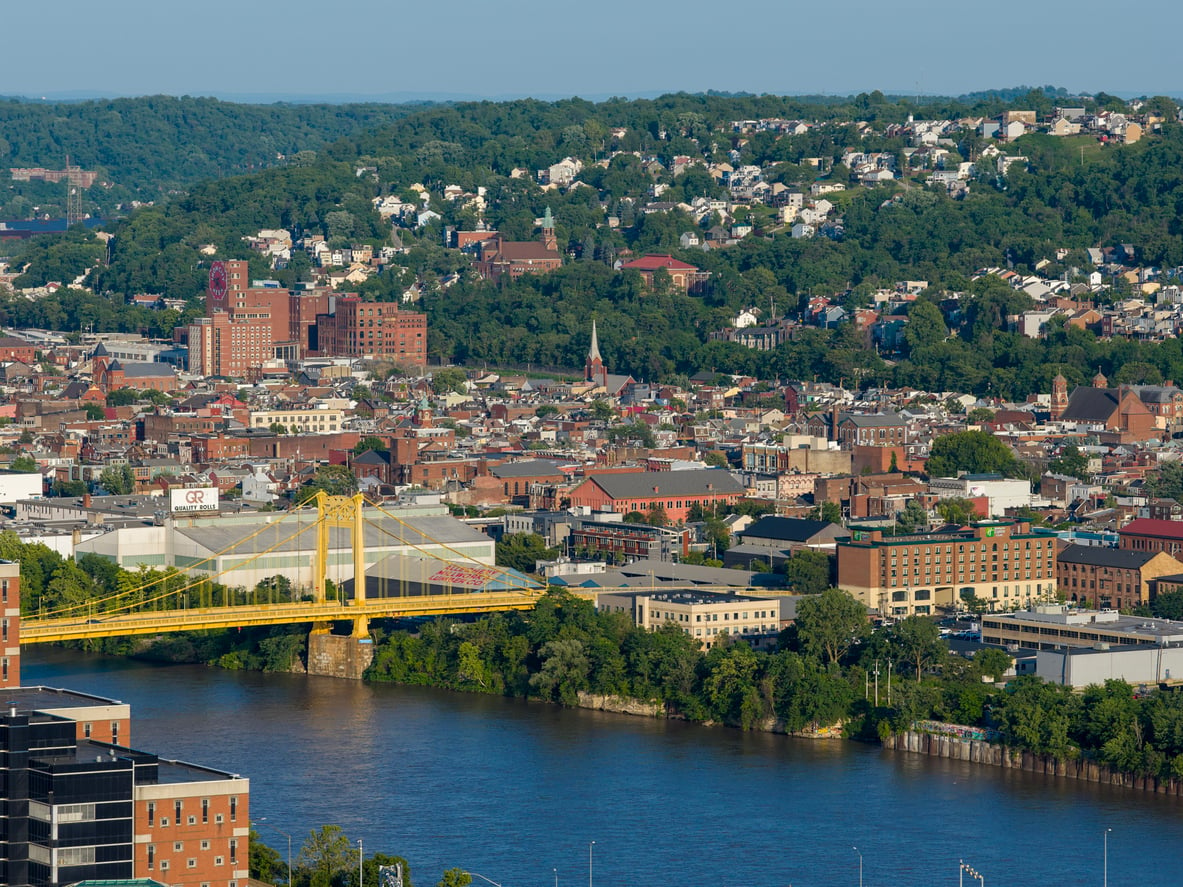
When you think of a day trip from Pittsburgh, your mind probably drifts to the usual suspects – a winery tour, a state park, maybe a scenic overlook you’ve already Instagrammed twice. But about a half-hour drive southeast of the city, sitting quietly at the confluence of the Youghiogheny and Monongahela Rivers, there’s a place most Pennsylvanians drive right past without a second thought. McKeesport once hummed with the energy of more than 55,000 residents during its 1940s peak. Today, its population hovers around 17,000, per the U.S. Census Bureau, and the town carries a story that stretches back to before the American Revolution – one that rewards anyone willing to slow down and explore.
A melting pot forged in steel
McKeesport is technically the second-largest of Allegheny County’s four officially designated cities, though its current size and feel put it closer to Pittsburgh suburbs like West Mifflin and Scott Township. The reason for the dramatic shift is the same force that built it in the first place: steel. For over a hundred years, the National Tube Works, one of the many production plants operating under the U.S. Steel umbrella, anchored the local economy.
Those mill jobs drew workers from around the world, turning McKeesport into a vibrant cultural mosaic. The town still honors that heritage every August with its International Village festival at Renziehausen Park, where visitors can enjoy dancing, music, and food representing the many cultures that call McKeesport home. But what if you’re not around in August? The good news is the town has plenty worth visiting year-round.
History you can walk through
George Washington himself stopped at the mouth of the Youghiogheny River in 1753 to visit Seneca ruler Queen Alliquippa – making him the first future American to set foot in the area. The first permanent settlers arrived in 1768, when the McKee family established a ferry business, giving the town its name: McKee’s Port. Early growth was driven by industry, beginning with coal mines in the 1830s. Steel followed after the first mill went up in 1851, and it remained the town’s main industry until the 1980s.
You can trace all of this at the McKeesport Regional History & Heritage Center, which houses seven rooms of exhibits covering Washington’s visit, the McKee family, and the steel boom years. Outside, you can tour the town’s first schoolhouse, dating to 1832. Admission is free on Tuesday, Thursday, and Saturday afternoons.
The historic architecture extends beyond the Heritage Center. The Carnegie Library of McKeesport, funded by industrialist Andrew Carnegie, features a grand stone exterior designed by architect William J. East and first opened in 1902. The Bank of McKeesport Building at the corner of 5th Avenue and Sinclair Street was completed in 1891. Railroad enthusiasts should seek out the McKeesport Connecting Railroad Bridge, also known as the Riverton Bridge. Built in 1891, this two-span truss bridge over the Monongahela River was retrofitted for pedestrians in 2008 and now serves travelers on the Great Allegheny Passage rail-trail. Follow the GAP trail west along the river and you’ll even spot an abandoned 1906 roundhouse.
Trails, gardens, and birdsong
McKeesport sits along the Great Allegheny Passage, an epic 150-mile trail through state parks and historic sites. From here, you can ride northwest to Pittsburgh, about 16 miles away, or head south for over 100 miles until you cross the border into Maryland. The town also connects the GAP Trail to the 47-mile Montour Trail via the 5-mile Clairton Connector, which eventually leads as far as the hidden Montour Woods nature preserve outside of Pittsburgh.
Closer to town, the 205-acre Renziehausen Park is a destination in its own right, especially in summer when over 1,800 flowers bloom in the Renzie Rose Garden, a community-maintained arboretum established in 1938. The Garden Club of McKeesport tends the park’s butterfly garden and herb garden and hosts five teas between May and October, serving elegant Victorian fare surrounded by colorful blooms. Anglers can cast their lines at Lake Emilie, typically stocked with trout for the start of trout fishing season in early April, alongside carp, channel catfish, and largemouth bass.
For something wilder, head a few miles south to Dead Man’s Hollow Conservation Area. This densely wooded preserve is crossed by 8 miles of trails and is particularly appealing for birders – more than 130 species have been spotted here, including migrating songbirds like Kentucky Warblers and Yellow-Throated Vireos that aren’t commonly seen in the region. You can also find the remains of a century-old pipe factory and a 19th-century quarry woven into the greenery.
Why McKeesport deserves a spot on your list
This is a town where George Washington once walked, where immigrants from around the globe built a community around molten steel, and where over 1,800 roses still bloom every summer in a garden volunteers have tended since 1938. You can hike 150 miles of trail, spot rare warblers, fish for bass, and tour a schoolhouse that predates the Civil War – all within a half-hour drive of downtown Pittsburgh. McKeesport isn’t waiting to be discovered. It’s waiting for you to finally show up.


