










You spot it one morning in the bathroom mirror – a silvery strand catching the light at your temple. Then another. Then a whole cluster near your part. Your first instinct might be to reach for the box dye or book an emergency salon appointment. But what if there were a smarter, subtler way to work with those grays rather than frantically trying to cover every last one? The conversation around aging gracefully has intensified this year, fueled in part by Kris Jenner’s controversial interview comments and a wave of not-so-secret celebrity facelifts. Yet while the cosmetic-treatment debate continues, our collective attitude toward embracing silver strands has quietly shifted – and a precision coloring method is making that shift far easier to navigate.
Why the leap from dyed hair to silver feels so daunting
More women than ever are choosing to eschew hair dye and let their grays shine. It is genuinely heartening to see a new generation embracing their natural color, and worth remembering that going gray is not reserved exclusively for those of a more mature age. Women in their thirties are discovering silver strands just as readily as women in their seventies.
In practice, though, the transition from colored hair – whether your natural shade or a long-standing dye job – to full gray is anything but simple. If you have been covering your roots every few weeks for years, the idea of suddenly stopping can feel overwhelming. Where do you even begin? And how do you avoid that awkward grow-out phase that makes so many people abandon the process entirely?
That gap between intention and execution is exactly where a technique known as gray blending comes in. It is designed for anyone who wants to start the journey toward their natural color but needs a roadmap – and a professional hand – to get there gracefully.
How gray blending actually works
Sarah Bower, one of the leading specialists in gray blending who offers the service at Larry King salons, describes it as a precision hair coloring technique that seamlessly integrates your grays with your natural hair color. The goal is to soften the appearance of silver strands so they look more natural rather than stark or jarring.
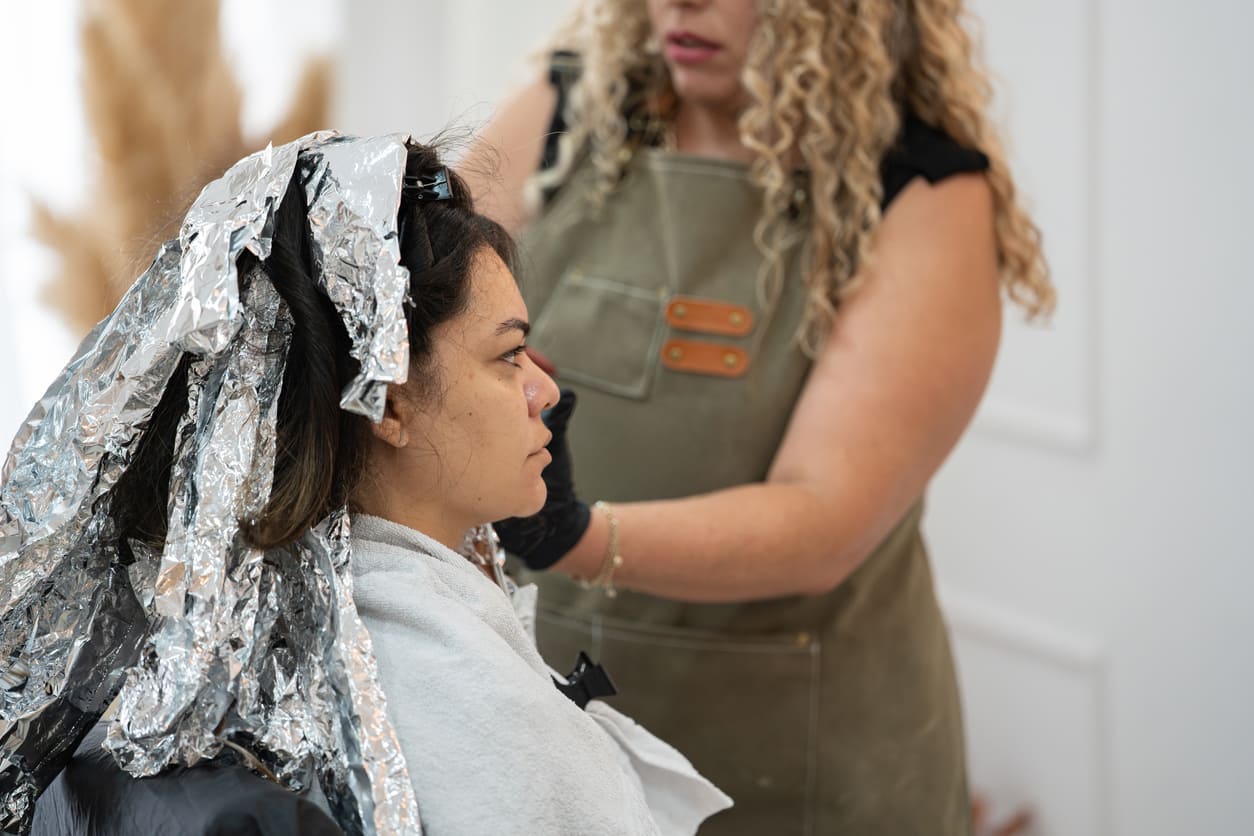
During an appointment, a colorist uses highlights or lowlights – sometimes both – to create a look that minimizes the visual impact of grays while still allowing them to show through. Instead of covering them up entirely, the technique makes them appear more subtle and dimensional. Think of it less as hiding and more as harmonizing.
What makes the process genuinely bespoke is the consultation stage. Your colorist will evaluate your lifestyle, hair type, and how much gray you ultimately want to reveal. A few scattered silvers require a different strategy than a full head of gray, and Bower notes that different techniques can be deployed to create a personalized result you feel comfortable with.
Multiple sessions are often required to reach the most natural finish, depending on your hair’s starting point and how much or how little coverage you are looking to achieve. If there is a definitive contrast between your current color and your incoming gray – for instance, if your hair is dyed brown or black – the process may be considerably longer. Your colorist should be able to give you a realistic appraisal during the initial consultation of what kind of look is attainable and how many visits it will take.
Maintaining the look between salon visits
One of the biggest advantages of gray blending is that it is inherently low-maintenance. Bower’s guiding philosophy is that less is more: fewer salon visits and longer stretches between appointments are typically the norm, because the entire aim is to create a look that does not demand constant upkeep.
That said, there are adjustments you can make at home to extend the life of your new shade. Neutralizing warmth is a significant part of the process, so a gloss or toner applied between salon sessions is often recommended. Adding a violet toning shampoo to your wash-day rotation can also help counteract brassiness, keeping your blend looking cool-toned and fresh rather than yellowed.
These small routine tweaks go a long way. Rather than scheduling a color appointment every four to six weeks, you may find you can stretch intervals considerably – saving both time and money while still looking polished.
A new way to think about silver strands
Gray blending reframes the entire conversation around going gray. It is not about surrendering to something or hiding from it. It is about meeting your hair exactly where it is and guiding the transition on your own terms. Whether you are noticing your very first silvers or you are well into the process, this technique offers a path that feels intentional rather than haphazard.
What you know now that you might not have before: embracing gray does not have to be an all-or-nothing decision. A skilled colorist can soften the contrast, add dimension, and create a result that evolves naturally over time. The takeaway is refreshingly simple – your grays can look beautiful from the very first appointment, and the journey only gets easier from there.


