










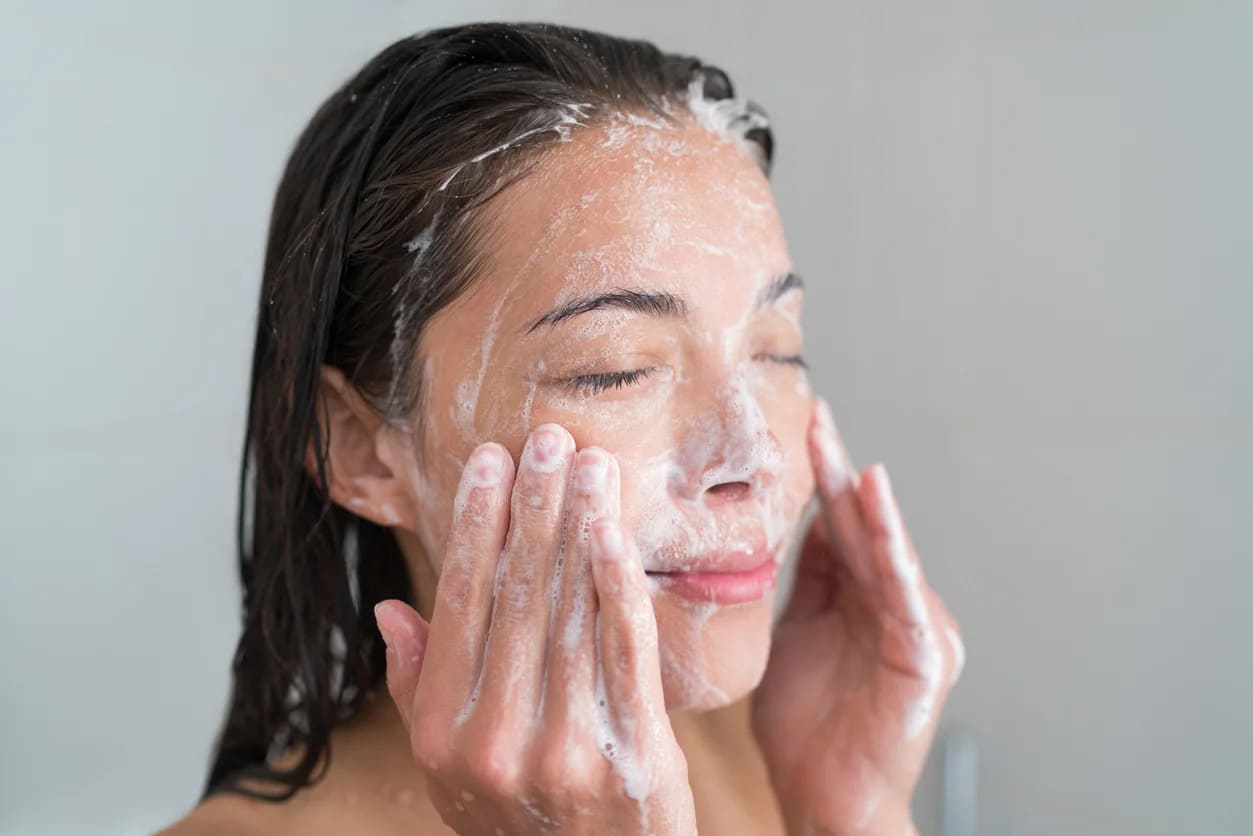
You probably splashed some cleanser on your face this morning, rubbed it around for a few seconds, and rinsed it off without a second thought. Most of us do. In fact, the average person spends roughly 15 seconds washing their face – barely enough time to cover every zone from forehead to jawline. But what if slowing down that one daily habit could change the way your skin looks and feels? A viral cleansing method created by a licensed esthetician suggests exactly that, and two years after it took social media by storm, people are still getting the details wrong.
Why your quick rinse might not be cutting it
Licensed esthetician and skincare influencer Nayamka Roberts-Smith, known as @LaBeautyologist on Twitter and Instagram, introduced what she called the 60 second rule. The concept is disarmingly simple: wash your face using only your fingers for a full 60 seconds. That is the entire method. Roberts-Smith created the rule to help people get more out of a product we already rely on morning and night – our cleanser.
The hashtag #60SecondRule went viral, and in the two years that followed, the original idea picked up countless personal twists. Some helpful, some not. The core message got diluted along the way, but the principle remains the same. Sixty is not a magic number. The real point is to slow down and pay genuine attention to how you cleanse, making sure every section of your face – forehead, cheeks, nose, chin – actually gets touched by the product. So why are so many of us still rushing through the most basic step in our routine?
The right (and wrong) way to try it
Not every cleanser pairs well with a full minute of contact time. Oil cleansers, foaming cleansers, and hydrating cleansers tend to be the best candidates. Exfoliating cleansers and facial scrubs, including those with chemical exfoliants like AHAs and BHAs as well as physical exfoliants such as granular scrubs, are generally not meant for everyday use. If your skin starts looking shiny but not oily, or you notice redness, tightness, or dryness, those are telltale signs of over-exfoliation.
There is a nuance worth noting. Some BHA cleansers – those containing salicylic acid, for instance – might be gentle enough for daily use, but your skin could still be too sensitive to tolerate a full minute of contact before rinsing. Reading the directions on your product label matters here, and so does trusting what your skin tells you.
Equally important is what you use to apply the cleanser. Roberts-Smith specifically recommends fingers only. Rotating brushes, silicone scrubbers, and facial sponges are all forms of physical exfoliation, and they tend to be too harsh for a daily 60-second session. Using those tools a few times a week is fine, but twice a day for a minute each time is overkill. A gentle touch with your fingertips is exactly how cleansers are designed to be used – pressing too hard can damage your skin and may even make breakouts worse.
Does spending more time actually improve your skin?
Roberts-Smith has suggested that washing for 60 seconds can improve skin texture, unclog pores, and reverse hyperpigmentation. That is likely an oversimplification – simply extending your cleansing time does not guarantee better skin on its own. But there are a few reasons your complexion might benefit.
First, some makeup contains comedogenic ingredients, meaning they can potentially clog pores. If that makeup is not fully removed, breakouts can follow. A more thorough cleanse naturally improves removal, though it is worth checking that your cleanser itself is free of pore-clogging components – otherwise, you are just trading one problem for another. Ingredients like sodium lauryl sulfate, for example, can irritate skin, so tools like the cosDNA test can help you screen your products.
Second, rushing through a wash often means missing certain areas entirely. Giving yourself a full minute lets you address each zone of your face individually, which could help clear up breakouts in spots you have been neglecting. Third, if your cleanser contains active ingredients – topical zinc, for instance, which may suppress sebum (oil) delivery – keeping it on your skin for a full 60 seconds before rinsing could help decrease excess oil. A bar soap with zinc pyrithione left on for that duration might offer that benefit. Still, cleansers with active ingredients are generally best used a few times a week, alternating with a gentle formula.
How often you cleanse matters too. Twice daily, morning and night, is the most common recommendation, but if mornings are not your thing, a thorough nighttime cleanse is the most critical step. That is when you clear away the dirt and grime that accumulates throughout the day. If breakouts are a concern, even just splashing water on your face in the morning can help. For makeup removal, the process often takes longer than 60 seconds and may require more than one product – micellar water and oil cleansers are both popular first steps.
What to take away from all of this
The 60 second rule is not a cure-all, and it was never meant to be. What it does is force you to slow down and turn an autopilot habit into an intentional one. You now know that your fingers are the only tool you need, that exfoliating cleansers should not be part of this daily ritual, and that ingredient-checking is just as important as technique. The simplest upgrade to your skincare routine might just be giving it an extra 45 seconds of your attention.


