










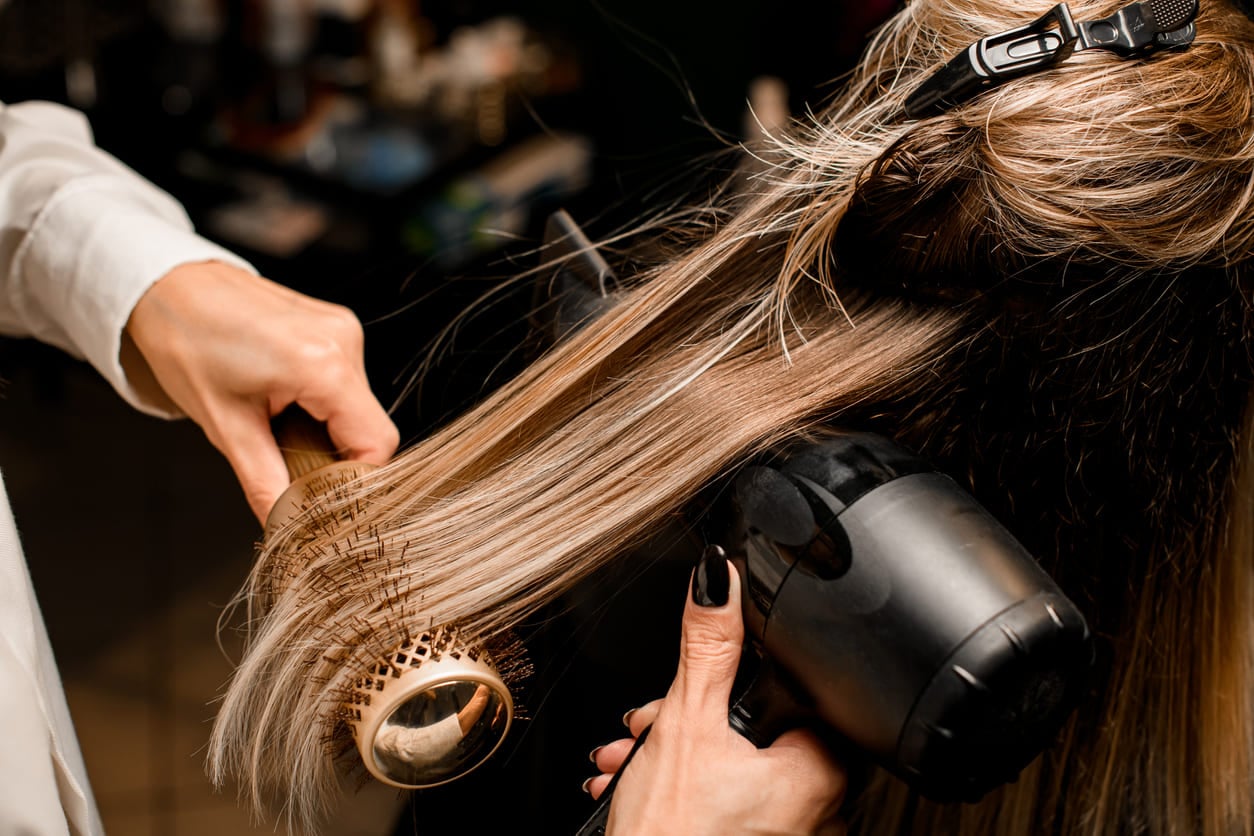
You have probably scrolled past it a dozen times this week – that perfectly bouncy, full-bodied hair that looks like it belongs on a 1990s supermodel runway. Maybe you have even tried to recreate it at home, only to end up with limp ends or frizz that refuses to cooperate. The truth is, the voluminous blowout you keep admiring is not reserved for people with naturally straight or thick hair. It is also not as complicated as it looks. According to two of the industry’s most respected hairstylists, the real secret lies not in a single product but in a method – and one that works across every hair texture, length and density.
Why the bouncy blowout is back – and bigger than before
Volume has officially reclaimed its place in the hair conversation. Bounce is no longer optional. And yet, this time around, the revival feels different from the decade that originally made it famous. Paul Mitchell Artistic Director Paula Peralta, a leading expert in curly hair and hair color, along with celebrity hairstylist Justi Embree, both point to a critical shift: modern blowouts are more inclusive than ever.
Embree sees the blowout not as a single hairstyle but as a technique – one that can be adapted to any texture, length or density. The earlier iterations of the look were largely built around straighter hair, but the current wave embraces every texture in the mix. So whether your strands lean wavy, coily or pin-straight, the approach remains the same. The only variable is how you customize it for your own hair.
There is also a subtle but important difference in where the volume lives. Back in the 90s, the goal was sky-high lift at the roots. Today, according to Embree, the volume starts more at the mid-shaft. The result still looks polished, but it carries an effortless quality that feels thoroughly modern.
The step-by-step method that makes it work
Getting the look right starts well before you pick up a dryer. The foundation is a properly prepped canvas, and that begins in the shower. A clarifying shampoo like Paul Mitchell Shampoo Two resets the hair without stripping it, removing buildup so the strands can actually respond to styling. Following that with a hydrating formula like Tea Tree Lavender Mint shampoo and conditioner restores the moisture your hair needs to stay smooth and cooperative under heat.
Once you step out of the shower, the next move is applying Paul Mitchell Super Skinny Serum, which acts as a blowout primer. It speeds up dry time while offering heat protection up to 450°F. The lightweight silicones in the formula smooth the cuticle to deliver a silky, frizz-free finish without weighing the hair down. Think of it as the invisible scaffolding that holds the entire style together.
From there, the dryer you choose matters more than you might think. The Paul Mitchell Neuro Dry+ Folding Professional Hair Dryer delivers high-velocity airflow with even heat distribution, cutting down dry time while controlling frizz for up to 24 hours. Its compact, dual-voltage design makes it just as effective at home as it is while traveling. Peralta emphasizes that the right dryer does not merely speed up the process – it gives you control, allowing you to direct the hair and create a smooth, polished finish with less effort and less heat.
For shaping the actual blowout, Peralta recommends the Express Ion Round Brush, which is designed for all hair types and lengths. It comes in four barrel sizes, each suited to a unique hair type, length and style, so you can choose the one that best matches your strands.
Lock it in: the finishing step most people skip
Here is where many at-home blowouts quietly fall apart. You have done the work – prepped, dried, shaped – and then you skip the seal. Peralta recommends finishing with Paul Mitchell Hot Off The Press Heat Protectant. It offers thermal protection up to 450°F and delivers a flexible hold with humidity-resistant, frizz-fighting properties. It is not about locking the hair into a rigid shape. It is about giving the style staying power while keeping it touchable and natural-looking. Consider this the final layer that keeps your blowout intact through the day, regardless of weather or movement.
This finishing step also doubles as additional insurance if you plan to use any hot tools for last-minute touch-ups. Because it resists humidity, you are far less likely to see your bounce deflate the moment you step outside.
Your new blowout playbook
The most important takeaway here is a reframe. A blowout is not a look that belongs to one hair type. It is a method, and once you understand the sequence – clarify, hydrate, prime, dry with control, shape with the right brush, and seal – the bouncy, voluminous finish becomes genuinely achievable at home. You do not need salon-exclusive skills. You need the right technique and the discipline to follow each step. The 90s gave us the aspiration. The updated version gives us the access.


