










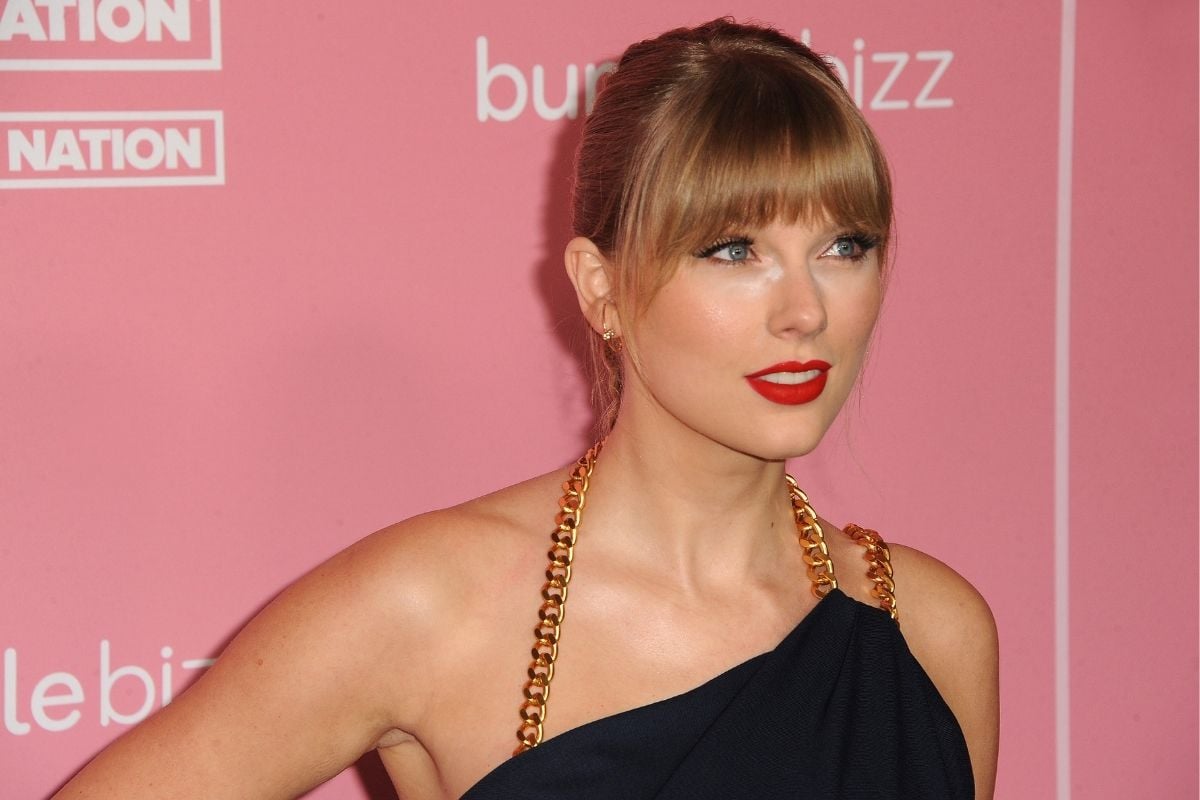
You walk into a museum expecting dusty glass cases and velvet ropes. Maybe a few interactive screens if you are lucky. Rarely do you expect a space built specifically so that teenagers, senior citizens, and young artists with disabilities can actually create something on site. Yet that is exactly what is unfolding inside Nashville’s Country Music Hall of Fame right now, and the person who made it possible is someone you probably already follow on your phone.
How a pop star’s donation reshaped a Nashville landmark
The Taylor Swift Education Center exists as part of a sweeping $75 million expansion of the Country Music Hall of Fame. Swift’s contribution helped the museum unlock new programming capacity it simply did not have before. Museum director Kyle Young explained to Billboard that the institution already did education well, but the funding would allow it to do what it does better, serve more people, and develop entirely new programs.
What makes this story more than a standard celebrity-writes-a-check headline is what came next. Young noted that as they discussed the opportunity with Swift, she expressed a clear desire to remain involved in an advisory capacity. His assessment was blunt: is there a better person out there who is in touch with a young audience? He said he thought not, joking that the museum should be paying her for that role – though he quickly clarified he was only joking.
The center now hosts workshops designed for teens and senior citizens, bridging generational gaps through music education and, as the expansion promised, showcasing creative work by children and artists with disabilities. So what does it look like when a musician stays engaged long after the wire transfer clears?
Beyond the check: Swift’s evolving cultural footprint
The education center is not the only arena where Swift’s influence has been making waves. Her dominance on the charts has been nothing short of historic. In 2025, Taylor Swift notched 10 Top 10 singles. To put that in perspective, no Australian song even hit number one that same year. In fact, an Australian single failed to crack the Top 20 at all, believed to be the first time in chart history that a homegrown hit had not reached that threshold.
That kind of commercial clout is precisely why her advisory voice matters to an institution like the Hall of Fame. She understands what resonates with younger listeners in a way that few legacy organizations can replicate on their own. And her creative output keeps evolving. Swift released I Knew It, I Knew You, her first new original song since 2025, written for Disney and Pixar’s Toy Story 5 and inspired by Jessie’s storyline in the long-running animated franchise. The track followed her 2025 project The Life Of A Showgirl and confirmed she is still actively writing and recording original material for major cultural tentpoles.
Meanwhile, her personal life has drawn its own iconic musical moment. Paul McCartney reportedly performed The Beatles’ breakthrough American hit I Want To Hold Your Hand live for the first time in more than six decades during Taylor Swift and Travis Kelce’s wedding reception in New York, reviving one of the defining songs of Beatlemania for an intimate audience. When a Beatle dusts off a song he has not played live in over 60 years just for your wedding, it is fair to say you occupy a singular space in the pop culture ecosystem.
The bigger picture: why music access matters now more than ever
All of this unfolds against a backdrop where attending live music has become dramatically more expensive. The cost of concert tickets has transformed over the past four decades, with arena and stadium prices now outpacing inflation at a rate few other entertainment sectors can match. In the mid-1980s, a major concert ticket typically cost between $12 and $15. In 2026, premium tickets for the world’s biggest tours regularly exceed $500, while VIP packages can stretch beyond $1,000.
That shift has fundamentally changed not only the economics of touring but also the behavior of audiences in North America and beyond. When a single ticket can run into four figures, free educational programming inside a museum becomes something more than a nice perk. It becomes one of the few remaining entry points for young people and older adults who want to engage with music culture without a financial barrier.
The new programs and workshops at the Taylor Swift Education Center speak directly to that gap. Teens who might never afford a stadium seat can walk into the Hall of Fame and participate in hands-on creative work. Senior citizens who grew up in an era of $12 concert tickets can share that history with a new generation. And artists with disabilities gain a visible platform inside one of Nashville’s most visited institutions.
What this means for you
The takeaway here is refreshingly concrete. A $75 million expansion, powered in part by Swift’s donation and ongoing advisory involvement, has turned a celebrated museum into a living workshop. It serves populations – teens, seniors, artists with disabilities – that are too often sidelined by the rising cost of music culture.
You do not need a VIP package to experience it. You just need to walk through the door. And knowing that one of the most commercially dominant artists of this generation is actively shaping what happens inside might be the most encouraging part of the whole story.