










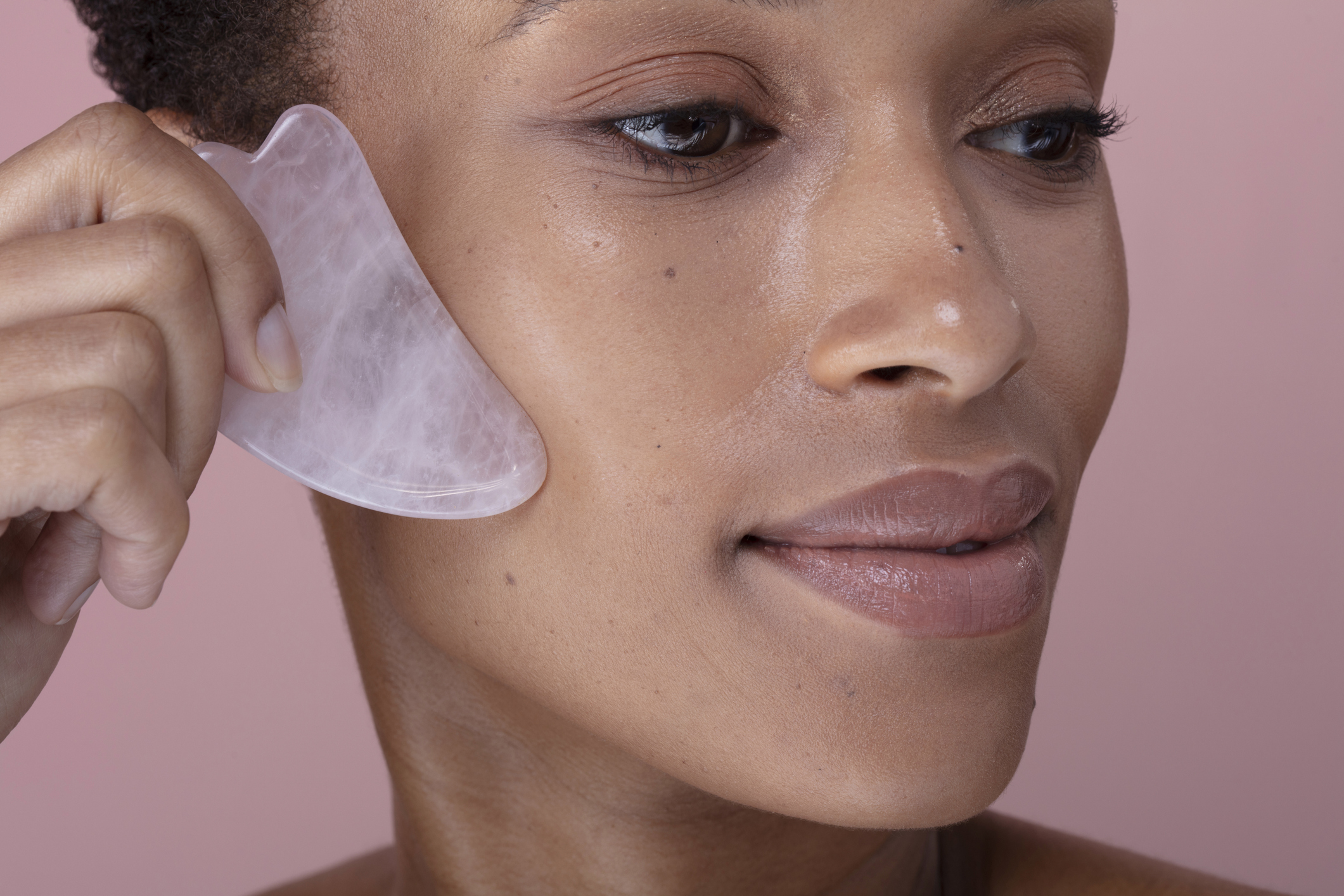
Could your gua sha actually help protect your brain? It sounds like a bold claim, but fascinating new research suggests that the gentle facial massage trend may do more than sculpt cheekbones. Scientists have discovered previously unknown drainage pathways linking the face to the brain’s waste-removal system, raising intriguing questions about whether facial massage could one day play a role in brain health. Here’s what the science really says.
Your Brain Has Its Own Cleaning System
Your brain is constantly producing waste products as it works. Throughout the day, proteins, toxins and other metabolic by-products build up between brain cells. Fortunately, the brain has its own housekeeping system.
This process relies on cerebrospinal fluid (CSF), the clear liquid that surrounds the brain and spinal cord. The fluid circulates through a network known as the glymphatic system, washing away waste proteins including amyloid-beta and tau, two substances strongly associated with Alzheimer’s disease.
For years, scientists understood how this cleaning process worked inside the brain but couldn’t fully explain how the fluid escaped the skull. That mystery was recently solved by researchers at the Institute for Basic Science in South Korea. Publishing in Cell, the team identified tiny openings called arachnoid fenestrations that allow cerebrospinal fluid to drain around the eyes and nose before entering lymph nodes in the neck.
This discovery connected the brain’s glymphatic system with the body’s lymphatic network, revealing an important route for removing waste.
As we age, however, this drainage system becomes less efficient. Poor sleep, cardiovascular disease, diabetes and high blood pressure can all slow the flow of cerebrospinal fluid, allowing amyloid-beta and tau to accumulate over time. While this isn’t the sole cause of dementia, researchers increasingly believe impaired brain drainage may contribute to the disease alongside genetic and lifestyle factors.
The Surprising Link Between Your Face And Your Brain
The researchers made another unexpected discovery. After tracing the flow of cerebrospinal fluid beyond the skull, they found an extensive network of lymphatic vessels running through the cheeks, nose and roof of the mouth before draining into lymph nodes beneath the jaw and deep in the neck. Many of these vessels sit just a few millimetres beneath the skin.
That means parts of your face may form an extension of the brain’s drainage system.
To test whether stimulating these pathways could improve fluid flow, researchers performed an extremely gentle form of manual lymphatic drainage in mice and monkeys. Using feather-light downward strokes lasting just one minute, they found cerebrospinal fluid drainage increased to roughly three times its normal rate for around 30 minutes. In older animals, drainage also improved to levels closer to those seen in younger subjects.
Importantly, this was a carefully controlled laboratory technique, not a traditional gua sha treatment or vigorous facial massage.
Could Facial Massage Help Prevent Dementia?
This is where the headlines can get ahead of the evidence. Animal studies are certainly encouraging. In mouse models of Alzheimer’s disease, repeated manual lymphatic drainage has been shown to improve memory performance while reducing the accumulation of Alzheimer’s-related proteins in the brain.
Human research, however, tells a much more cautious story. Studies involving people already living with dementia suggest massage therapy and therapeutic touch may reduce agitation, anxiety and depression while improving overall comfort and wellbeing. But so far, there is no evidence that facial massage slows cognitive decline or prevents Alzheimer’s disease.
Leading organisations including the Alzheimer’s Association and the Alzheimer’s Drug Discovery Foundation still consider therapies targeting the glymphatic system to be experimental. Their advice for protecting brain health remains focused on well-established measures such as regular exercise, quality sleep, controlling blood pressure, managing diabetes and staying socially and mentally active.
So Should You Keep Using Your Gua Sha?
There’s certainly no reason to throw it away. For most healthy people, gentle facial massage is safe, relaxing and may help encourage normal lymphatic movement. While there’s currently no proof it prevents dementia, the new research suggests it could support one small part of the brain’s natural drainage system.
If you’d like to borrow from the techniques used in research, keep the pressure extremely light—just enough to move the skin rather than press into the muscles—and always direct movements toward the neck, where lymph fluid naturally drains.
Using your fingertips or a gua sha tool, gently sweep from the sides of the nose across the cheeks toward the ears, glide from the centre of the forehead toward the temples, then finish with soft downward strokes along the sides of the neck toward the collarbones.
The entire routine only needs to take one or two minutes. Think of it as a relaxing skincare ritual that may support healthy lymphatic flow—not a proven strategy for preventing dementia. For now, the strongest evidence for protecting your brain still comes from the basics: sleep well, exercise regularly, manage cardiovascular health and keep your mind engaged.