










From crowded cafés to office meetings, a tiny habit—pushing your chair back in—has caught psychologists’ attention. What do these nine quiet behaviors hint about your everyday character?
The scene: you and a friend get up from a crowded restaurant table. She instinctively slides her chair back in, bag on shoulder, already asking the server if they need anything else. The guy at the next table leaves his chair half sideways in the aisle like a booby trap for your ankles. You notice it. Your brain files it.
That tiny difference is why psychology’s latest micro‑obsession is people who push their chair back in when they leave a table. Is it a secret Rorschach test of character or just proof someone’s mom was strict about manners? As usual, it is a little of both – but if you have this habit, research on personality and self control says you probably carry around a specific, quietly impressive set of nine behaviors.
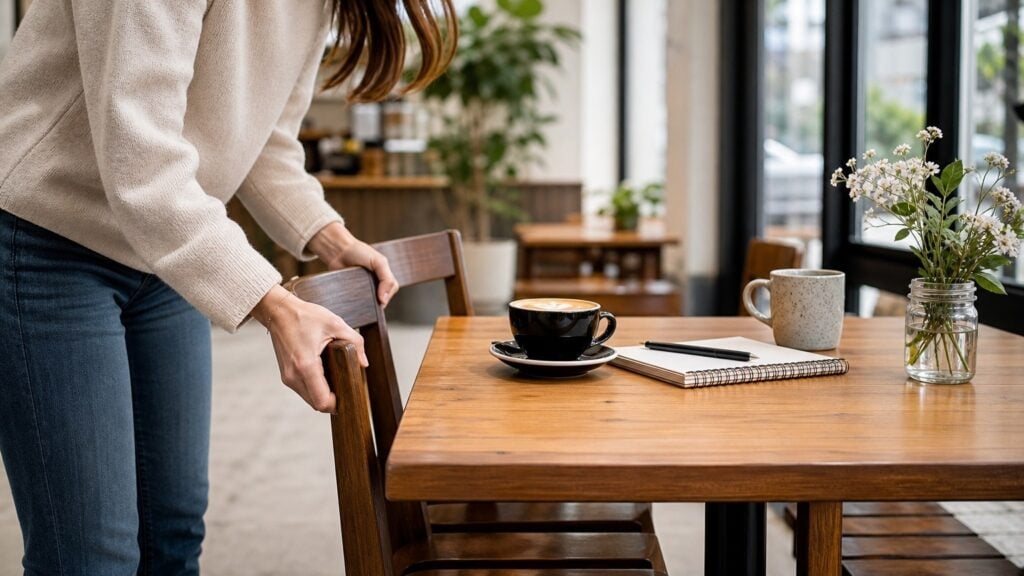
The Tiny Habit Your Brain Notices
Micro Behaviors And What They Whisper About You
Psychologists sometimes talk about “micro behaviors” – the background habits you barely register, like returning your grocery cart or stacking plates after brunch. They are not destiny, but they often travel with bigger traits. Cottonwood Psychology, a US practice that has written about chair‑tuckers, links this move to conscientiousness in the Big Five personality model, that cluster of order, reliability and follow through measured in tools like the NEO‑PI‑R.
There is also a social mindfulness angle. Sliding your chair in keeps the walkway clear for servers, strollers and teetering high heels you will never meet. It is a one second nod to community comfort. None of this means that leaving a chair out makes someone selfish – pain, distraction, cultural norms and pure exhaustion exist – but as a repeated pattern, the habit points in a surprisingly consistent direction.
Nine Unique Behaviors People Who Push Their Chair Back In Often Display
They Instinctively Think About The Next Person
Chair‑tuckers tend to run a constant, quiet “who is coming after me?” scan. In restaurants that means leaving a clear path; at home it looks like putting the cereal back where someone else can actually find it.
They Like To Leave Things Truly Finished
That little shove under the table is a physical version of “closing the loop.” These people are the ones who send the follow up email, screw the lid back on and actually hit submit on the benefits form.
They Respect Time And The Flow Of A Room
A stray chair costs other people seconds – side steps, pivots, near spills. The person who pushes theirs in tends to protect the pace of shared spaces, whether it is a café aisle or a conference room.
They Show Quiet, Steady Self Control
Pushing a chair in requires a tiny pause instead of bolting off. That pause is self regulation in miniature. Long running work like the Dunedin study in New Zealand links this kind of everyday impulse control to better health and finances over time.
They Notice Micro Details Other People Step Over
If you are the one who sees that your chair is blocking the stroller, you are usually also the one who spots the wobbly table, the draft from the door, the friend whose voice just dropped half a register.
They Hold Themselves To Inner Standards, Not Just Rules
No restaurant has a sign that says “please return chairs to original position.” People who still do it are running on internal standards. They care about doing things the “right” way even when nobody is watching.
They Take Personal Responsibility For Their Impact
There is a subtle “my mess, my job” energy here. The same mindset shows up when someone wipes a spill they did not technically cause or apologizes without blaming the schedule, the traffic, or Mercury retrograde.
Their Behavior Stays Consistent Across Settings
Chair people are often chair people everywhere – at a fancy hotel bar, a divey taco spot, a friend’s tiny kitchen. That consistency signals values rather than performance, and it is a big part of why others experience them as dependable.
They Believe Character Lives In Small, Unglamorous Moments
If you push your chair in on autopilot, you probably also return library books, put weights back at the gym and hand the bartender your empties. You act like these moves matter, even if you would roll your eyes at an article praising you for it.
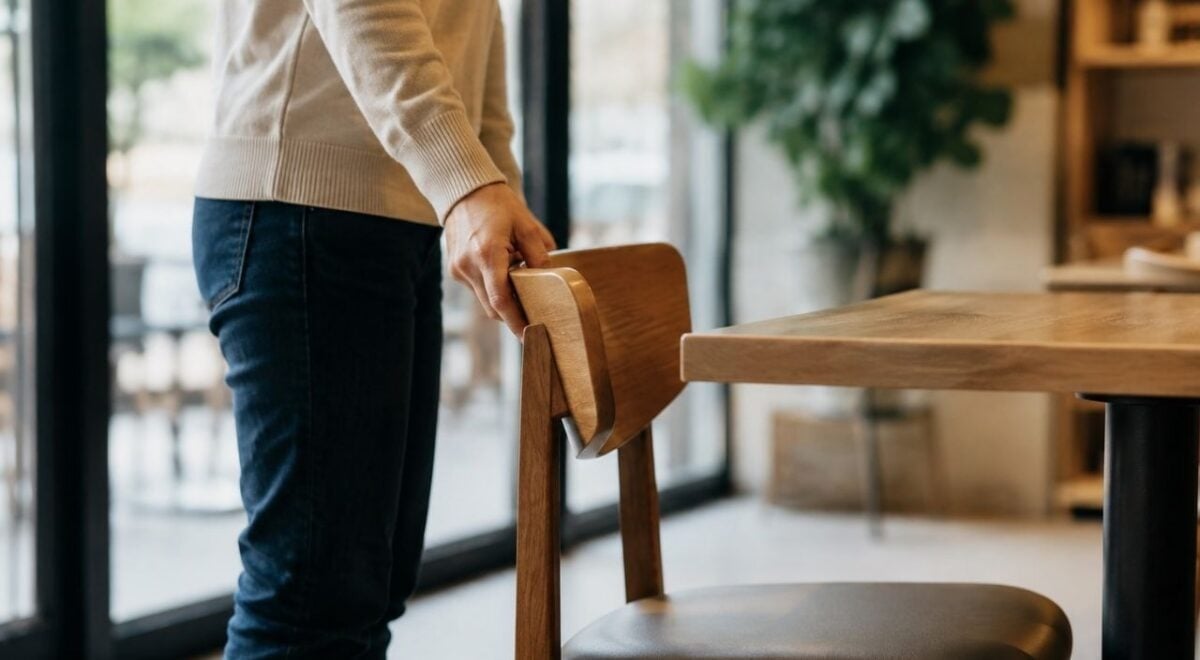
What This Gesture Definitely Does Not Mean
Read The Chair In Context, Not As A Character Test
Before you start screening dates by café exit behavior, some reality. Plenty of thoughtful people leave chairs out because their back hurts, the layout is tight, the staff prefers to reset seating or they are wrestling a toddler and a laptop bag. Personality research itself is modest; a reanalysis in the Journal of Applied Psychology found conscientiousness has a real but not huge link to job performance. One gesture on one Thursday afternoon is a flimsy data point. Patterns over time are where the story gets interesting.
How To Borrow The Best Of This Habit
Start With One Tiny Act Of Care A Day
If you like the energy of chair‑tuckers but were raised in chaos, you do not need to overhaul your personality. Pick one micro habit that makes life smoother for the next person: slide in the chair, return the cart, toss the empty cups in the hallway trash on your way to a meeting. Let it be small and boring. The goal is not control or perfection; it is practicing that quiet “someone else exists after me” thought. Do it often enough and people may not compliment you on your chairs, exactly – they will just feel oddly at ease when you are in the room.


