










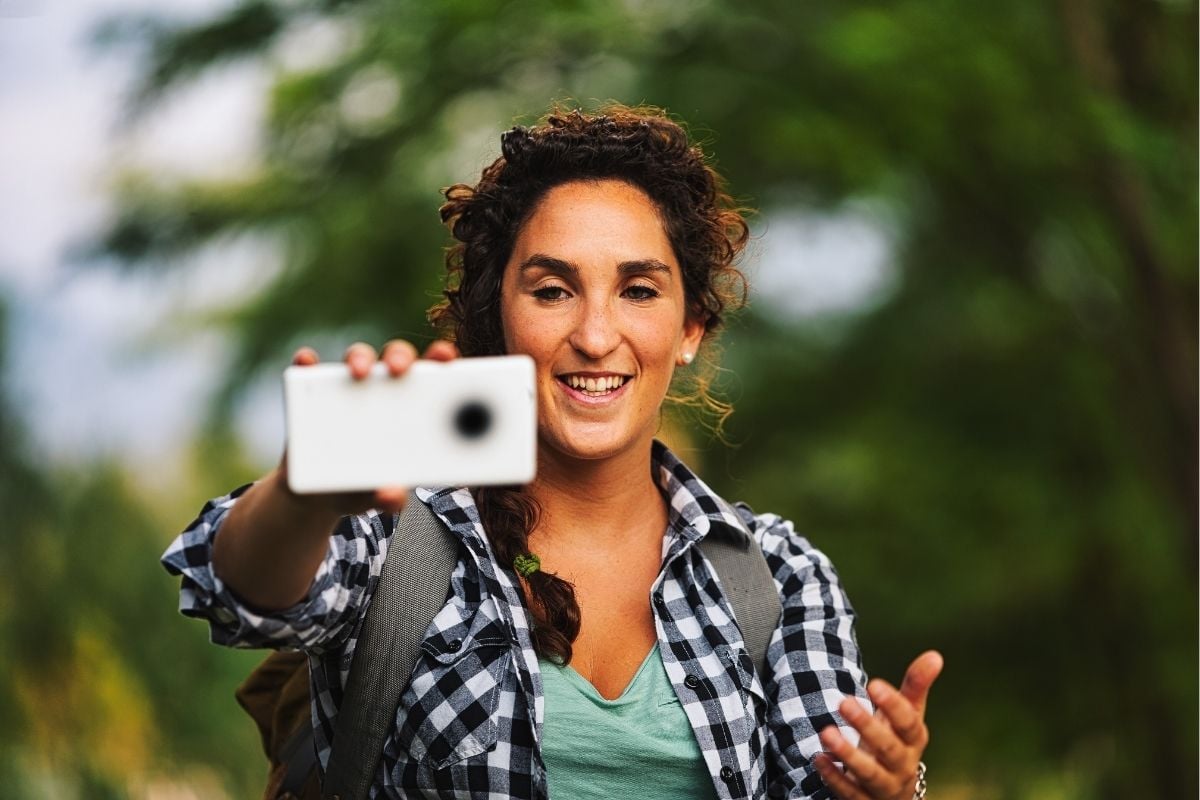
Your camera roll remembers everything. You, it seems, may remember a little less. Picture this: a museum on a quiet afternoon, a painting you love, and the reflex to lift your phone before you have even really looked. Most of us do it. Some people don’t. They stand there, take it in, and walk on. If that is you, you may be keeping more of the moment than everyone else in the room.
Fairfield University psychologist Linda Henkel tested exactly this. In a study published in the journal Psychological Science, she took undergraduate students on a guided tour of the university’s Bellarmine Museum of Art. They were asked to note certain objects, either by photographing them or by simply observing them. The next day, their memory was tested.
The Photo-Taking Impairment Effect
The results were striking. Students were less accurate at recognizing the objects they had photographed, and they could answer fewer questions about those objects’ visual details, than the ones they had only looked at. Henkel gave the phenomenon a name: the “photo-taking impairment effect.”
“These results show how the ‘mind’s eye’ and the camera’s eye are not the same,” she said. One way to read it: when we trust the camera to remember for us, we may stop paying full attention ourselves.
The One Exception: Zoom In
A second study added a twist. When students zoomed in on a specific detail of an object, their memory held up, and not just for the detail. They remembered the whole object, including parts that were outside the frame.
The difference seems to be engagement. Zooming forces you to choose, look closely and think about what matters. Pointing and shooting does not. It is a useful nuance: the problem is not the camera itself, but using it instead of looking. A phone can be a magnifying glass or a blindfold, depending on how you hold it.
Which Kind of Looker Are You?
The Lingerers stand in front of one painting for a full minute. The Detail Hunters notice the ring on a hand or the crack in a frame. The One-Shot Photographers take a single picture, on purpose, after they have looked. All three are doing what the study rewarded: paying attention first. It is the same old-school instinct behind people who keep a paper calendar instead of a phone or who still write by hand to remember.
How to Keep More of What You See
Look before you shoot: give anything you care about 30 seconds of your full attention first. Then take one photo, not ten. If you do pull out your phone, zoom in on the detail that caught your eye, since that is the habit linked to better memory in the study. On a trip or at a family event, choose a few moments to experience without the screen at all. And when you scroll back through your photos later, pause on one and try to recall what you felt, not just what you saw. The lesson worth borrowing is that attention, not storage, is what makes a memory.
The Bottom Line
People who don’t photograph everything often remember it better, and a museum study named the reason: the photo-taking impairment effect. The camera keeps the image. Looking is what keeps the memory.


