









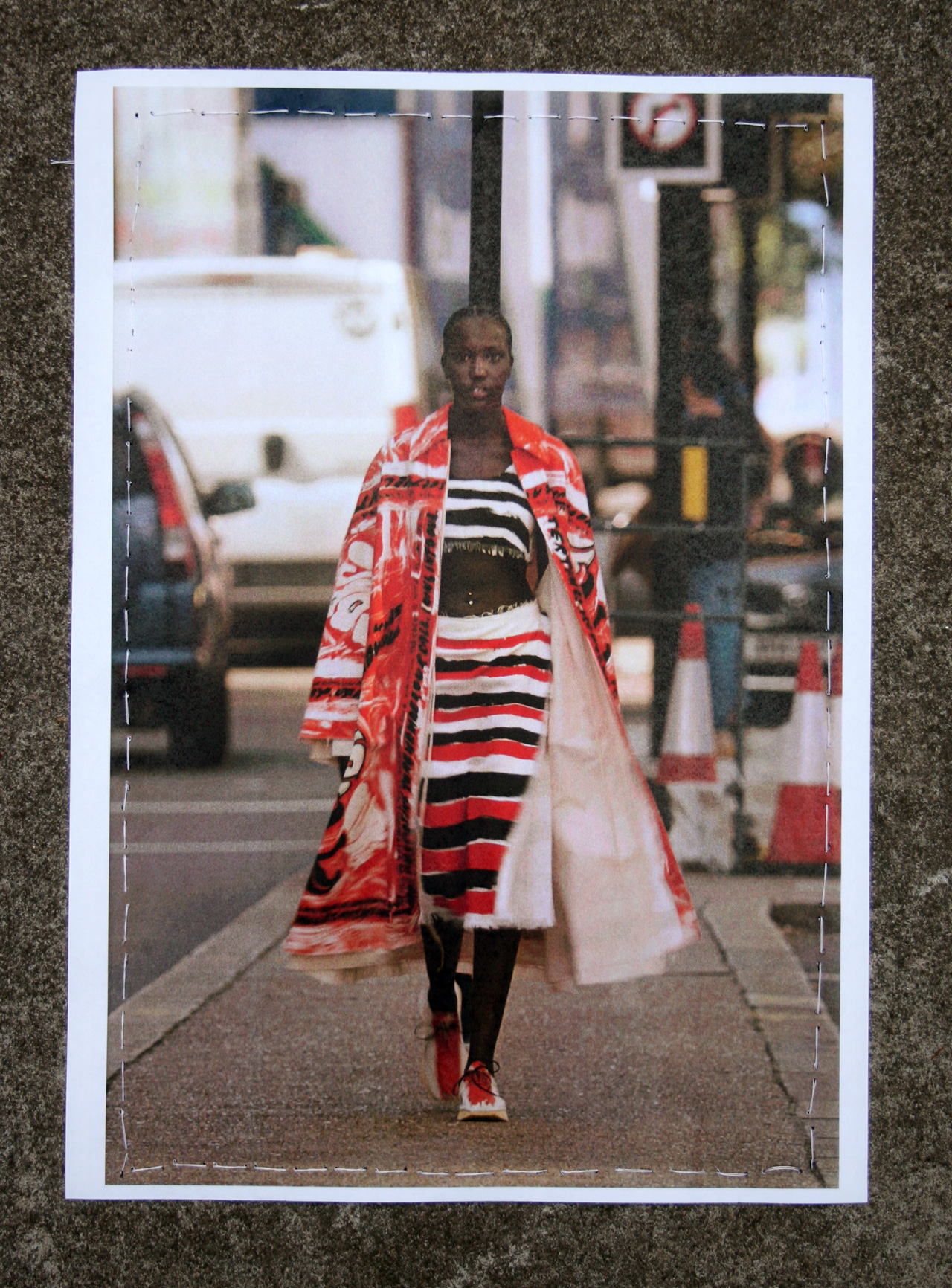
Francesco Risso had somewhat of an epiphany during the COVID-19 lockdown period. Following his Spring 2021 showcase, the gregarious Marni creative director told reporters that he and his team had used the pandemic’s indoor sentencing to procure new-season cuts “at home [out of] blankets [and] curtains.” The scrappy, Fraulein Maria-esque nature of such limitations then resulted in an unexpected vision – a collection of raw-edged coats and dresses garnered from the Marni archives. Seasonal elders from the Italian label that Risso reconstructed using old fabrics then varnished with lashings of expressive slang and abstract graffiti. This was his “Marnifesto,” as he labeled it, a tribute to fashion’s most unlikely luxury uprising.
Upcycling in practice is, of course, nothing new. Every teenager worth his or her high school sewing license has fused a homemade sleeve to an old denim vest. Or appropriated a dress out of a spare sheet and some pin-tucks. The nineties made a sport out of scouring local thrift shops for a five-dollar winner. Unearthing old-season, any-designer, anything meant formals could be rife with second-hand slip dresses and friends could bond over flea market tees and vintage jeans.
However, the stranger times of nowadays are reviving this bygone era of recycle-chic, rebranding it less hand-me-down and more hand-me-up. Last year, the abhorrently wasteful ethics of the fashion industry were revealed to the world and sent designers spiraling. The well-publicized statistics around landfill, water usage and underpaid labor at the hands of the billion-dollar industry caused both an overdue reckoning and a marketing nightmare. Luxury labels and fast fashion alike were forced to overhaul practices and align their focus with a more sustainable, less gluttonous future. In doing so, the responsibility revolution began. But then, the pandemic hit, and suddenly, the lowering of consumables became as much about conscience as it did about scrambling to keep profits above water.
So, now the fashion world tilts on a brave new angle. Not only shining a light on the high-end collections whose stories endorse upcycling practices – everyone from Virgil Abloh to Raf Simons to Stuart Vevers has professed their allegiance – but on the indie labels whose primary ethos comes from the repurposing of otherwise wasted goods. It’s these excitingly artisanal newcomers who are paving the way for a type of neo-luxury. Many now hosted by premium online department stores once only home to brands that cut the cookie as required. Their pieces, mostly made individually and without specific size or season, are dropped as ready and bought by those with the quickest click.
FLIP IT AND REVERSE IT
Renée van
Wijngaarden knows a thing or two about value. Before co-founding
premium upcycling label 1/OFF Paris, she was busy spreading the
zeitgeist at pre-owned luxury online marketplace The Vestiaire
Collective as head of brand partnerships. “I was just really
inspired by seeing all the pieces we leave behind even though
fashion always comes in circles. Why do we keep buying new, when
there are designer pieces and work wear with such beautiful
craftsmanship and fabrics waiting to be destroyed?” she told
GRAZIA. In partnership with Xuan Thu Nguyen, an established
couturier and invited member of La Fédération de la Haute Couture,
the Dutch duo started 1/OFF Paris last year. Since then, it has
become a type of poster child for what luxury upcycling looks like.
Inspired by the theatrical foundations of couture, pieces include
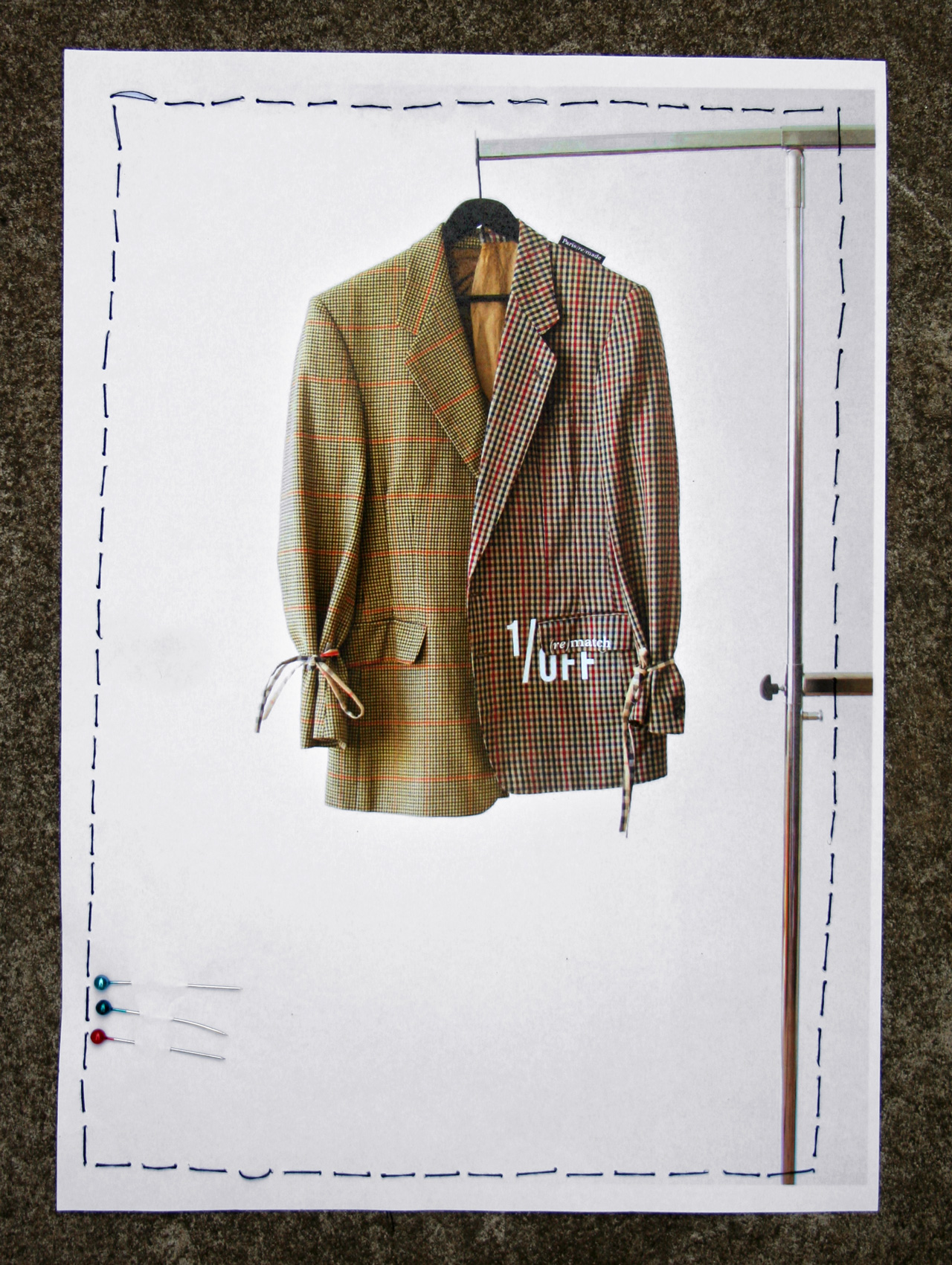
an inside-out Burberry trench coat, a half-half houndstooth “double
blazer” and oversized oxford shirts pleated and gathered to create
corseted silhouettes. Given the caliber of pieces they source,
slice and remaster, 1/OFF is a renegade of restriction. However,
the women’s aesthetic has become a go-to, with a distinct sense of
wearability not usually achieved by a genre based on salvaged
vintage. And, with it now being stocked in places like Selfridges
and Harvey Nichols, what could have been relegated to quirk is now
firmly in reach of the everyday customer. “Due to mass production
and globalization, everyone can buy the same brands and products in
each city. Therefore, I believe the demand is growing for more
unique pieces that can really speak out your identity.”
Concept-style upcycling is fast becoming part of a widespread shopping psyche. Companies like Hong Kong’s The R Collective and denim regenerating brand Re/Done have championed the fight against landfill since 2007 and 2014 respectively. Both partner with established brands and young designers to push the cool-factor for pre-loved wares. Re/Done, who call themselves “the new American Luxury” are known for collaborating with Levi’s on reinstating 501s while their 2019 capsule with Italian über brand Attico realized a sell-out range marrying modern couture to thrifted LA party dresses. This attention from mainstream is certainly helping to normalize the upcycling trend and beckon a new customer. Wijngaarden says “with the experience of this year I think the customers of 1/OFF are ambitious for their passion, and curious to [see] what is next. I feel they have a certain guts to do things in their own way. They stand for what they believe in and [are] therefore looking for ways to express their identity.”
IT’S DIFFERENT, BUT LIKE GOOD DIFFERENT
When Julie Pelipas set out to name her new label, a typo caused a
Freudian slip. The Ukrainian fashion editor and influencer decided,
however, that this unexpected upcycling of the brand’s name was in
fact serendipitous. And so, Bettter (with three t’s) was born.
Pelipas’ signature style is a master-stroke in proportion. Her
tall, athletic frame draped in variations of upholstered men’s
tailoring has become a favorite for street style snappers and
PInterest’s most-wanted boards. Coming from a family of
seamstresses, Pelipas began tampering with second-hand men’s suits
as a way to find pants long enough to fit and to have them sit just
as she wanted. Before long, French fly pleated trousers worn with
wide-shouldered blazers and oversized button-down shirts became
synonymous with her Instagram persona. So, when Bettter launched in
June of this year, despite the lockdowns and the economic meltdowns
and all the working from home, the first range ‘Drop 00’ sold out
instantly. The capsule collection of slouchy three-piece suit sets,
all with varying degrees of cut-outs and strap fastenings, would
have anyone mistaken that the pieces were crafted from scratch.
However, in her what-Phoebe-Philo-did-next style Pelipas’ first
venture instantly dispelled any myth that regenerated fashion can’t
be covetable.
WHEN YOU KNOW, YOU KNOW
Anyone who’s led a
career within the fashion vacuum could understand how being privy
to its relentless wastage can become catalyst for an antithesis.
When former Marni design director Molly Molloy and former British
Vogue fashion director Lucinda Chambers decided to turn their trade
to a sustainable operation in 2018, Colville was born. Their unique
pieces don’t take on a particularly vintage character so, as a
result, upcycling ingredients are basically indistinguishable.
Electric color blocking on minimalist cuts blended with the
timeless appeal of asymmetric shapes have a distinct Marni
influence. But it’s the notes of cultural print and texture that
profess its individualism. Colville upcycles using repurposed
materials but incorporates pieces from local projects in Columbia,
Morocco and Mexico too. There is a special-ness that comes from
pieces that bring stories from far and wide, and from long
established players whose place in the industry is now utterly of
their own design.
“It’s slower fashion, it’s all those things that we believe in, and that you can give something another life, longevity, and it’s also buying with a conscience,” said John Galliano while dissecting his fall 2020 show for Maison Margiela. Entitled ‘Recicla,’ the collection of optimistic utility used crafty regeneration to create a kind of joyous fairytale cosplay. Almost as though the challenge to reuse had given the formerly disgraced designer an excuse to load his pieces in a couturier way. And he certainly seems to be relishing in it. With the wisdom that comes from perspective, any fashion industry veteran would concur that cultivating fashion without burdening the earth seems the only conscious way to continue.
DOES THE FUTURE HAVE A PATCH ON THE PAST?
What do traditional Bulgarian fabrics have in common with rock
climbing apparatus? Unless you’re already a purveyor of London
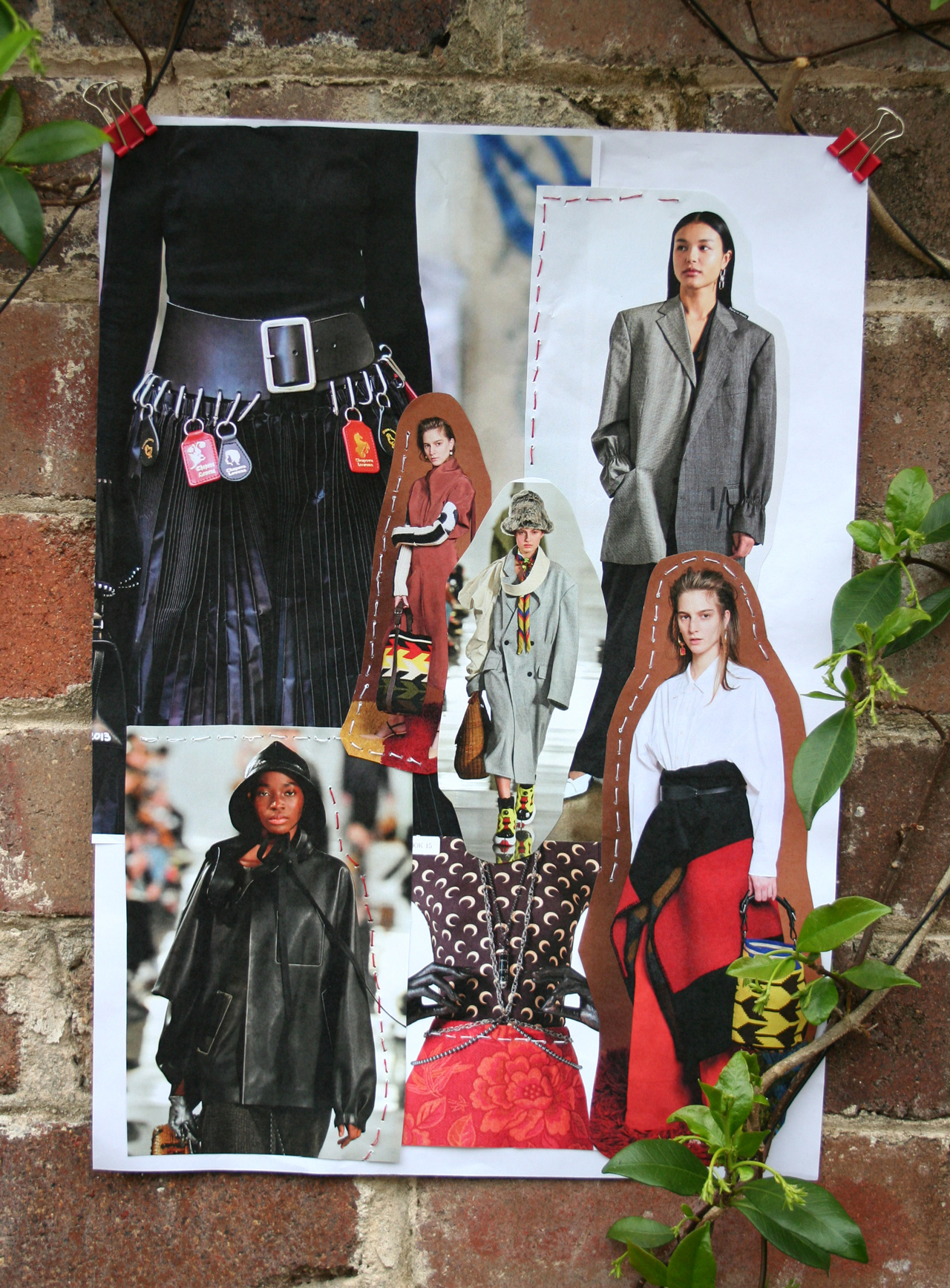
based label Chopova Lowena, chances are you’d assume not much. But
Emma Chopova and Laura Lowena are one of the frontrunners in the
futurist space of artisan upcycling and their looks are a kooky
customization of both. Their mismatch method is ingeniously
refreshing. Tapestry patchworks worked into harlequin prints and
organ pleats savaged by sourced leathers, hooks and vintage
sneakers. You’d be forgiven for thinking it’s a post-modern costume
installation. A folkloric fusion that dips into Bulgarian tradition
while wrenching it back to urban culture. As a brand already
snapped up by luxury heavy hitters Matches Fashion and Farfetch,
futurism is a burgeoning space for upcycling. Bred as kind of
wearable art, its possibilities are broad and exciting. Central
Saint Martins alum Patrick McDowell spent his tenure under
Christopher Bailey experimenting with discarded Burberry fabrics,
some of which he now (along with recycled firefighting accessories)
incorporates into his young label. While Dutch fashion-challenger
Duran Lantink has made a name for himself mashing together pieces
from labels like Louis Vuitton and Gucci, relishing in the
decimation of class culture within the industry. It’s the “new
order,” as he calls it. But perhaps most unadulterated of all is
Parisian upcycler Marine Serre. A creator of absurdist, confronting
couture with a post-apocalyptic narrative, Serre is credited by
some as the founder of the current movement. Her vantage is that of
an “ecofuturist” and her prescient upcycled collections give a
pedestal to pragmatic wears usually leveled for utility or sport.
Spring 2021 gives a lead to abstract biking wear, for example, in
response to the rise in cycling since the pandemic began, while her
crescent moon-print body stocking made from recycled jersey has
been worn by everyone from Beyoncé to Kylie Jenner to Dua Lipa.
This bohemia of (re)thinkers, with fashion borders set far from the edges of expectation, is rewriting the rules for the future of desirable fashion. Driven by a unique creativity that comes via the art of customization and repurposing, they’re challenging the rest of us to follow (their splendidly upcycled) suit.
Top Video Banner: Pinko Reimagine Collection by Patrick McDowell


