









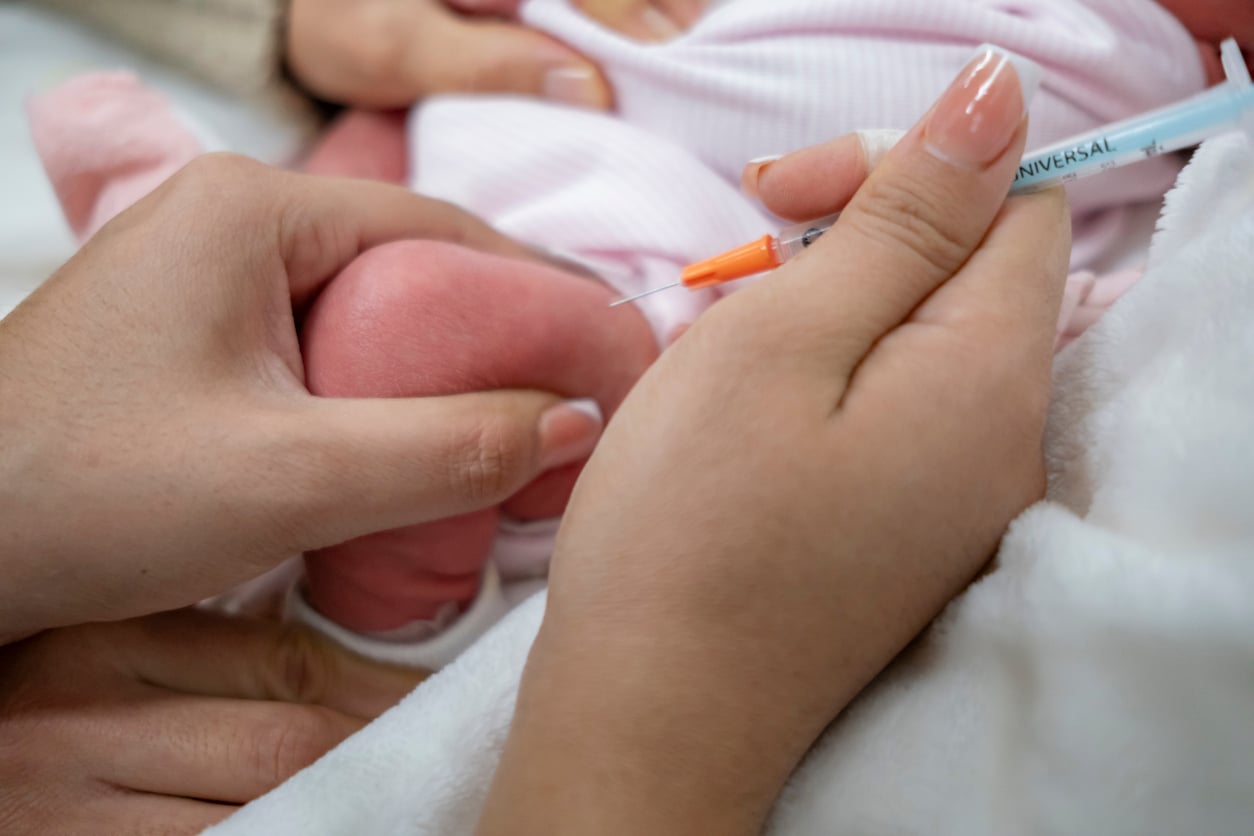
You have just had a baby. Within the first hours, a nurse explains that your newborn needs a quick shot – not a vaccine in the traditional sense, but a dose of vitamin K, a nutrient your baby is naturally deficient in at birth. It sounds routine. It has been routine for more than 40 years. And yet, scrolling through your phone in the delivery room, you may have already seen a post from a wellness influencer urging you to say no. That tension between what science has long established and what social media now whispers into new parents’ ears is at the heart of a growing and deeply troubling trend.
A life-saving practice under siege from misinformation
The Canadian Paediatric Society recommends that every newborn receive a vitamin K injection shortly after birth to prevent a rare but potentially fatal condition called vitamin K deficiency bleeding, or VKDB. Babies are born with low levels of vitamin K, a nutrient essential for blood clotting. Without it, they can develop severe hemorrhages, including bleeding in the brain.
According to Dr. Ng, late vitamin K deficiency bleeding carries a three-times-higher risk of intracranial hemorrhage – bleeding inside the brain – which he describes as a major complication. This is not a minor bleed we are talking about. Brain hemorrhages in newborns can be devastating.
So why would any parent turn down such a straightforward intervention? According to doctors, the answer comes down largely to health misinformation spreading online. Timothy Caulfield, a professor at the University of Alberta, has described the vitamin K shot as a well-established, essential, and entirely commonplace biomedical procedure that saves lives and reduces risk – one that is being rejected solely because of the spread of false health information.
What the data actually shows – and what influencers get wrong
The vitamin K injection has been given routinely to newborns for over four decades. Yet Dr. Ng says he has recently observed a rise in the number of parents declining it. This is not just a local phenomenon. A new Swedish study found that the number of parents refusing the shot more than doubled between 2006 and 2021.
Among the concerns fueling refusal are worries about ingredients, the use of preservatives, and a now-debunked link to leukemia. Online influencers frequently point to the package warning label, which lists serious potential side effects including shock, cardiorespiratory arrest, flushing, shortness of breath, and cyanosis. However, experts note that these warnings stem primarily from severe reactions observed in certain adults who received high doses. Newborns receive a low-dose injection of the vitamin, and serious reactions are extremely rare.
Caulfield has pointed out that the shot is known to be very safe, while skipping it is extremely dangerous. Despite this, the narrative against it is being driven largely by internet influencers, and it is causing real harm. As a new parent, you hear a compelling story presented in a seductive way by someone relatable – and that personal, urgent message can feel more persuasive than the authoritative voice communicating what the science actually says.
What parents should know about their options
There is an oral form of vitamin K available, but it requires three separate doses: one at birth, another between three and five days after birth, and a third during the fourth week following birth. Health professionals still prefer the injection because it is more reliable. One shot, done in seconds, offers consistent protection. The oral alternative, while an option, demands strict adherence to a dosing schedule that some families may not follow through on completely.
Experts have also flagged a worrying pattern: parents who refuse the vitamin K injection tend to be less inclined to vaccinate their children overall. This overlap suggests that declining the shot may be part of a broader rejection of established medical guidance, often rooted in the same online misinformation ecosystems.
Doctors and medical associations acknowledge that once a parent has made up their mind, it becomes very difficult to have a productive conversation about these topics. Dr. Ng has said that parents who refuse the injection are essentially playing Russian roulette with their child’s health. The bleeding that can result is not trivial – brain hemorrhages represent a serious, life-altering complication.
The medical community is fighting back – and needs your help
Caulfield acknowledges that countering every piece of false health information circulating online is a monumental task. Still, medical associations around the world are increasingly speaking out against misinformation. He has stressed the need to craft messaging that meets parents where they are in those vulnerable early moments of parenthood – and has admitted that the medical community has not always succeeded at this.
What you now know is straightforward: newborns lack vitamin K, a nutrient they need to prevent potentially catastrophic bleeding. A single low-dose injection given shortly after birth has protected babies for more than four decades. The fears circulating online are rooted in debunked claims and misinterpreted warning labels designed for entirely different patient populations. If you are expecting or know someone who is, the most empowering thing you can do is seek information from your pediatrician rather than your feed.


