










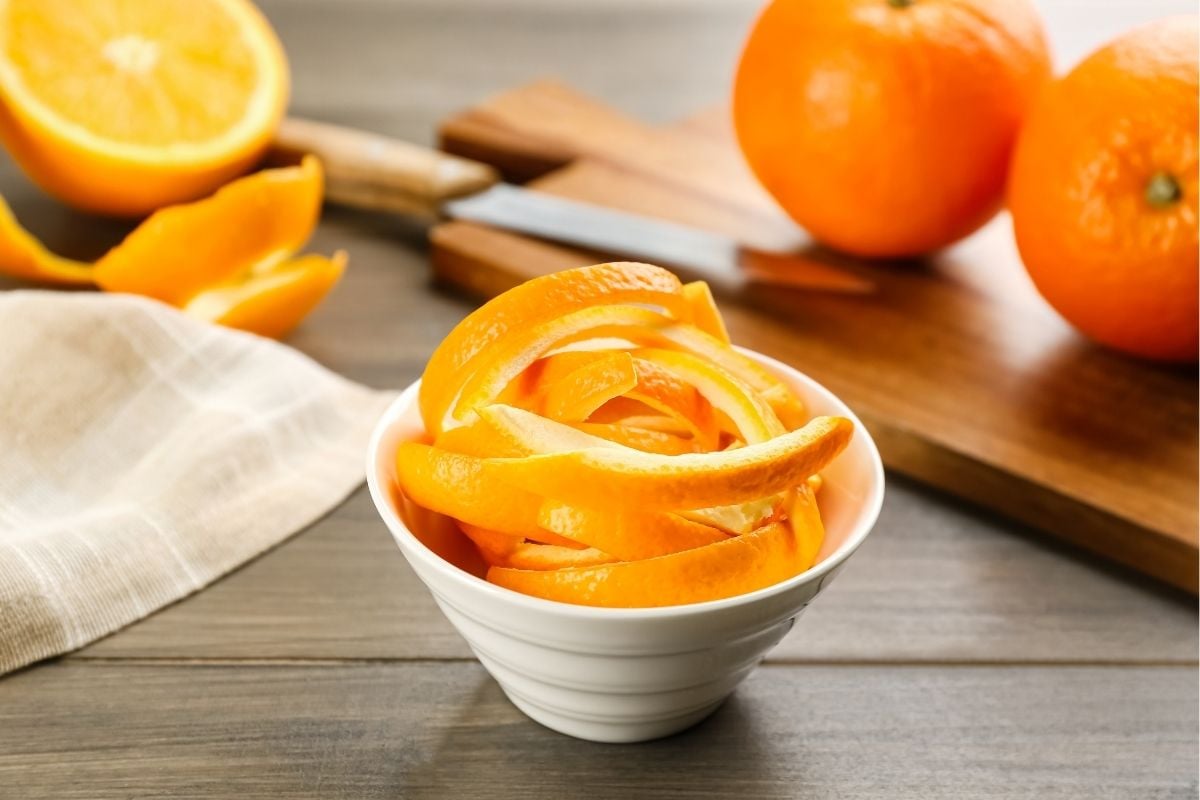
Four oranges, a jar of vinegar and a week of patience: the homemade cleaner that smells far better than it should. Vinegar is one of the most popular homemade cleaners, but its sharp smell puts many people off. That is where orange peels come in. Instead of throwing them away, you can turn them into a fragrant all-purpose spray that tackles everyday grime.
The method appears in a guide to homemade household cleaners from the University of Florida’s Institute of Food and Agricultural Sciences (UF/IFAS), and it costs almost nothing to make.
The Method
According to UF/IFAS, place the peels of four oranges in a quart-size glass jar and pour in enough white vinegar to cover them. Close the jar and let it steep for about one week. Then strain the liquid into a spray bottle.
Use a glass jar rather than metal, since vinegar can corrode metal lids. For everyday cleaning, many guides suggest diluting the infused vinegar half and half with water. For tougher spots, it can be used straight.
Why the Orange Peel Helps
White vinegar contains acetic acid, which helps cut through light grease, everyday dirt and mineral deposits. Orange peels release natural oils during steeping, and the main benefit is the scent: the citrus softens vinegar’s sharp smell and leaves a fresh fragrance behind.
What It Cleans Well
The mixture works best on acid-tolerant hard surfaces. El Cronista, citing the UF/IFAS guide, recommends it for ceramic tile and some kitchen countertops. It can help with light grease on stovetops and range hoods, fingerprints, water spots on faucets and tiles, the inside of the microwave and some odors. Always test a small, hidden area first.
What It Does Not Do
This is a cleaner, not a disinfectant. Vinegar can reduce some germs, but it does not kill all of them, and it is not a substitute for a registered disinfectant when you need to sanitize, for example after handling raw meat or during an illness in the household. In the UF/IFAS guide, the disinfecting recipes use bleach, not vinegar.
Surfaces to Keep It Away From
Acid can damage some materials. Avoid using the mixture on marble, granite, other natural stone and terrazzo, where it can etch or dull the finish. Keep it off unsealed wood, waxed surfaces and delicate finishes as well. On wood floors in general, UF/IFAS warns against getting them overly wet.
The One Rule You Should Never Break
Never mix vinegar with bleach. UF/IFAS warns that bleach should never be combined with vinegar, ammonia, rubbing alcohol or other household cleaners, because the chemical reaction can release fumes that affect the lungs. Use products separately and ventilate the room.
Smart Storage Tips
Label your bottle clearly, never store homemade cleaners in food or drink containers, and keep them out of children’s reach. UF/IFAS also recommends mixing only what you need and using it up.
Mixing white vinegar and orange peels is cheap, simple and pleasant to use. Treat it as an everyday cleaner, keep it off stone and wood, and never combine it with bleach.