










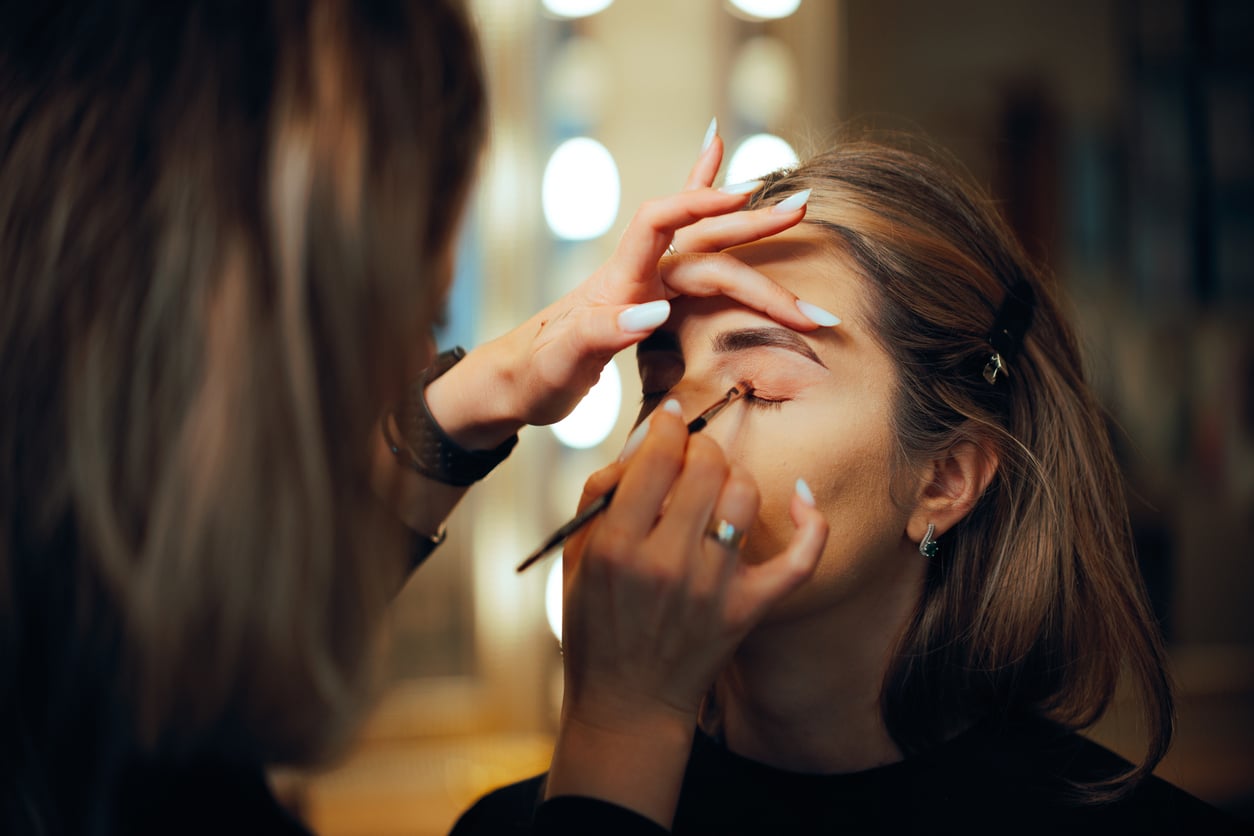
You have probably done it hundreds of times without thinking twice. You reach for that trusty full-coverage foundation, blend it on, and expect a flawless finish. It feels like the logical choice – thicker formula, better coverage, fewer visible flaws. But what if the very product you rely on to smooth things out is actually doing the opposite? What if it is quietly amplifying every fine line and wrinkle you are trying to hide? According to one of Hollywood’s most sought-after makeup artists, that is exactly what is happening to a lot of us after we hit 40.
The foundation formula that is quietly working against you
Scott Barnes, the celebrated makeup artist behind the iconic looks of Jennifer Lopez and Céline Dion, recently shared a game-changing insight with Parade. He pointed to one specific category of product that can undo all of your anti-aging efforts in a single application: full-coverage matte formulas. The irony is thick – pun very much intended – because these are the exact foundations many women gravitate toward for their ability to mask uneven skin tone.
And the appeal makes sense on the surface. These formulas are thicker and drier than their lighter counterparts, which is precisely what gives them the power to conceal discoloration and imperfections. Their long-lasting hold is another major draw, making them a go-to for women who need their makeup to survive a full day without retouching. So where does it all go wrong?
The problem emerges the moment these dense textures meet mature skin. Rather than creating a smooth canvas, full-coverage matte foundations tend to lodge themselves directly into fine lines and wrinkles. Instead of masking the signs of aging, they settle into every crease and crevice, making those marks of time stand out even more prominently on the face. The product you thought was your best ally is essentially highlighting everything you wanted to minimize.
The smarter swap – and why technique matters just as much
Barnes does not just identify the problem; he offers a clear alternative. He recommends switching to medium coverage with either a satin or luminous finish. This type of formula adds radiance to the complexion without settling into or marking the more fragile areas of the face. The result, he explains, is a fresher, more youthful appearance – one that works with your skin rather than against it.
But choosing the right product is only half the equation. Application technique plays a key role in how your makeup ultimately looks and wears throughout the day. Barnes specifically recommends using a double-fiber brush – a tool with two different bristle lengths that helps blend product more seamlessly – to work the foundation into the skin. This particular type of brush ensures even distribution across the entire face without depositing too much product in any one area.
The way you move the brush matters, too. Barnes insists on working in circular motions directed toward the outside of the face. This deliberate movement prevents foundation from getting trapped in the fine, downy hairs that naturally cover our skin. The approach preserves your skin’s natural texture without weighing it down, and it keeps the complexion looking fresh all day long. In practical terms, your makeup ages better on the face – it does not crack, settle, or look cakey by mid-afternoon.
Where you place your blush can add years – or take them away
Foundation is not the only place where we might be accidentally aging ourselves. Barnes notes that adding blush to your routine can amplify the anti-aging effect of a good base, but its placement on the face is absolutely crucial. Get it wrong, and you risk accentuating the very signs of aging you are trying to counteract.
One trend he specifically cautions against is the technique known as blush blocking, which involves applying a large block of color near the temples. While this bold placement might photograph beautifully on a runway or in an editorial spread, it is not suited for mature skin. That area of the face often shows more wrinkles and texture than other zones, so sweeping color there simply draws attention to those imperfections.
The ideal placement, according to Barnes, is on the cheekbones, positioned just below the iris of the eye. To find the perfect spot, simply look straight ahead in a mirror. This targeted position naturally enhances your facial features without calling attention to areas of concern. For a finishing touch, Barnes adds a light dusting of translucent loose powder, then picks up the remaining product on his blush brush. That subtle residue, dabbed gently onto the top of the nose, creates a healthier, more vibrant effect on mature skin – a small detail that makes a surprisingly big difference.
A few small shifts, a noticeably different reflection
What we are really talking about here is not a total overhaul. It is a handful of intentional tweaks that can completely change how your makeup interacts with your skin after 40. You now know that those thick, matte formulas you trusted for years may actually be emphasizing the lines you wanted gone. Medium coverage with a luminous finish, applied with a double-fiber brush in outward circular motions, is a far more flattering approach. And when it comes to blush, moving it from the temple area down to the cheekbone – right below the iris – can quietly reshape how youthful your face appears. Small changes, real results. Your makeup bag might just need an edit, not a replacement.


