










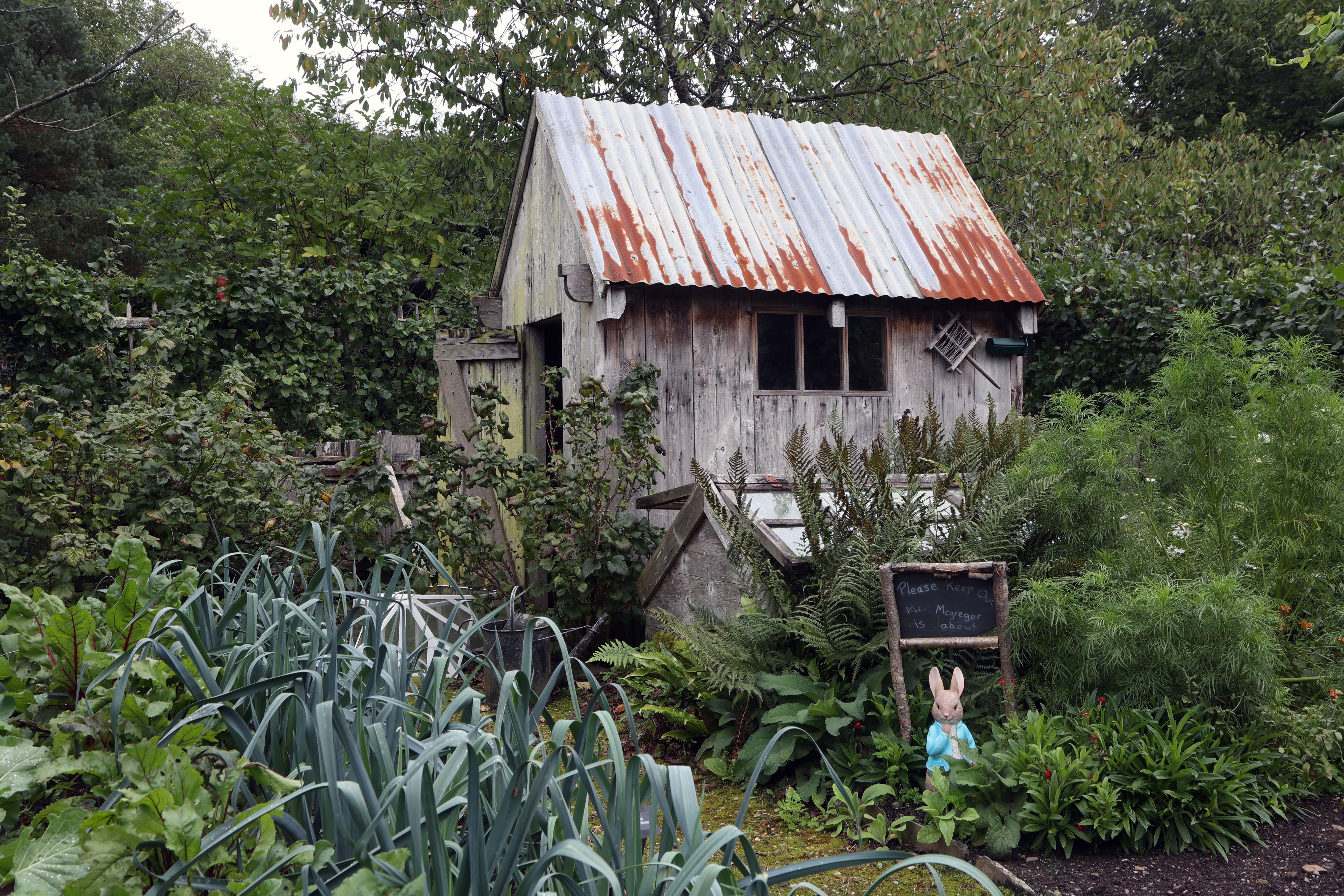
Beatrix Potter Garden at RHS Rosemoor
RHS Rosemoor, UK – 28 Sep 2023
Before Peter Rabbit became one of the most beloved characters in children’s literature, his creator was turned down by publishers. What she later did with the money her little books earned turned out to be her most lasting work of all, and it is still visible in the English countryside today.
In short
- “The Tale of Peter Rabbit” was published by Frederick Warne in 1902, and the first 8,000 copies sold out immediately, according to the National Trust.
- Beatrix Potter used her book profits to buy Hill Top Farm in the Lake District and became a farmer and an award-winning sheep breeder.
- When she died in 1943, she left 4,000 acres of land to the National Trust, which still cares for it.
Rejected, then a bestseller
Born in London on July 28, 1866, Beatrix Potter first sold rabbit drawings as Christmas card designs in 1890. When publishers rejected her story about a mischievous rabbit, she privately printed 250 copies herself. Frederick Warne & Co. then published an initial run of 8,000 copies in 1902, and they sold out instantly, according to the National Trust.
A farmhouse bought with book money
Around 1905, with six books in print, Potter used her profits to buy Hill Top, a 17th-century farm in the village of Near Sawrey. The National Trust describes the farmhouse as the inspiration for her little books, and visitors can still spot scenes from her stories in its garden. She married William Heelis, a local solicitor she met in nearby Hawkshead, and from 1913 the couple lived at Castle Cottage in the same village.
From author to farmer
In the Lake District, Potter reinvented herself. She bred her own flock of Herdwick sheep, the hardy local breed, and her animals won prizes at local agricultural shows. Like the stars who build their lives around a lakeside retreat, she chose a landscape and then made sure it would be protected.
The 1943 gift
When she died in 1943, Potter left 4,000 acres of land to the National Trust, along with a number of farms. More than eight decades later, that land is still protected, and the charity continues to look after the countryside that shaped her stories.
What you can see today
Hill Top’s house, garden and shop are open to visitors on scheduled dates, and visitors arriving by car must book ahead. The farm is still worked by tenant farmers, the Dixon family, who have farmed there for more than 35 years and run “Hill Top Herdwick” farm tours, according to the National Trust. It is a very different kind of famous property from the French village Johnny Depp bought for himself, and one that was designed to be shared.
The limit
The National Trust gives two different counts of the farms Potter left, 15 in one passage and 14 in another, so we have kept to the 4,000 acres both figures share. Opening days and tour availability at Hill Top change by season and should be checked before any visit.
For another story told across the decades, see how the original Charlie’s Angels reunited 50 years later.
The bottom line
Beatrix Potter could have simply enjoyed her success. Instead, she turned a rabbit in a blue jacket into acres of protected fields, farms and fells, a legacy that has now outlived her by more than 80 years.


