










From TikTok
kitchens to suburban homes, a three-ingredient simmer pot is
replacing candles and sprays after heavy meals. But how much can
bay, clove and cinnamon really do for your air?
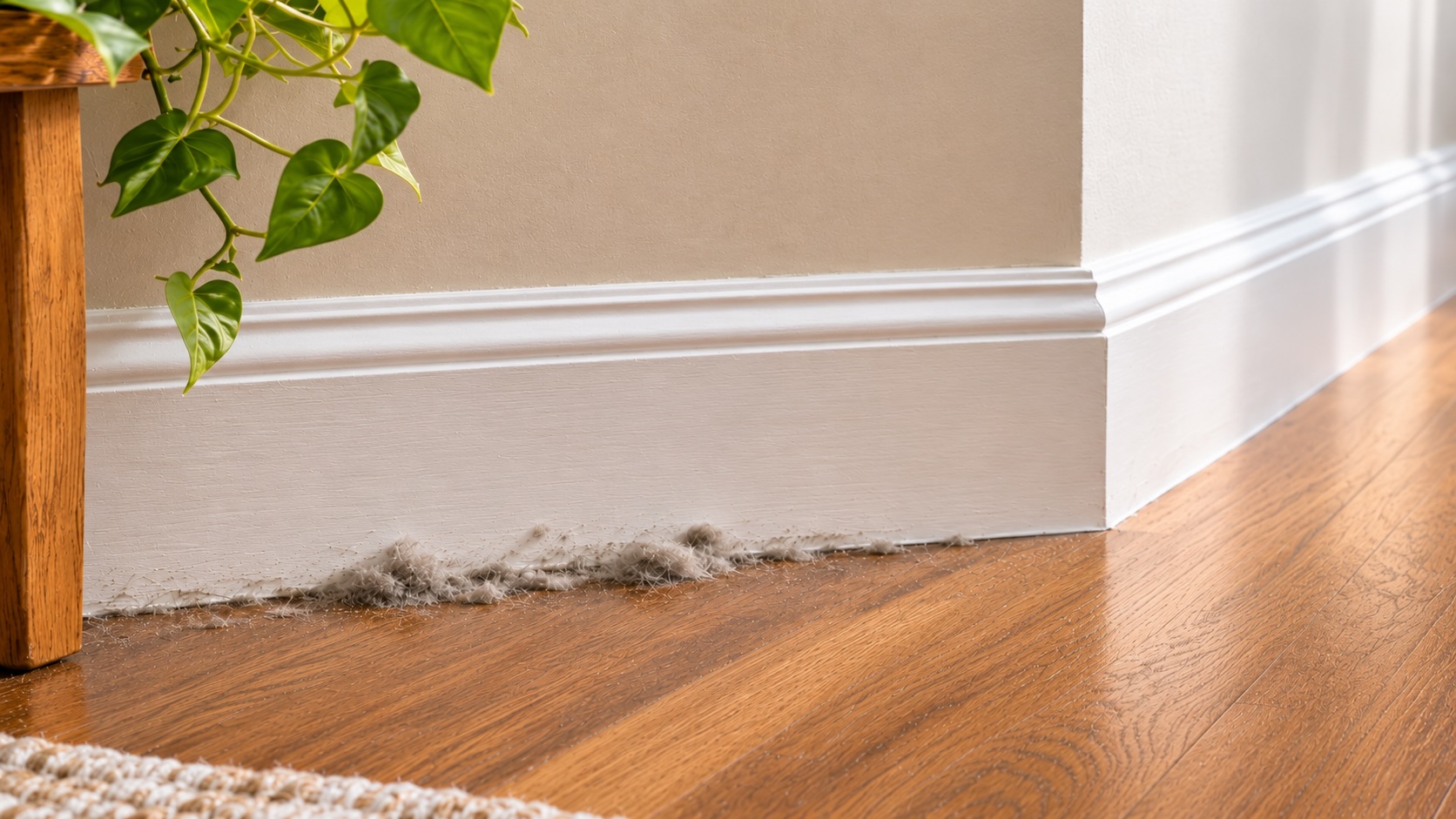
You know that moment when the sun hits just right and suddenly you can see every dust bunny clinging to your baseboards like it pays rent? You just cleaned last weekend, your quads are still mad about all that crouching, and yet there it is again – a fuzzy outline around every room.
The fix is not another expensive gadget or an afternoon on your hands and knees. It is sitting in your laundry room next to the detergent. The same thing you toss in with your towels – a dryer sheet – can quietly keep dust off baseboards for weeks.
The Real Reason Your Baseboards Get Dusty So Fast
Baseboards are perfectly placed to catch everything that floats by: dust, pet hair, dander, tiny bits of lint, and the faint film of kitchen grease that likes to wander. Gravity pulls it all down, but static cling is what makes it stick and stay.
Painted trim and molding can build up an electrostatic charge, so when dust drifts past, it magnetizes to the surface. You wipe it away, but if you do not change the static, the dust simply comes back for a sequel.
The Laundry Staple Hack: Dryer Sheets As A Dust Shield
Dryer sheets are designed to fight static on clothes, and that same trick works beautifully on baseboards. Viral TikTok cleaning hacks did not invent this – professional cleaners have been slipping sheets into their caddies for years.
A fresh dryer sheet does three things in one swipe: it grabs existing dust, it neutralizes the static that attracts more, and it leaves behind a barely-there coating that makes future dust slide off instead of sticking. Bonus: you can use any mainstream US brand you already have, from Bounce to Gain.
How It Works (No Science Degree Required)
Dryer sheets are coated with fabric softeners that contain positively charged ingredients. Those counteract the electrostatic charge on your baseboards and calm the cling. Less static plus a slightly slick surface means dust, pet hair, and dander have a harder time latching on.
The result is not a force field, but most homes see noticeably less buildup for at least several days, and often close to a month in low-traffic rooms.
[fpvideo mediaid=”https://www.youtube.com/watch?v=Ud-0O04D-KU” no_top_page=”yes” autoplay=”no”]
Step-By-Step: Using Dryer Sheets To Keep Dust Off Baseboards
Step One: Do A Quick Clean If Your Trim Is Grimy
If your baseboards are just lightly dusty, you can skip straight to the sheet. But if you are dealing with shoe scuffs, splashes, or kitchen grease, give them a fast reset first.
Run a vacuum with a brush attachment or a dry microfiber cloth along the trim to lift loose debris. Then wipe with warm water and a tiny drop of dish soap on a microfiber cloth. Rinse with plain water, dry completely, and let the paint come back to room temperature before you treat it.
Step Two: Wipe On The Dryer-Sheet Shield
Grab a fresh dryer sheet – used ones have already spent most of their static-fighting power in the dryer.
- Fold the sheet in half so it is easier to control.
- Starting in a corner, run it along the top ledge of the baseboard, then the face, then any grooves or decorative molding.
- Hit the spots that collect the most grime: behind doors, around door frames, near vents, and around pet beds.
- For no-bend cleaning, wrap the sheet around a broom, flat mop head, or vacuum wand and secure it with a hair tie or rubber band, then glide it along the trim.
When the sheet looks gray or starts to feel limp and less grabby, swap it for a new one.
Step Three: How Often To Reapply
Most pros suggest treating baseboards about once a month, which matches how long that anti-static coating can reasonably last.
In a low-traffic bedroom, you may get close to a full month of cleaner-looking trim. Hallways, entryways, and pet zones will need attention more often. A simple rule: every three to four weeks, when you vacuum, do a quick dryer-sheet pass in that same room to keep dust off baseboards between deeper cleans.
Does This Trick Actually Work?
Picture this: you clean all your baseboards, but only treat one wall in your hallway with a dryer sheet. Two weeks later, the untreated wall has a visible gray haze along the top edge, plus that halo of cat hair that loves to collect near corners. The treated wall still looks fresher, with just a light film that wipes off in one pass.
That side-by-side difference is what cleaning guides and many home testers report. It is not lab research, yet the pattern is consistent – less static means noticeably less dust settling back on the trim.
When To Skip Or Tweak The Dryer Sheet Baseboard Hack
If You Have Allergies, Asthma, Or Sensitivities
Some dryer sheets release fragrance and volatile organic compounds. If anyone in your home is sensitive, look for unscented or “free & clear” formulas, and use them with good ventilation.
If even that feels like too much, move straight to the alternatives below, which let you dial down scent and residue while still taming static.
If Your Trim Is Bare Wood Or Specialty Finish
On standard painted semi-gloss or eggshell trim, this hack is usually safe. On unsealed or oiled wood, limewash, or very matte designer finishes, any residue is more noticeable.
Test a small hidden section first. If you see dulling or streaking, skip the sheet and use a lightly damp microfiber cloth with diluted fabric softener instead.
Dryer-Sheet Alternatives That Still Fight Static
Diluted Fabric Softener Wipe
Fill a bowl or small bucket with water and add a small splash of liquid fabric softener. Swish to mix, then dip a microfiber cloth and wring it almost dry.
Wipe along the baseboards, let them air dry, and you have the same static-reducing effect with less waste and more control over scent.
Anti-Static Spray On A Microfiber Cloth
You can also use an anti-static spray designed for clothing or upholstery. Lightly mist a microfiber cloth – not the wall – then run it along the trim.
Look for fabric-safe, low-VOC, unscented formulas if indoor air quality is a priority.
Turn It Into A Five-Minute Routine
Build It Into Habits You Already Have
The secret to actually keeping dust off baseboards is not perfection, it is repetition. Every time you vacuum a room, grab a dryer sheet or treated cloth and do that room’s trim. Focus on high-traffic zones first: entryway, kitchen, hallway, around pet hangouts.
If you have multiple floors, assign one level per week. By the end of the month, everything has had its anti-static moment without a marathon cleaning session.
Quick Answer Round
Can I use a used dryer sheet? Yes for quick dust pickup, but it will not repel dust for as long as a fresh one.
Does this replace deep cleaning? No. You still need occasional soap-and-water scrubbing for stains, scuffs, and built-up grime.
Is it safe around kids and pets? Generally, yes on painted trim, as long as no one is chewing the baseboards and you are not overloading the room with fragrance. If that is a concern, switch to unscented sheets or the diluted softener method instead.


