










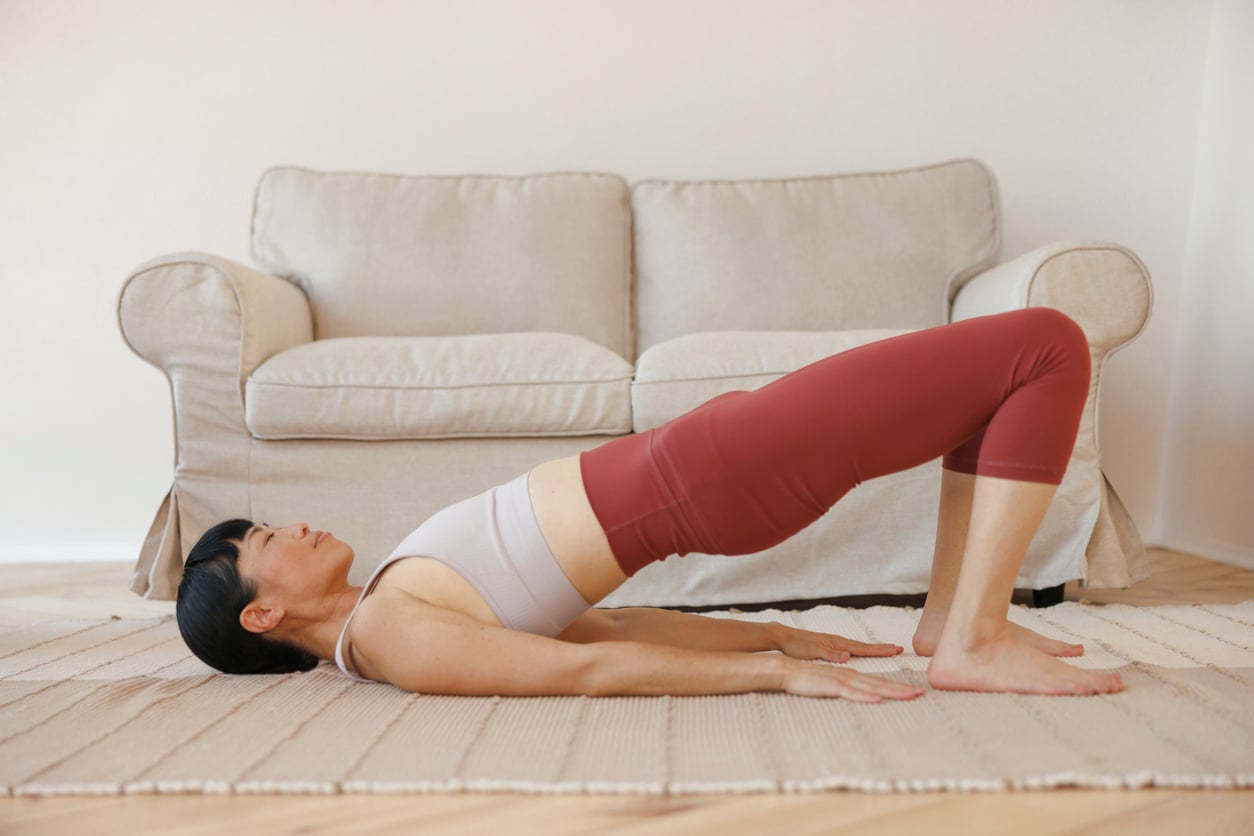
You eat the same way you always have. You move through your days at roughly the same pace. And yet, somewhere around 50, you catch your reflection and notice your midsection looks different – thicker, softer, less defined. It is one of the most common frustrations women report after menopause, and one of the least discussed honestly. The assumption is that you need to train harder, sweat more, push through pain. But what if the answer were quieter than that – gentler, slower, and only three minutes long?
When your body changes despite doing everything right
That is exactly where Sylvie, a 50-year-old woman who describes herself as someone who has never been an athlete, found herself. After menopause, she noticed her waistline thickening even though her diet had remained stable. Nothing dramatic had shifted in her lifestyle, yet her silhouette was telling a different story. It is the kind of change that can feel deeply disorienting, especially when effort and outcome no longer seem to correlate.
Sylvie began researching Pilates movements that could help reawaken the deep muscles of the core – those stabilizing muscles that tend to disengage over time and especially during hormonal transitions. What she landed on was a foundational Pilates exercise called the Pelvic Curl, a move so accessible she could fold it into her morning routine without any equipment at all. Within a few weeks, she noticed her waistline gradually reshaping, gently and without any intense physical strain.
A 2023 systematic review published in Healthcare (Basel) by Franks, Thwaites, and Morris (vol. 11, no. 10, p. 1404) examined how Pilates can improve core muscle activation, particularly in the context of chronic low back pain. The findings support the idea that Pilates-based movements effectively engage deep stabilizing muscles – the very muscles Sylvie set out to target. So is it really possible that a single, simple exercise could make that much of a difference?
How three minutes on your back can reshape your core
The Pelvic Curl is a foundational Pilates movement, commonly used at the beginning of a session to mobilize the spine, engage the deep abdominal muscles, and activate the glutes. It requires no equipment and can be performed at home, even by complete beginners.
The mechanics are straightforward. Lying on your back with knees bent and feet flat on the floor, you inhale to prepare. On the exhale, you slowly roll the pelvis and spine upward, vertebra by vertebra, until you reach the shoulder blades. Sylvie describes feeling her abdominals working throughout the motion, but without any pain. That pain-free quality is part of what made the exercise sustainable for her – she could do it every single morning without dreading it or recovering from it.
She now considers three minutes per day to be all she needed to start feeling better in her own body. That brevity is key. When a movement demands so little time and produces tangible results, the barrier to consistency essentially disappears. You do not need a gym membership, a class schedule, or specialized clothing. A mat on the floor and a few quiet minutes are enough.
Building from a single move toward a fuller routine
Over time, Sylvie expanded her morning practice by incorporating a couple of complementary Pilates exercises. She added Toe Taps – a movement focused on coordination – and Leg Circles, which help loosen and mobilize the pelvis. But she is clear about one thing: the Pelvic Curl is where everything started, and it remains the exercise she never skips. She simply does not begin a day without it.
Beyond the visible changes to her waistline, Sylvie also reports experiencing less lower back pain and noticeably improved posture. She stands taller, breathes more easily, and finds that her evening sessions on the mat provide a deep sense of well-being. The aesthetic benefit, in other words, was almost a side effect. The real transformation was functional – better spinal mobility, stronger deep muscles, fewer aches.
This tracks with the research. The systematic review by Franks, Thwaites, and Morris specifically examined Pilates as a tool for improving core muscle activation in people with chronic low back pain, reinforcing the idea that these gentle movements carry benefits that go well beyond appearance. For women navigating the physical shifts of menopause, that dual payoff – looking and feeling better – can be quietly life-changing.
A small habit with outsized returns
What Sylvie’s experience illustrates is something we often overlook in wellness culture: the most sustainable changes tend to come from the smallest commitments. Three minutes a day. One foundational movement. No equipment. The Pelvic Curl is not glamorous or trendy, but it is effective, gentle, and built to last. If your midsection has been quietly shifting despite your best efforts, you now know there is a move designed precisely for this moment in your body’s life – and it takes less time than brewing your morning coffee.


