










Longer is not better. The goal is a solid minute, and the rest is about form. Social media loves a plank challenge. Three minutes, five minutes, a shaking timer and a triumphant collapse at the end. It looks impressive, but it is not what exercise specialists recommend if you want a stronger core.
According to Cleveland Clinic and Harvard Health, the target is far more modest: about one minute, held with good form. After that, the smarter move is to make the plank harder, not longer.
What Cleveland Clinic Recommends
Exercise physiologist Katie Lawton, writing for Cleveland Clinic, advises building up gradually. “Hold a plank for about a minute before you start advancing,” she says. If you begin with a low plank on your elbows, she suggests starting with three sets of 30 seconds and lengthening the holds over the following weeks, adding 5 to 10 seconds at a time.
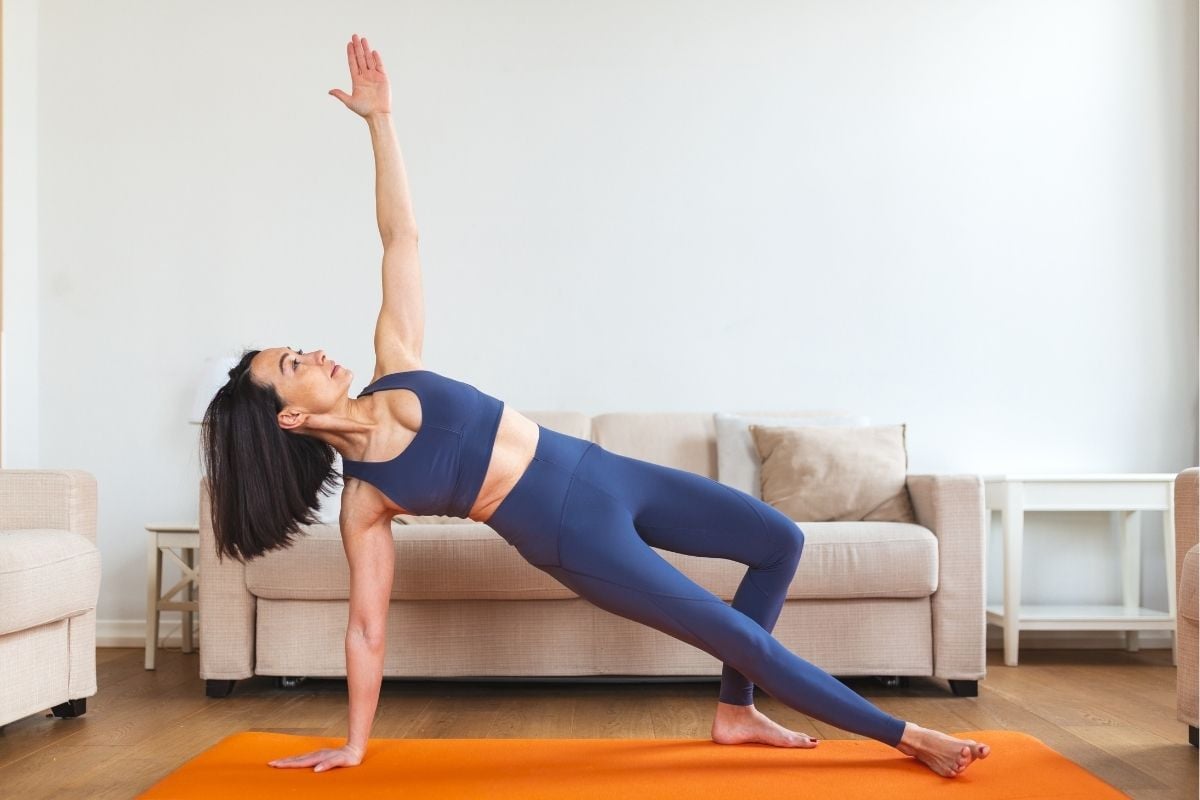
Once you can hold a position for more than a minute, Lawton recommends adding movement, such as reaching one arm overhead, rocking forward and back, or lifting a leg. She suggests planking two to four times a week.
The Ideal Time for Your Level
Harvard Health takes a similar approach. It recommends holding each plank for 10 to 60 seconds, with a goal of 60 seconds in total, split across as many repetitions as you need. If you can only hold 15 seconds, that means four rounds, with a short rest in between.
In practice, that gives a simple guide. Beginners can aim for several holds of 10 to 15 seconds, or start on their knees. Intermediate exercisers can work with sets of 30 seconds. Advanced exercisers can hold for about 60 seconds, then progress to harder variations.
“If you can hold it for three seconds, try it for four. If you can hold it for four, try to get to 10 seconds,” says Dr. Edward Phillips of Harvard Medical School.
Why Form Matters More Than the Clock
A long plank with sagging hips or a lifted backside does more for your ego than your core. Cleveland Clinic lists these as the most common mistakes, and warns that back or shoulder pain usually signals a form problem.
Here is the correct setup, according to Cleveland Clinic: start in a pushup position with your shoulders stacked over your elbows or hands, squeeze your glutes, tighten your abs and keep your back and hips in one straight line. Harvard adds three cues: keep your neck neutral, your shoulders down and back, and do not bend at the hips. Look at the floor, not ahead.
If you are unsure, film yourself from the side. The moment your form slips, the set is over.
Make It Harder, Not Longer
Once a minute feels comfortable, change the challenge rather than the timer. Try side planks, starting on your knees, then with straight legs. Add shoulder taps, leg lifts or a light weight on your back. Each variation works the core in a new way.
Why It Is Worth It
A strong core supports your spine in everyday tasks like lifting groceries, protects you during other exercises and can make good posture easier to maintain, Cleveland Clinic notes. Plus, a plank needs no equipment and only a few minutes.
Forget the five-minute plank. A clean, steady minute, a few times a week, will do far more for your body.