







You have probably experienced it without even realizing it. You pull your hair back before washing your face and catch a glimpse in the mirror – suddenly your cheekbones look sharper, your eyes appear wider, and the whole face seems somehow more awake. Then you let your hair fall and the effect vanishes. It turns out that fleeting moment of looking inexplicably refreshed is not a coincidence. It is a principle that hairstylists have understood for years, and one that Anne Hathaway recently brought into the spotlight in a way that has beauty lovers paying very close attention.
Why your updo makes you look younger than your skincare does
We spend small fortunes on serums and treatments chasing the kind of lifted, sculpted look that a well-placed ponytail can deliver in seconds. The conversation around hair as a visual lifting tool picked up momentum when Hathaway called her signature lifted hairstyle her favourite facelift hack. Her hairstylist, Orlando Pita, even shared a video tutorial breaking down the technique, which involves two lifting braids that begin at the temples and are then gathered into a ponytail.
But what exactly makes a hairstyle capable of mimicking what cosmetic procedures aim to achieve? Ante Pažanin, founder of TE Studio, explains that a visual lift through hair is not an illusion but rather the result of deliberately changing the direction and weight distribution of the hair. When strands are guided upward, the viewer’s line of sight shifts accordingly. The face reads as fresher, the eyes look more open, and the cheekbones appear more defined.
So could the secret to looking well-rested actually live in the way you style your hair rather than in the eye cream you applied last night?
The mechanics behind a hair-powered mini lift
According to Pažanin, the simple act of lifting the hair targets many of the same areas that a surgical facelift addresses. Tension at the roots raises the temple and brow area, while volume at the crown produces what he describes as a push-up effect through the mid-face. Smooth, sleek surfaces reflect light in a way that accentuates the face’s natural contours and essentially sculpts it. The outcome is a natural yet noticeable mini lift that requires neither invasive treatments nor much effort.
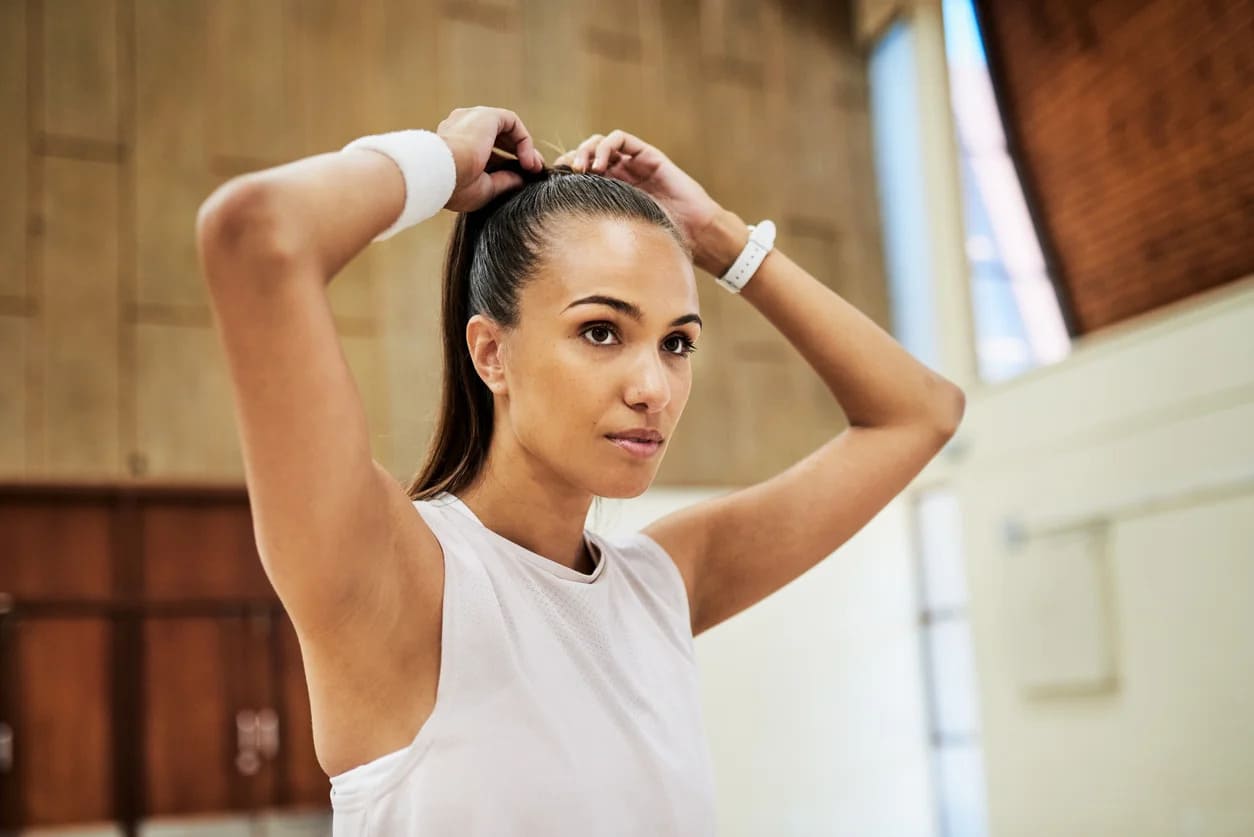
The high ponytail is perhaps the most iconic version of this concept. When the hair is pulled into a perfectly sleek, tight ponytail, the entire upper third of the face opens up. Pažanin considers it the quickest non-invasive lift available. For those who prefer something less dramatic, a half-up hairstyle offers a subtler version of the same effect. By building volume around the crown, the mid-face is optically elongated and the eyes appear more open. Pažanin likens this style to a discreet French facelift – the kind of change where nobody can pinpoint exactly what is different, but everyone notices you look more rested.
Then there is the sleek bun, which may be the most versatile lifting hairstyle of all. Whether worn low or high, a slick bun sharpens facial features and brings out the cheekbones. The smooth hair reflects light and creates more defined contours, while the upward pull gives the temples an optical lifting effect. Pažanin notes that when creating a slick bun for editorial shoots, his focus centres on the jawline and cheekbones, because clean, sleek hair around the face lends them an almost sculptural definition. This chameleon-like style transitions effortlessly from a wedding day to cocktail hour, the gym, or the office.
How to make the lifting effect work harder for you
The beauty of this approach is that it comes down to four variables you can control with nothing more than a brush and a hair tie: direction, volume, light, and tension. Pažanin emphasizes that hair, perhaps more than any other beauty tool, can create structure, height, and definition without aggressive interventions. Whether you gravitate toward tightly pulled-back styles or prefer soft face-framing strands, manipulating those four elements is the key to unlocking the lift.
He also suggests that lifted hairstyles can be paired with strategically placed highlights as an additional way to visually lift the face. The interplay between light-catching colour and upward-directed styling amplifies the sculpting effect, giving you an even more polished result. You do not need to commit to one signature style either. A high ponytail for a busy morning, a half-up look for the weekend, a slick bun for evening – each one targets the same lifting zones in a slightly different way.
The real takeaway for your mirror moments
What Hathaway and her stylist Orlando Pita brought to the mainstream is something hairstylists like Ante Pažanin have long understood: your hair is one of the most powerful contouring tools you own. A few minutes of intentional styling can open up the eyes, define the cheekbones, and lift the temples in ways that echo the goals of far more involved procedures. The next time you absentmindedly sweep your hair up and think you look somehow better, trust that instinct – and maybe reach for a second hair tie.


