










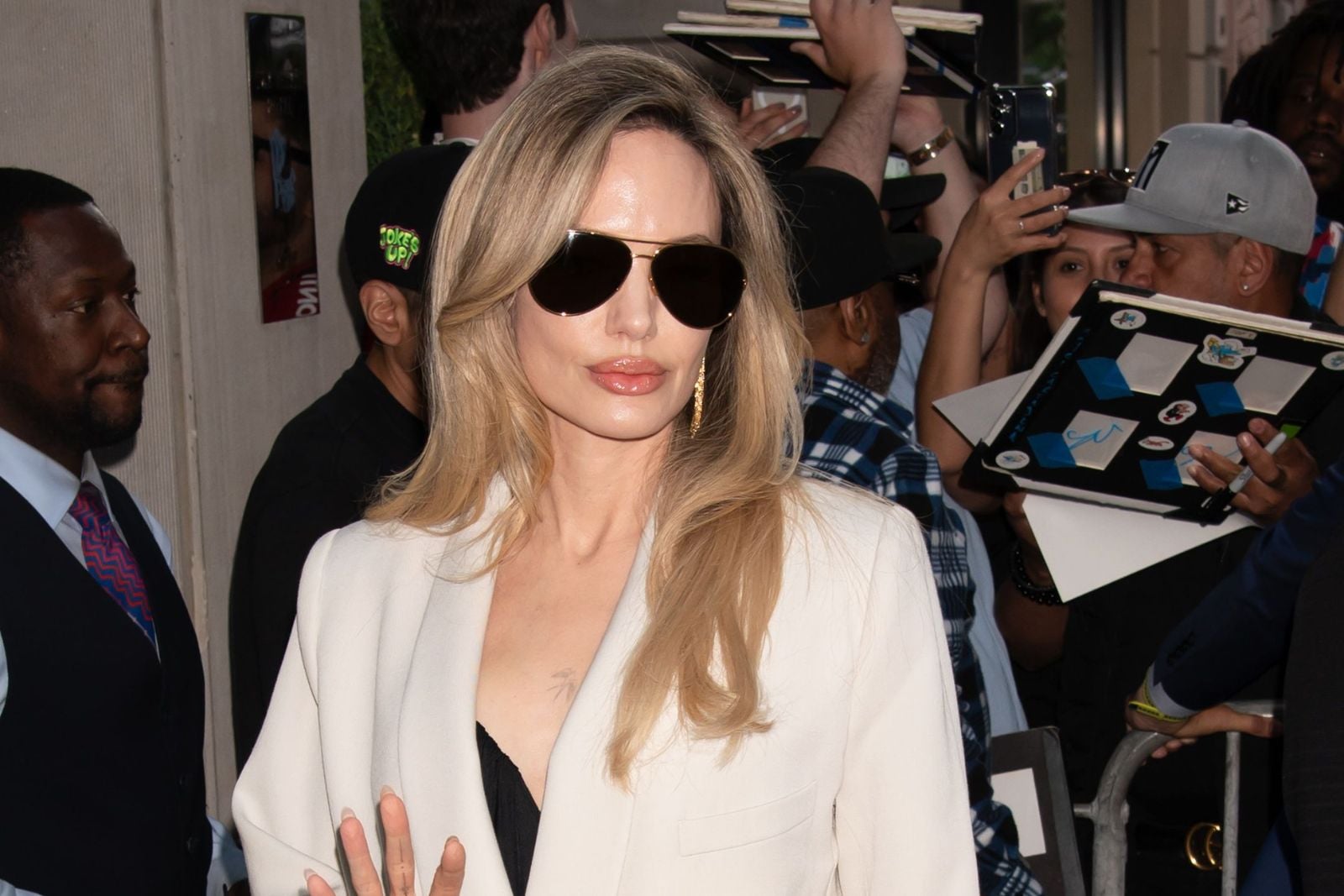
We like to believe that the entertainment industry rewards talent and integrity in equal measure. We tell ourselves that the biggest stars got where they are by making smart choices, picking the right scripts, and working with the right directors. But what happens when the “right” project comes attached to someone dangerous – someone whose behavior you have witnessed firsthand? For most people in Hollywood, the answer has historically been to look the other way. Angelina Jolie chose a radically different path, and it cost her a chance to work with one of cinema’s greatest living directors.
A career built on talent and conviction
Jolie’s relationship with the film industry began remarkably early. Her first role arrived when she was just seven years old, appearing opposite her father in Lookin’ to Get Out. By the time the early 2000s rolled around, she had evolved into a formidable presence on screen, demonstrating serious dramatic range in films like Girl, Interrupted and Gia while simultaneously proving she could anchor a global franchise with Lara Croft: Tomb Raider.
Add Mr. & Mrs. Smith to the ledger, and you had an actress who could command any room in the business. Every opportunity imaginable was available to her. Yet despite reaching that rarefied air, Jolie never treated career advancement as something worth pursuing at any moral cost. She had drawn a personal line long before the rest of the world caught up.
So when Martin Scorsese came calling for his 2004 biographical epic about pilot Howard Hughes, assembling an ensemble cast filled with the biggest names of the era, Jolie seemed like a natural fit. Which role Scorsese had in mind for her remains unclear, but the invitation itself was undeniable. And she said no.
Why she walked away from a Scorsese film
Her refusal had nothing to do with Scorsese or the project’s creative vision. The problem was Harvey Weinstein, who was producing The Aviator through Miramax Films, the company he co-founded with his brother Bob. In a 2021 interview with The Guardian, Jolie confirmed that she declined the role specifically because of Weinstein’s involvement. She told the publication she never associated or worked with him again after making that decision.
This was more than a decade before allegations against Weinstein became public and eventually led to him being charged and convicted of sexual assault. Jolie, however, did not need the headlines to know who he was. She had already experienced his behavior up close and personally.
During production of the Miramax movie Playing By Heart, when Jolie was just 21 years old, she endured a harrowing encounter with Weinstein in a hotel room. She described it as a violation of her rights – not merely an unwanted advance but something she physically needed to get away from. She later reflected that it was the first time she had ever told someone in the industry to back off in the most explicit terms possible. She also acknowledged a painful truth: that even an attempted violation carries the weight of an assault.
Sounding the alarm when no one else would
What makes Jolie’s stance remarkable is not just that she walked away. It is what she did afterward. She pledged never to collaborate with Weinstein again and actively urged others to do the same. She recalled telling Jonny Lee Miller, her first husband, about the incident and asking him to spread the word among other men in the business – specifically warning them not to let young women be alone with the producer.
Her conviction even created friction in her personal life. Jolie revealed that it was difficult for her when Brad Pitt later chose to work with Weinstein. She said they fought about it and that it hurt. In an industry where career calculations routinely override personal ethics, Jolie’s willingness to let her stance affect her closest relationships underscores just how seriously she took the situation.
Working with Scorsese is widely considered the pinnacle of any actor’s career. Many stars would have set aside their reservations for that kind of opportunity, reasoning that the director’s legacy outweighed the producer’s misdeeds. Jolie simply was not willing to make that trade.
What her choice tells us now
Looking back, Jolie’s early refusal to stay silent carries an uncomfortable implication. Had more people in positions of influence followed her lead – refusing to work with Weinstein, warning colleagues, making his behavior professionally untenable – he might have been held accountable far sooner. Miriam Haley, who suffered at Weinstein’s hands in 2006, might have been spared entirely.
Jolie did not have the benefit of a public reckoning or a cultural movement to validate her instincts. She had only her own experience and a resolve that most people in her position simply did not share. The takeaway is not that one person should have carried this burden alone. It is that integrity, even when it is lonely and costly, can be its own form of power.


