










You know the routine. Late summer rolls around, the basil on your countertop still smells like sunshine, tomatoes, and garlic. The leaves are thick, almost warm to the touch, ready to release that unmistakable fragrance the second you crush them between your fingers. And yet, deep down, you already know what happens next. A few cold nights creep in, the stems go limp, and those gorgeous green leaves end up blackened and mushy – shoved into the back of a freezer bag or forgotten in the crisper drawer. We have all been there, and most of us have simply accepted it as the price of seasonal cooking.
Why your frozen basil always turns into a brown, flavorless mess
Every year, the same well-meaning impulse kicks in: toss the entire bunch into the freezer for later. And every year, the result is a brownish, scentless lump that barely resembles the herb you started with. So what exactly goes wrong?
Basil is a tropical plant. It genuinely hates the cold. Its very tender leaves are loaded with water, and once temperatures drop inside a freezer, that water forms ice crystals that rupture the cell walls. When you thaw the leaves, you get a mushy, purée-like texture that falls apart between your fingers – nothing like the firm, aromatic leaf you froze weeks earlier.
But cell damage is only half the story. There is also an enzyme called polyphenol oxidase. When exposed to air and cold, this enzyme triggers browning. A whole bouquet frozen as-is stays in prolonged contact with oxygen, the stems deteriorate, the color shifts to brown, and the fragrance escapes along with the released water. Where hardier herbs like parsley or mint can handle freezing without too much damage, basil loses almost everything. So is there actually a way to outsmart the chemistry?
The small but game-changing move chefs make before the first frost
Professional cooks do not resign themselves to flavorless winter herbs. Their method is almost embarrassingly simple, and it starts with an ordinary ice cube tray and a drizzle of oil.
First, you detach the leaves from the stems and dry them thoroughly. Then you cut them finely. Some chefs prefer tearing the leaves by hand or snipping them with scissors rather than using a metal knife, which is thought to introduce a slight bitter note. The finely cut basil goes into each compartment of the tray, packed to about two-thirds full – firmly, but without completely crushing the leaves.
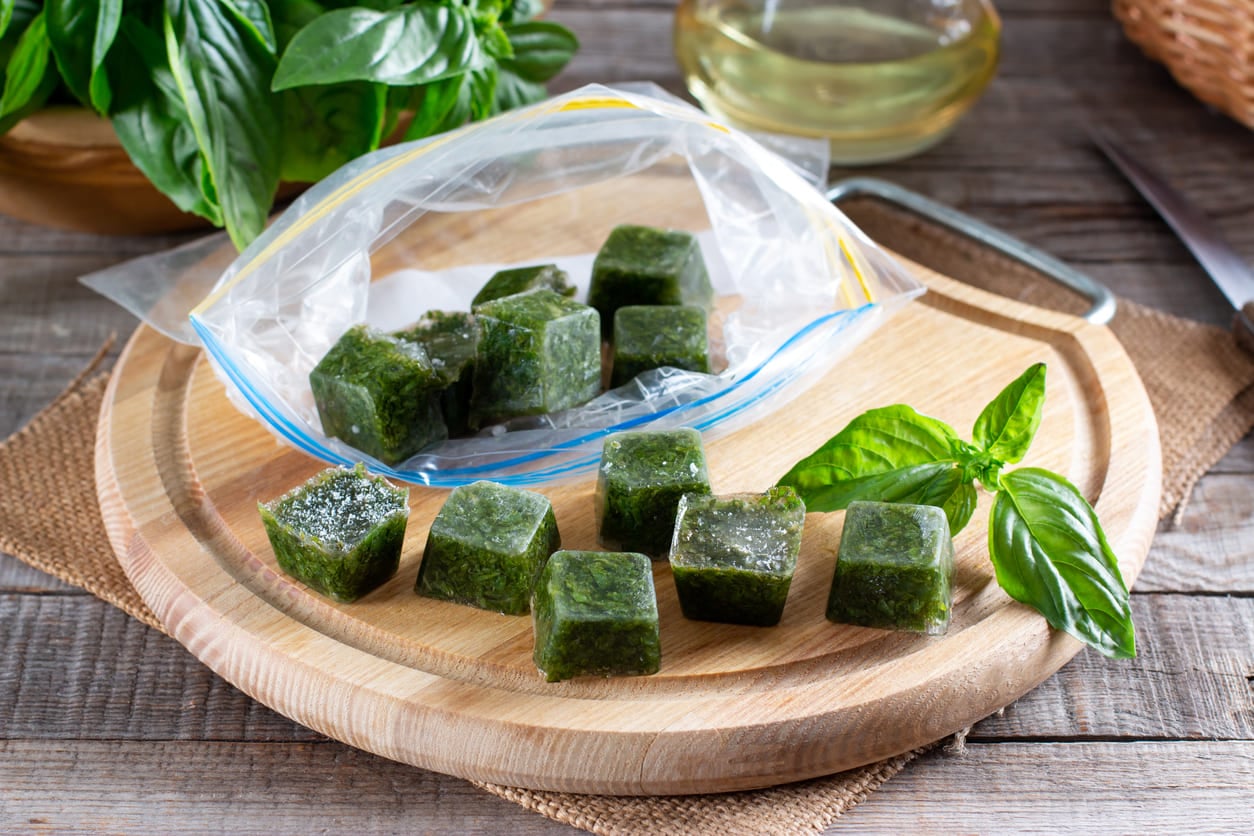
Next comes the crucial step. You pour oil over the basil, just enough to reach the top of the herbs – no more. This thin layer of oil creates a protective film that drives out the air, limits oxidation, and prevents that dreaded blackening. One single night in the freezer is all it takes to produce vibrant green cubes, ready to perfume your cooking whenever you need them.
The science behind it is straightforward. By eliminating the air pocket around the leaves, you cut off the oxygen supply that polyphenol oxidase needs to trigger browning. The oil also insulates the delicate cell structure, reducing the severity of ice-crystal damage. The result is a cube that looks – and smells – like it was made in August, even if you pop it out of the tray in January.
How to store them and put them to work in your kitchen
Once frozen solid, transfer the cubes into a tightly sealed bag and keep them in the freezer at 0 °F (-18 °C). Stored this way, basil cubes hold their color and fragrance for up to one year. For comparison, parsley cubes last roughly six months under the same conditions, while cilantro keeps for about three months. This approach also cuts down on waste from oversized bunches bought at the store or end-of-summer garden harvests that ripen all at once.
Using them could not be easier. A single herb cube melts in just a few seconds in a hot pan. You can drop one into a tomato sauce at the end of cooking, stir it into a risotto, slide it over a zucchini sauté, or place it on a fish fillet right before it goes into the oven. Feeling creative? Combine basil, parsley, and chives in the same compartment to build a homemade bouquet garni cube. Or blend basil with Parmesan and nuts before freezing to create ready-to-use pesto cubes that are practically a weeknight dinner shortcut.
One September gesture, months of summer flavor
The takeaway here is refreshingly practical. You do not need special equipment, expensive gadgets, or professional training to preserve basil the way chefs do. An ice cube tray, a bottle of oil, and ten minutes of prep before the first cold snap are all it takes. What you gain is a freezer stocked with brilliantly green, intensely fragrant cubes that bring the scent of a summer garden straight into the dead of winter. It is one of those rare kitchen tricks where the effort is tiny and the payoff lasts for months.


