










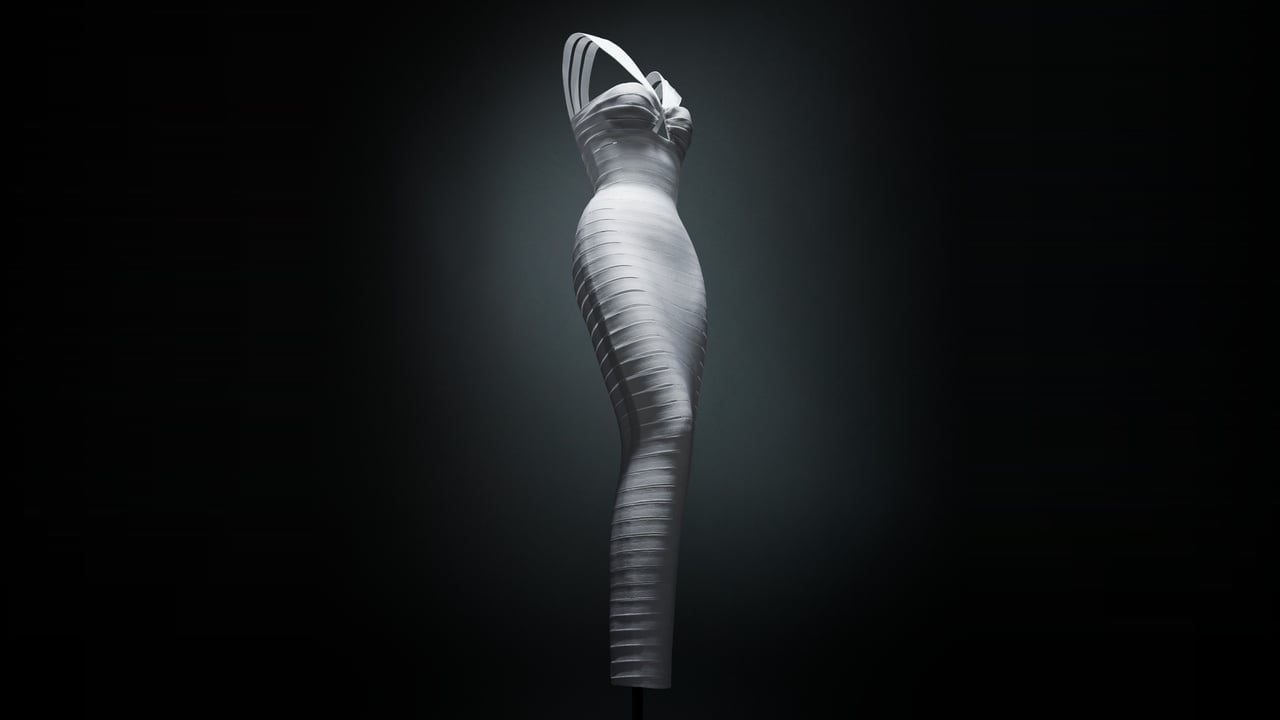
Courtesy of Fondation Azzedine Alaïa © Andrea & Valentina
In the sage words of Clueless’s Cher Horowitz, Alaïa is, “like, a totally important designer.” A new exhibition at San Francisco’s Legion of Honor museum reveals just how important the United States was to making the late Tunisian-born French couturier a household name. Azzedine Alaïa: Sculpting Fashion, the first U.S. Alaïa retrospective, brings together 80 garments spanning 1982 to his death in 2017, alongside pieces from his formidable historic fashion collection, including works by American greats Charles James and Adrian. The exhibition traces how Alaïa’s body-sculpting clothes met their moment in the U.S., as American women were claiming greater agency in the workplace and redefining what strength could look like. Retailers, editors, models, and celebrities became his champions, helping transform a tiny but influential maison into an international phenomenon.

Courtesy of Fondation Azzedine Alaïa and the Fine Arts Museums of San Francisco © Gilles Bensimon
Alaïa’s path to fashion stardom was hardly conventional. He studied sculpture at the School of Fine Arts in Tunis, financing his education with sewing jobs after learning the craft as a boy by doing his sister’s homework. In 1956, he moved to Paris, where a school friend helped him land an internship at Christian Dior that lasted just four days. Neither his time on Avenue Montaigne nor a later three-season stint at Guy Laroche proved as formative as working independently from his at-home atelier. For the next two decades, his reputation spread discreetly among a rarefied circle that included the Countess Nicole de Blégiers, novelist Louise de Vilmorin, artist Rosine Baldaccini, and actor Arletty. By the dawn of the 1980s, however, word about his dresses cut with the precision of carved marble had begun to travel across the Atlantic.
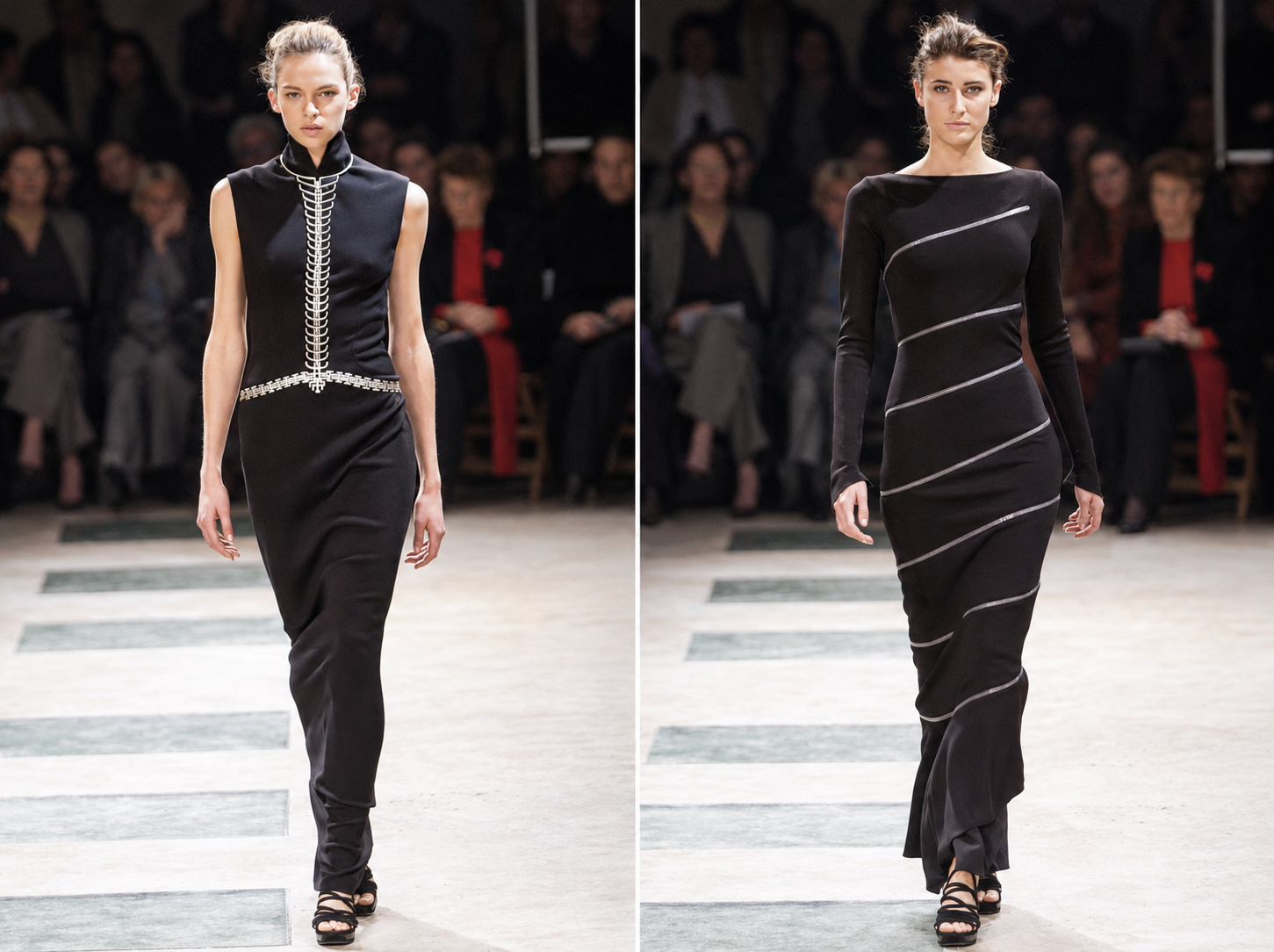
Photo Credit: Victor Virgile/Gamma-Rapho via Getty Images
Alaïa once said he owed everything to photographer Bill Cunningham, who brought him to the attention of the American fashion industry in a November 1981 Women’s Wear Daily story headlined “Paris’ New Hot Name.” Cunningham’s street-style shots of French editors including Carlyne Cerf de Dudzeele captured a form fitting leather suit and a jersey dress with a zipper spiraling around the body. He predicted that their kinetic forms possessed “power that might have an influence for the last decadesof this century,” anointing Alaïa as fashion’s fin-de-millennium Balenciaga. Soon, Bergdorf Goodman fashion director Dawn Mello came calling, encouraging Alaïa to produce his first ready-to-wear collection and inviting him to present it in New York. The following September, he staged his first-ever fashion show at the Fifth Avenue department store, a standing-room-only affair featuring top models Pat Cleveland and Alva Chinn.
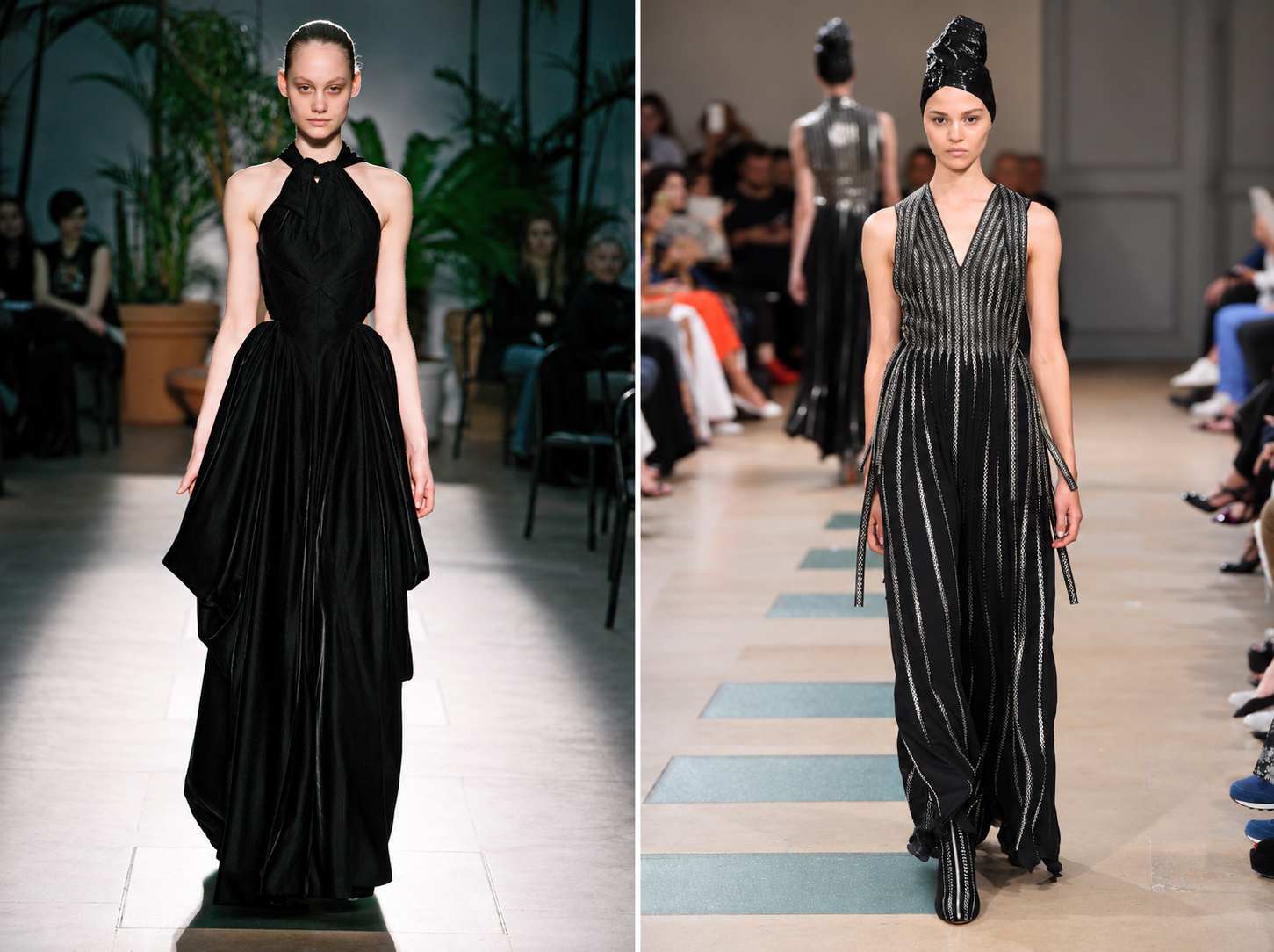
Photo Credit: Andrew Lamb/Catwalking/Getty Images, WWD/Penske Media via Getty Images
Bergdorf was hardly alone in recognizing Alaïa’s potential. Former Barneys co-CEO Gene Pressman maintains he first visited the designer’s atelier as early as 1979 or 1980. In his memoir, They All Came to Barneys, Pressman recalls buying a trove of black leather opera gloves studded with metal grommets, inspired by costumes Alaïa designed for Crazy Horse dancers. “With those gloves, we had it first,” he writes. Whatever the precise chronology, by 1983 an Alaïa boutique opened on Rodeo Drive in Beverly Hills and was stocked in department stores and independent boutiques in San Francisco, Dallas, Chicago, Detroit, Baltimore, and Boston. Two years later, Barneys took Alaïa-mania to another level, staging a 1,000-person show at the Palladium, art-directed by Jean-Paul Goude, for a crowd that included Keith Haring, Stephen Sprouse, and Andy Warhol.
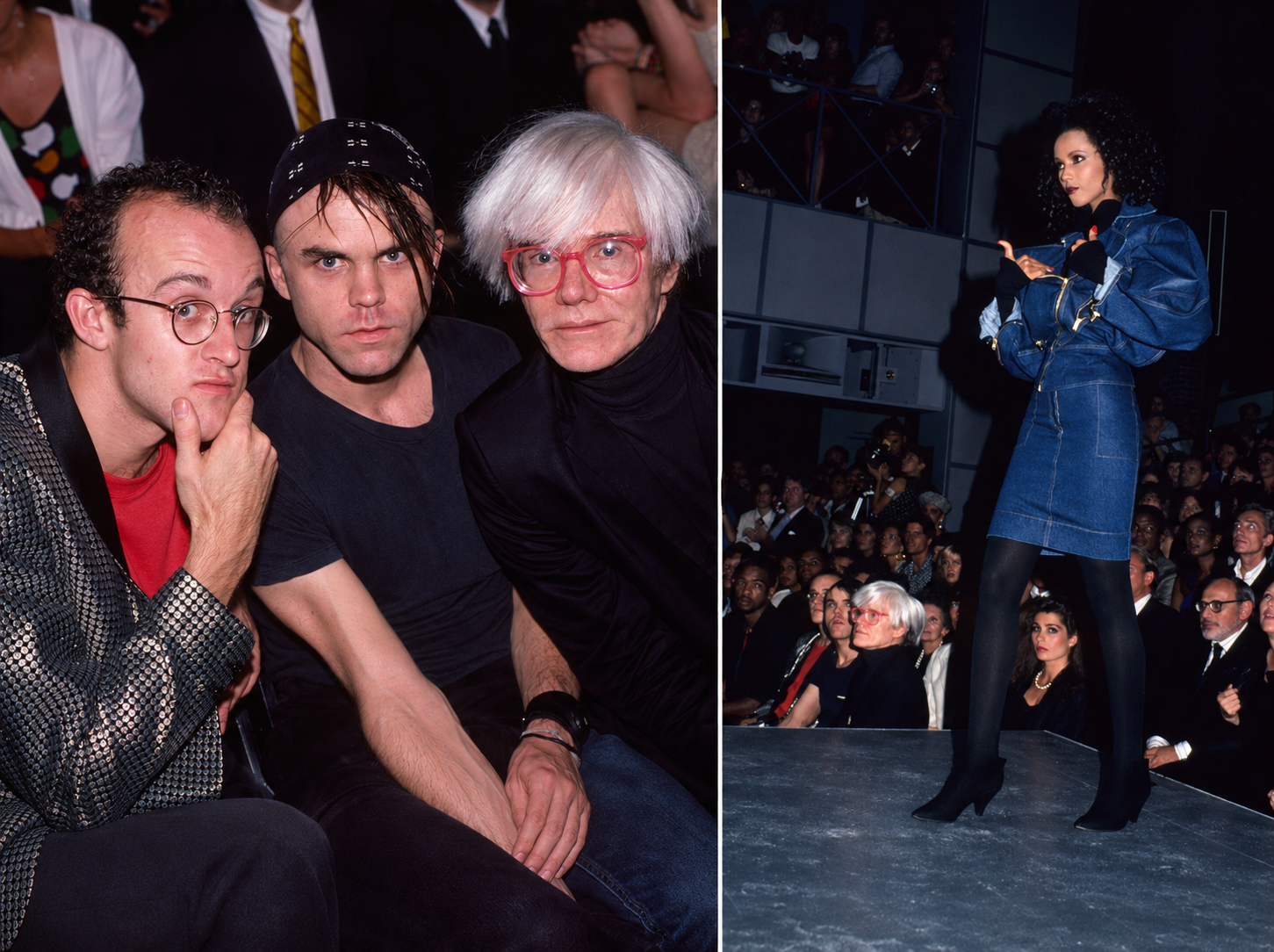
Photo Credit: Sonia Moskowitz/Getty Images, Rose Hartman/WireImage
“Alaïa’s really sculptural approach to design resonated with a generation seeking empowerment through bodily autonomy,” says Fine Arts Museums of San Francisco curator Laura L. Camerlengo, who organized the retrospective with Fondation Azzedine Alaïa director Olivier Saillard. “His clothes offered women shape and form, but also comfort.” Inspired by the wrapped linens of Egyptian mummies, his signature bandage dresses used Lycra to shape the body without the rigid architecture of corsetry allowing full range of movement. A long white Spring/Summer 1990 column and a dramatic hooded, fishtail gown worn by Grace Jones from Spring/Summer 1986 give those ancient wrappings a startling sense of life.
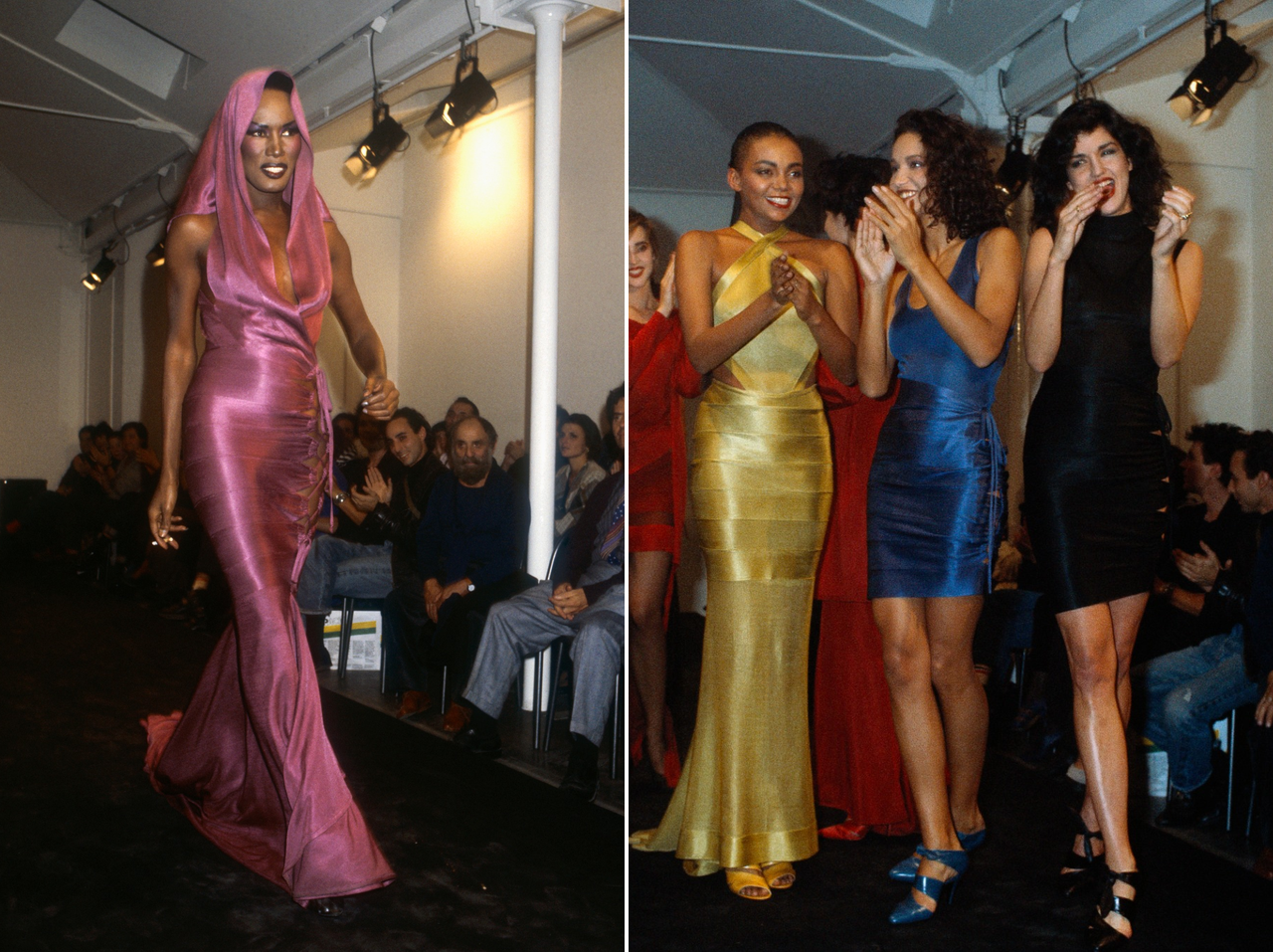
Photo Credit: Pierre Vauthey/Sygma/Sygma via Getty Images
“His understanding of materials really helped him create garments that wrapped around the body, rather than forcing it to take an artificial shape,” Camerlengo says. With body-con cuts cradling hips and breasts, glossy black leather, and metal grommets, Alaïa’s clothes were also unabashedly sexy. Amid second-wave feminism’s expanding conversations around women’s sexual freedom and pleasure, this embrace of sensuality was an assertion of agency. “Rather than being passive subjects of the male gaze, women used the way they felt in an Alaïa dress to reclaim the gaze,” says Camerlengo. Longtime Alaïa client Mathilde de Rothschild captured this duality a bit less academically: “Thanks to his dresses, a lady already has 50 percent of her work done for her, whether her aim is to do business or to seduce a man.” Wearing Alaïa offered the potent promise of having it all — in the boardroom and the bedroom.
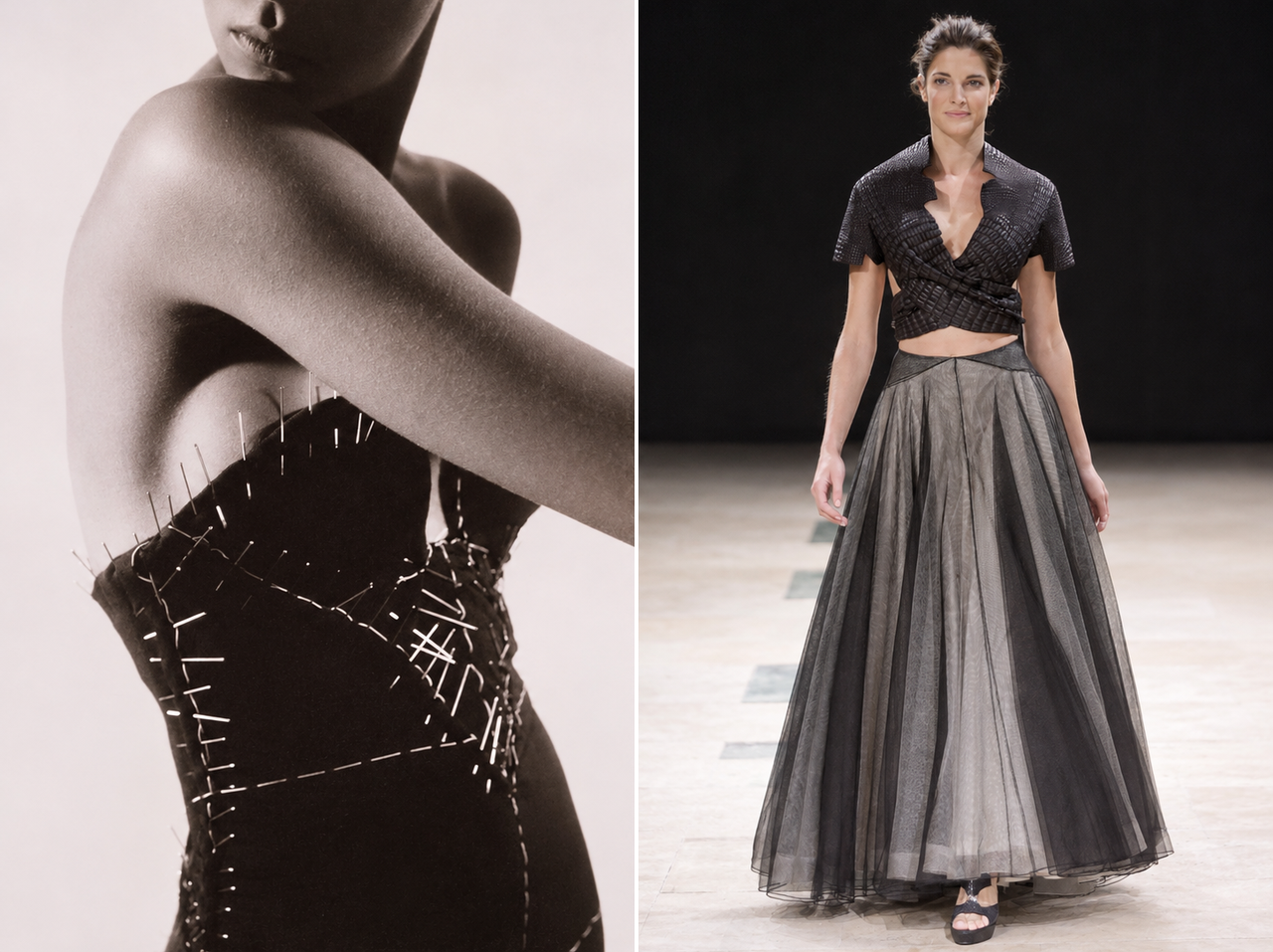
Photo Credit: © Jean-Baptiste Mondino, Victor Virgile/Gamma-Rapho via Getty Images
Alaïa’s vision of empowered femininity also helped shape a new fashion archetype: the supermodel. Detroit-born Veronica Webb and San Diego native Stephanie Seymour were among the teenage models Alaïa took under his wing, along with 16-year-old Brit Naomi Campbell; all three lived with him and his partner, artist Christoph von Weyhe. Alaïa taught them not simply how to walk, but how to command a runway. Indifferent to the fashion calendar, throughout the ’90s he might show a collection a week after the season ended, yet the trio and their single-name-only peers would fly to Paris to walk for him in exchange for runway samples. “When I wear Alaïa, I feel like myself,” Seymour has said, estimating she still wears his designs four times a week.
Grammy Awards
Photo Credit: Chip Somodevilla/Getty Images, Larry Busacca/WireImage
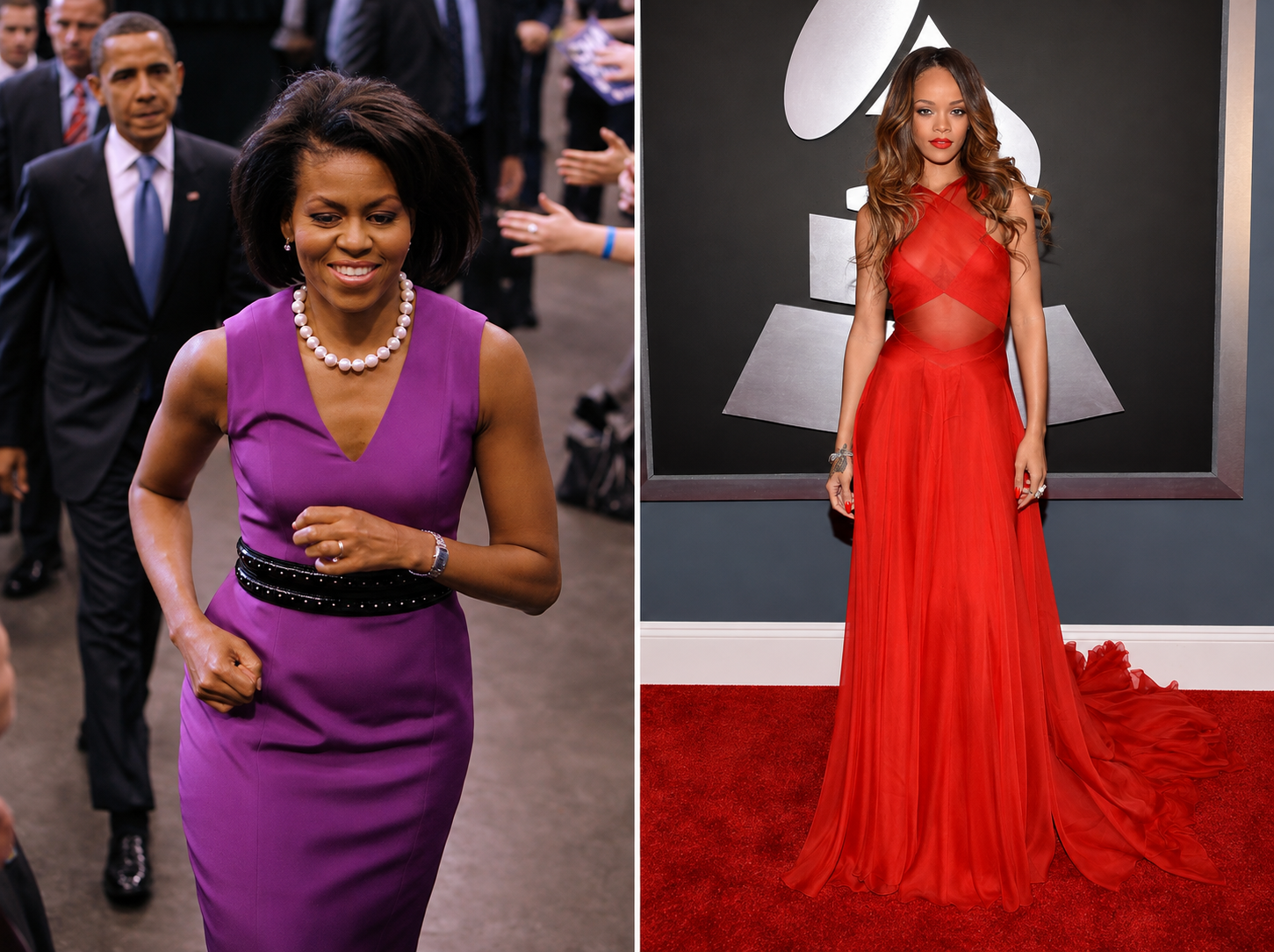
Alaïa’s women were never one type. Without budgetingfor advertising campaigns or celebrity placements, he attracted devotees from Tina Turner to Rihanna and Lady Gaga, typically insisting that they come to Paris for fittings. The exhibition includes a Spring/Summer 1989 minidress Turner modeled for a photo shoot, dripping in strands of gold-tone steel beads, and the statuesque Fall/Winter 1997 red silk chiffon gown Rihanna wore to collect a Grammy in 2013. His reach extended even to the White House. Michelle Obama wore Alaïa on the 2008 presidential campaign trail, where she cinched a Maria Pinto sheath dress with his perforated black leather corset belt and to gala events as first lady. Obama, however, bought her Alaïa off the rack — at Chicago boutique Ikram — just like his many other American fans.
Read GRAZIA USA’s Fall/Winter 2026 Issue


