










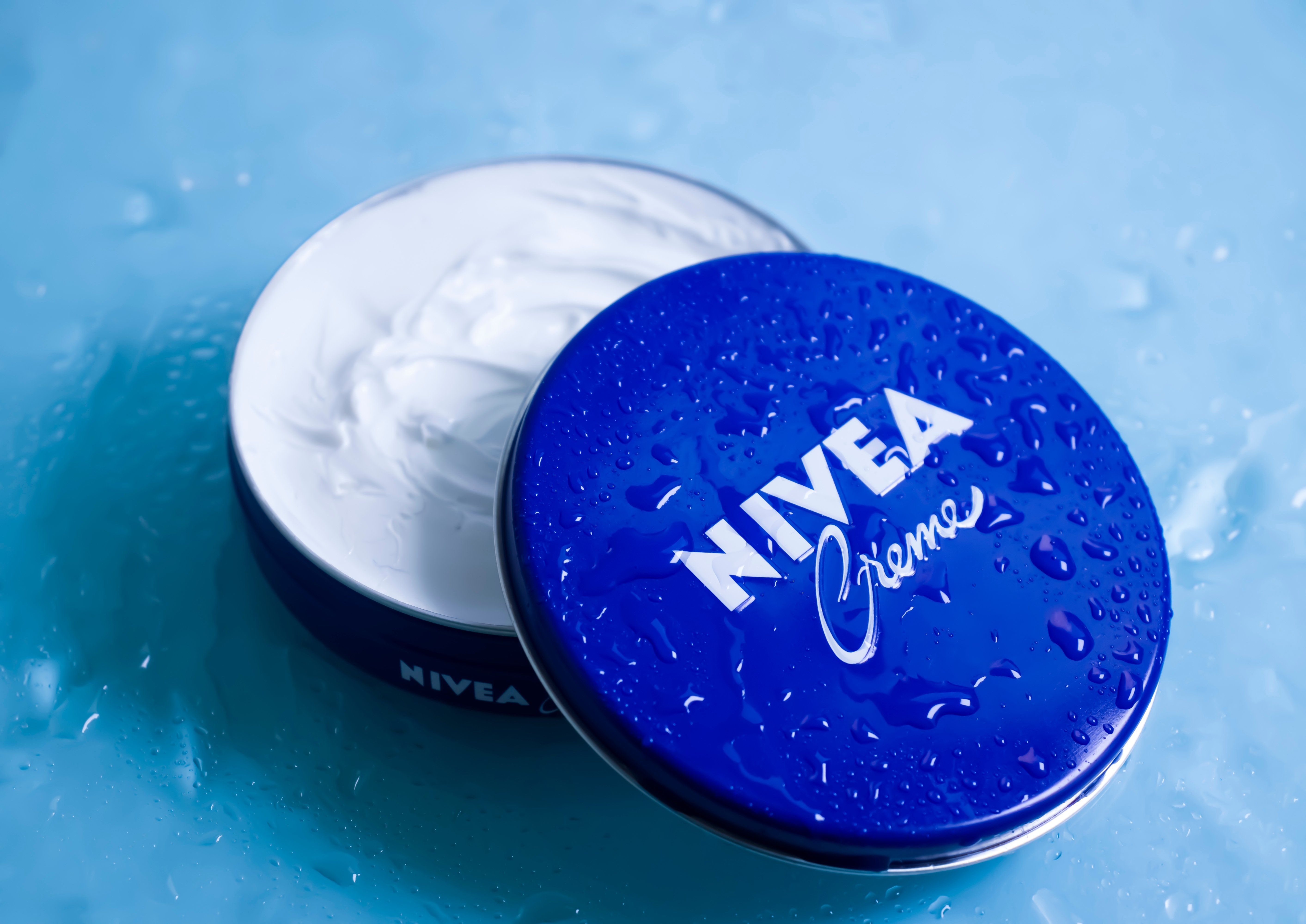
The blue tin of Nivea Creme is a beauty classic, and olive oil sits in almost every kitchen. Mixed together, they have become a popular home remedy for very dry skin. Here is what this combination can really do, how to prepare it, and why it is not for everyone.
In short
- The mix of Nivea Creme and olive oil is widely shared in Spanish-language media as a treatment for dry areas like elbows, knees, heels and hands.
- It is not an anti-aging product and does not erase wrinkles.
- A 2013 study found that pure olive oil can weaken the skin barrier, so people with eczema-prone skin should be cautious.
What it’s used for
According to the Mexican outlet Gastrolab, the mix is mainly used to soften the driest areas of the body: elbows, knees, heels and hands. The idea is simple. Nivea Creme forms a layer on the skin that limits moisture loss, while olive oil adds lipids that leave the skin feeling more supple.
Its effect is limited to comfort and hydration. As Gastrolab points out, the mix “does not work as an anti-aging product” and does not eliminate expression lines. Better hydration can make dryness-related fine lines look less visible, but only temporarily.
How to make it
Here is the recipe shared by Gastrolab:
- 1 tablespoon of extra virgin olive oil.
- 1 small tin of classic Nivea Creme (the blue tin).
- Optional: a few drops of vitamin E suitable for topical use.
Transfer a small amount of cream to a clean, dry container with a lid. Add the olive oil gradually and mix with a clean spatula until the texture is even, adding the vitamin E if you wish.
How to apply it
Apply a small amount to clean, dry skin, ideally after a bath or shower, and spread it gently over the areas that need it most. A little goes a long way: the texture is rich.
Who should skip it
This is where science calls for caution. In a study published in 2013 in Pediatric Dermatology, researchers led by Simon Danby applied olive oil twice a day to the forearms of 19 adult volunteers, some with a history of atopic dermatitis, for several weeks.
After four weeks, olive oil caused a significant reduction in the integrity of the skin’s outer layer and mild redness, both in people with and without eczema. The authors concluded that olive oil could damage the skin barrier and advised against using it for dry skin or infant massage. Sunflower seed oil, tested at the same time, did not have this effect.
In practice, people with eczema, very reactive skin or a damaged skin barrier should avoid this mix, and anyone should stop if redness or irritation appears.
The Nivea hacks keep coming
The blue tin has inspired many viral mixes, from Nivea Creme and cornstarch to Nivea Creme and coconut oil for hair.
For rough elbows and cracked heels, Nivea and olive oil can be a cheap comfort fix. For sensitive or eczema-prone skin, it’s better to skip it.


