










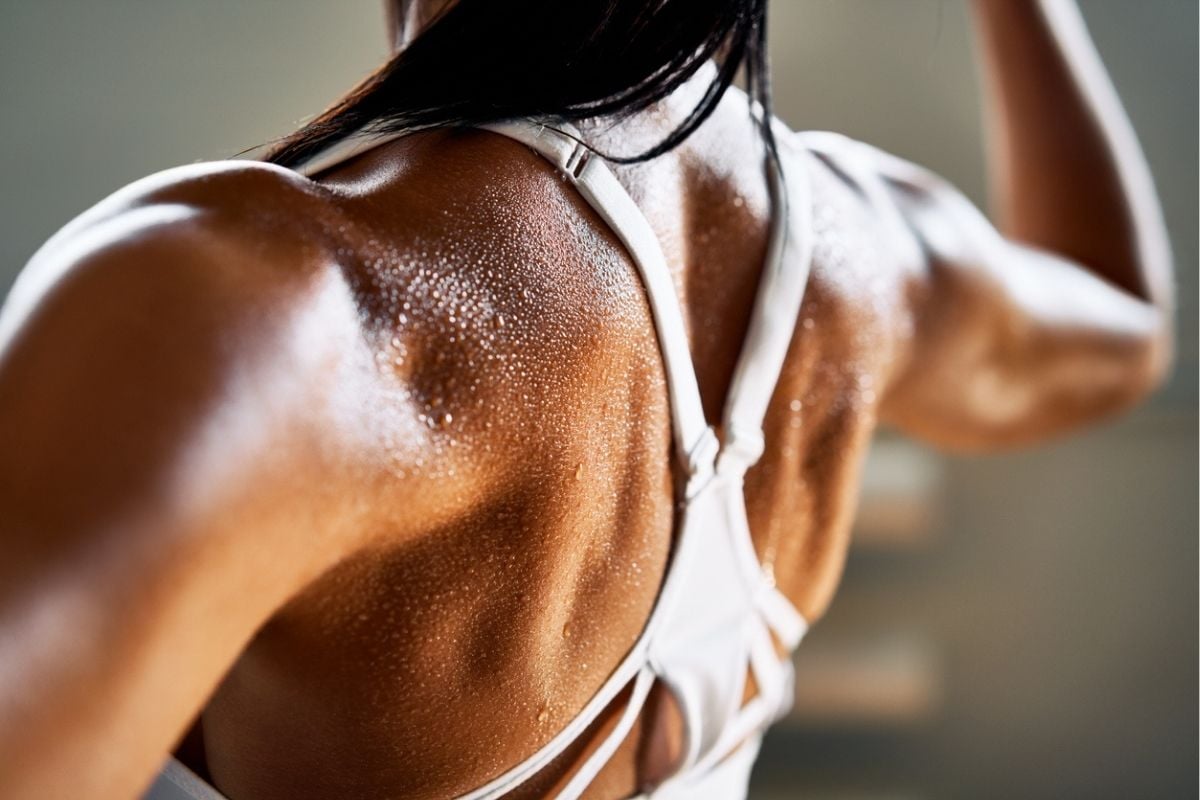
You bought a sports bra that felt snug in the fitting room. You have worn it to every single workout since – running, cycling, strength training, maybe even the occasional yoga flow. It seems fine, right? But here is the uncomfortable truth: the way most of us choose and wear our sports bras is built on a handful of assumptions that turn out to be flat-out wrong. And the consequences go beyond a little extra bounce. That pull you feel across your back and chest mid-run? It is trying to tell you something.
Why the number is so staggeringly high
According to data from Adidas, 90% of women are wearing the wrong sports bra size. Nine out of ten. That is not a rounding-up-for-drama figure; it is the brand’s own finding, and anyone who has ever glanced at fellow runners on a morning jog will recognize the evidence immediately. Visible bouncing at every pace, from a gentle run-walk to a full sprint, suggests that the bras underneath are simply not doing their job.
So where does the disconnect come from? Anna Murphy, senior manager of brand and product learning at Adidas, points to a two-fold problem. First, there is a widespread knowledge gap around the idea that different activities demand different levels of support, which means different bras. Many women believe a single sports bra can cover everything from a 5K to a pilates class. Second, a lot of us have never actually had a proper sports bra fitting, so we do not know what a correct fit looks or feels like. If nobody has ever walked you through how to check the band, the straps and the cups, how would you know what to look for?
The underband rule that changes everything
Here is the detail that catches most people off guard: the underband – that strip of fabric sitting directly beneath your breasts – is responsible for 80% of a sports bra’s support. Not the shoulder straps. The band. Murphy explains that checking the band fit should always come first, because if it is wrong, nothing else about the bra will compensate.
There is another fitting insight that flips conventional wisdom. You are actually better off choosing a bra that fastens comfortably on the loosest hook setting, not the middle or tightest one. Murphy confirms that starting on the loosest setting lets you see how the bra fits at its maximum size. As the fabric naturally goes through wear and tear over time, you can tighten the hooks incrementally to maintain support. Think of it as building in extra lifespan from day one.
Activity level matters just as much as size. For high-impact work like running, the best options feature three or four rows of hooks with three or four hook eyes on each row, and they combine two support methods: compression, which holds both breasts closer to the body, and encapsulation, which encases each breast individually in fabric. Some styles also include an underwire for additional sturdiness. For medium-impact activities such as strength training, pilates, yoga and cycling, stretchy over-the-head compression bras keep things secure without requiring individual breast support. And for low-impact moments – walking, lounging, rest days – non-padded, thin-fabric crop styles are enough.
When to retire your favorite bra (and why the industry still falls short)
Sports bras are engineered to absorb strain and stress, which means their supportive properties inevitably degrade. The more frequently you wear one, the shorter its functional lifespan becomes. You can slow the decline by washing at 86°F (30°C) and placing the bra in a garment bag in the machine, but once the underband starts to stretch and you have run out of tighter hook settings, it is time to let go – or at least demote that bra to yoga duty.
There is also a bigger, industry-wide issue worth acknowledging. Many brands still do not produce a wide enough range of sports-specific bras to fit all body types. While athleisure crop tops increasingly come in sizes from XS to XL at a minimum, high-impact options for larger cup sizes remain limited. Some women resort to doubling up and wearing two bras at once, which can restrict breathing and discourage them from exercising regularly. Others end up choosing a larger band size simply because no brand designs the support level they need. When it comes to sports-specific fits, the industry still appears to be designing for a narrow idea of what an athletic body looks like.
If you find yourself in that gap, do not settle for approximate support. Companies that cater specifically to larger cup sizes do exist, and putting pressure on brands that do not yet offer inclusive sizing is one of the most effective ways to push the market forward.
What to take away from all of this
The single biggest shift you can make today is to stop trusting your shoulder straps and start paying attention to your underband – that is where the real support lives. Match your bra to your activity level, fasten it on the loosest setting when it is new, and keep an eye on when the band begins to stretch beyond its tightest hook. You now know more about sports bra fit than the vast majority of active women. The next step is simply acting on it.


