



Newsfeed

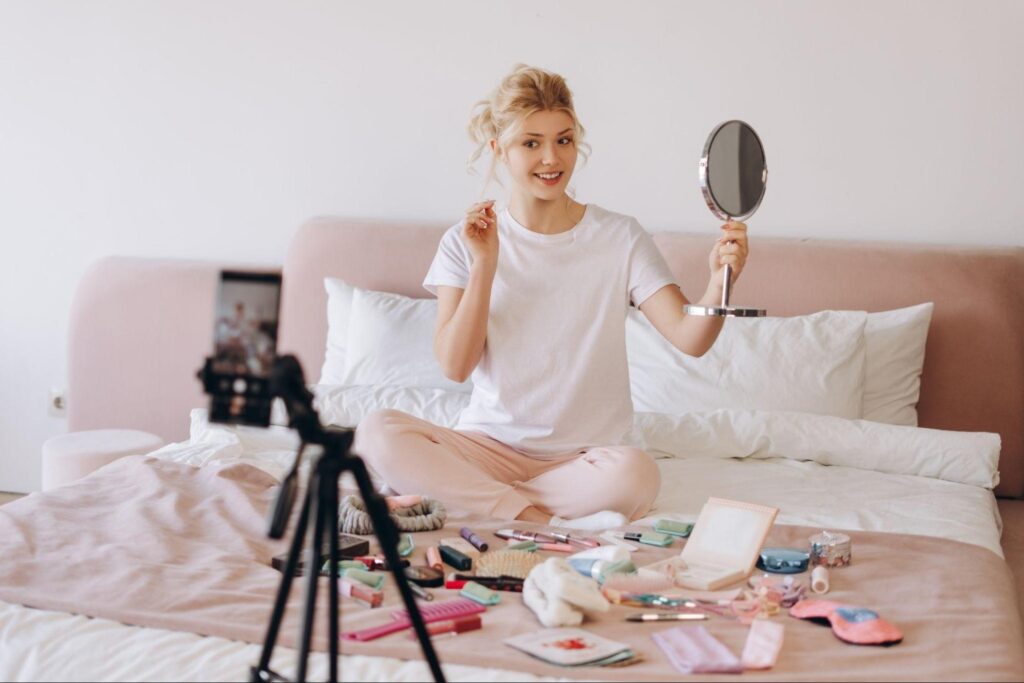
Have you ever sat down for brunch, coffee, or a lazy group chat with your friends only to find the conversation has suddenly gone into an elaborate tangent about essences, ampoules, and double cleansing? Friend number one is raving about their 10-step routine, friend number two is head over heels in love with snail mucin, and you are nodding along, feigning an interest while secretly having no clue what any of them are talking about.
K-Beauty is more than a passing fad; it’s a skincare philosophy that emphasizes hydration, skin nourishment, and a mindful, step-by-step approach to skincare. If you’ve ever half-heartedly stuck to a patchy skincare routine or spent years looking for that “one” moisturiser, it’s not hard to understand what turns so many people into skincare obsessives.
If you have wondered why your friends are talking about sheet masks and serums like they are permanent residents of Sephora, this one’s for you. This article explores the cult of K-Beauty, including what makes it so appealing, and shows you the ropes of Korean skincare.
The Obsession Explained: Why K-Beauty Is Everywhere Right Now
Have you ever wondered how to build your own K-Beauty routine? K-Beauty is everywhere. From friends to social media accounts to the Korean drama you binge, everyone is talking about K-Beauty. It is a multi-billion-dollar industry, so it’s hard not to be exposed to K-Beauty. With curated skin care routines, viral skin care ingredients, and even a unique set of vocabulary revolving around everything in your K-Beauty routine, such as serums, snail mucin, and sheet masks, this has grown into a significant part of the global beauty scene. It’s almost become a culture in and of itself.
The reasons are simple: not only are you taking care of your skin, but it’s also fun to do. Discovering products and including a little self-care in your daily routine adds an enjoyable sense of ritual to skincare. Once you find a product that truly works for you, it is an excitement you want to share with the world. K-Beauty has helped create a community where self-care is a point of discussion.
From Seoul to Skincare Shelves: How K-Beauty Gained Global Appeal
The entire thing really started before there was skincare TikTok. Before K-pop idols and K-drama leads were topping playlists and weeknight binge sessions in the early 2010s, it was their faces that people were paying attention to, subconsciously at first. There was something about the dewy perfection of those skin care routines that made you want to know more. And then, once you know, you’re kind of doomed. Beauty brands in Seoul were all too happy to tell you the secrets: essences, ampoules, cushion compacts started showing up on shelves, and in suitcases, and on bedroom floors everywhere, ferried halfway around the world by friends and cousins and first-adopters who’d gone down the rabbit hole.
Then, of course, social media happened. Hard. One week it was a toner blowing up, the next week it was a jelly-like moisturiser that “everybody” accidentally bought because they saw it in three hauls in a row. But what made it spread was that it was more than just hype: there was an intimacy to it, the act of watching someone test and wait, test and wait.
It was a process that made you feel as though you were watching someone’s skin slowly but surely come into its own. It was easy to return to a video to see if the glow was there yet, to root for them. And before long, you found yourself queuing in Mecca or hovering your cart cursor online, saying something to yourself along the lines of “Maybe this one will fix my face.” It’s a familiar feeling for many skincare shoppers.
What’s Behind the Popularity of K-Beauty Skincare?
The thing about K-Beauty, despite all the fun packaging and endless “you need this” videos, is that there’s actual science behind it. A lot of the principles in the formulas are simple but effective: hydrate well, but don’t go all-out on actives. Treat gently, nourish, but always respect the skin barrier and protect it like it’s your firstborn. Ingredients like hyaluronic acid and niacinamide are by no means new, but K-Beauty uses them in unique ways that combine to make products lightweight and quick to absorb, and frankly more pleasant than the heavy creams so many people grew up with.
There are then the fun ones (the fermented pumpkin, the propolis, the green tea extracts) that sound more like niche remedies than skin care, but often have more scientific backing than you think. The magic is really in the layering, though. Not in ten-layer depth, but in the idea that you go light to heavy, thin to rich, watery to creamy. It’s the idea that the thinnest, most watery products are designed to be applied early in the routine and help condition the skin for richer products.
Some skincare experts suggest that this slow-build system may allow active ingredients to work with reduced irritation, especially when AHAs or BHAs are used at low and consistent doses rather than as one-off, “let’s hope for the best” chemical peels. Toss in antioxidants like centella asiatica, and you’ve basically got a routine that plays the long game, which may help reduce irritation and improve overall skin texture over time.
The Ritual Appeal: Why People Find Comfort in Multi-Step Routines
It’s no surprise that Hailey Bieber’s self-care routine draws attention. It’s not just because of her glowing complexion. It’s because the ritual of it all is so addictive. In a world that feels like one big unending crisis, there’s something deeply soothing about coming home, tying your hair up, and taking your time to move through your skincare routine step by step.
K-Beauty routines are designed with that psychology in mind. Every step is its own minuscule act of pampering, whether that’s patting on an essence, layering a serum, or locking it all in with a moisturiser that gives your face the snuggliest virtual hug. The routine itself creates a sense of order when everything else feels like chaos; the sensorial rewards (the dewy glow, the supple bounce of your skin) make the whole experience feel aesthetically pleasing. It’s self-soothing, disguised as skincare. And it’s why people don’t just get into these routines, they become rituals they actually look forward to.
The Products Everyone Is Talking About
If there’s one thing that every generation of beauty can agree on, it’s that there’s a ton of iconic products across the eras. K-beauty is no exception, with a widely recognized lineup. Essences represent a standout product in today’s skincare scene. It’s the one often featured in viral skincare videos: those hypnotic TikTok videos of someone pouring what looks like literal dew drops into their hands.
Snail mucin is the no-bank-breaking ingredient people can’t shut up about. This is because it is known for creating a dewy, refreshed appearance, so you can convince any stranger that you drink three litres of water a day. SPF sticks are another standout: sticks you glide onto your face before stepping outside that don’t ruin your makeup are a convenient solution for makeup wearers.
These products go viral because they often produce noticeable results. But also, because they’re fun. It’s almost like skincare was designed to be explored: textures you’ve never tried, ingredients you didn’t expect, results that show up on your face. It’s like when you give your friends a new lip gloss, and they all gasp and ask you where you’ve been hiding. There’s a lot of “wait, you haven’t tried this yet?” energy.
If you’re ready to dip your toe in this world everyone’s talking about (or just want to see what all that hype looks like IRL), Arktastic has a curated K-beauty range to help you explore these cult favourites without any hassle. No pressure, no ten-step routine overhaul. Just the good stuff.
Is It Worth the Hype? What Skincare Experts Actually Think
For every dewy selfie, glowing review, and marvellous product haul, there’s one question that can remain nagging: does K-Beauty actually work? Ingredients in many K-Beauty staples are often rooted in research, not just trends, and many are designed to support and strengthen the skin barrier rather than stripping it with potent actives.
Where some skincare professionals are less equivocal is in the number of steps. Great skin can come in ten steps or one, but what they appreciate is the K-Beauty philosophy, consistent care that focuses on listening to skin rather than fighting it. They’ll be all for your snail mucin if it works, raise a brow at your DIY experiments, and wholeheartedly support anything that makes you apply SPF more consistently.
Many skincare professionals highlight the benefits of hydration, gentle formulas, and consistent care found in many K-Beauty products when approached as a ritual that complements your lifestyle, not a to-do list to be checked off.
How to Build a K-Beauty Routine Without Spending a Fortune
A common misconception about K-Beauty is that it’s expensive. You don’t need 30 products and a diva budget to create a routine. Admittedly, K-Beauty can be a pricey habit if you start amassing products just for the aesthetic. But if you focus on the needs of your skin instead of your vanity, building a routine can be surprisingly wallet-friendly.
Start with the foundations: a gentle cleanser, a hydrating toner or essence, a serum for your skin’s actual needs, and a great moisturiser. If you have oily skin, for example, invest in a light moisturiser for oily skin that will hydrate without breaking out. This is far more valuable than the latest trendy ampoule du jour.
From there, you can expand your collection one piece at a time, one new product every month or so, not a full 12-step routine in one shopping trip. K-Beauty is about building a routine with intentionality and listening to your skin, not buying all the products you’ve seen on TikTok in a panic. There are multipurpose formulas, travel sizes, and budget-friendly cult favourites that will help your skin without breaking the bank.
The goal is not to mimic a complete routine — the goal is to find one that fits your needs, your skin, and your budget. And honestly? That’s the real K-Beauty philosophy.
The Future of K-Beauty: What’s Trending Next
For a skincare world full of buzzy terminology, shiny packaging, and constantly changing preferences, something else is emerging through the noise. Minimalist skincare trends are becoming part of the K-Beauty space.
Welcome to the new trend, Skipcare. You can think of it as the sexy older sister of the 10-step routine, taking a more streamlined approach to skincare. It means stripping back to fewer products that work harder, formulas that double and triple up on duties, and routines that are less like homework and more like self-care. These trends in Korean Beauty also represent the direction the beauty industry is overall going. Skin that looks healthy in real life, not just through Instagram filters and TikTok lighting.
K-Beauty is always moving forward, not slowing down. But as trends change, the common thread here is simple: skin that feels hydrated, happy, and authentically you.
ITP Media Group newsroom and editorial staff were not involved in the creation of this content.