

Newsfeed


I arrived in the Middle East just 10 days before the world shut down in 2020. Six years on, with the region at the centre of a new conflict, I’m reckoning with what it means to be held by a place you can always leave.
On March 6, 2020, I stepped off a flight from Sydney into the warm, disorienting air of Dubai. I had no real sense of what I’d arrived into. Ten days later, the UAE went into full lockdown. The city I had moved to – its sprawling malls, its improbable skyline, its (somewhat hidden) culture – vanished behind closed doors before I’d had a chance to see it properly.
I will be honest about something: I came here largely ignorant. Not maliciously so, but shaped by a Western media landscape that had told me a particular story about this part of the world – a story of somewhat instability and extremity, in which nuance was a casualty and people themselves were reduced to being the backdrop.
Being on the ground began to change that. Whether that was beginning to understand the realities of Palestine through the lived experiences of friends here, or hearing about the trials Lebanon has endured from the many Lebanese people who now call the UAE home.
In the editor’s letter I wrote for our most recent issue – which went to press in the days just before the first US-Israeli strikes on Iran were carried out – I wrote about craving a moment of pause. About the exhaustion of living in fight-or-flight mode, of feeling permanently braced for the next thing. I meant it personally. I meant it professionally. I meant it as someone navigating a busy, demanding, wired life in a city that rarely slows down.
And then the strikes happened, and I realised with a particular shame that my fight-or-flight was borrowed. It was the anxiety of ambition, of deadlines, of modern life. The fight-or-flight that so many women in this region carry is different in kind entirely.
Lebanese friends here speak about conflict with a kind of matter-of-fact resilience – not because they accept it, but because the alternative is paralysis. There is a kind of strength in this region that I am in awe of, and equally deeply troubled by how many people have had to develop it by necessity rather than choice.
Are you leaving?
When news broke that the region might become entangled in a wider military escalation, I began receiving messages. Friends from home – London, Sydney, Edinburgh – checking in. Are you safe? Are you leaving? Do you need anything?
Even as uncertainty rippled across the region, Dubai remained calm – a reminder of the stability the UAE has worked carefully to build.
The warmth of those messages moved me. And then the weight of them did too. Because the subtext of “are you leaving?” is “you can leave”. There will be repatriation flights. There is a government with an obligation to bring you home. There is a home, in the geopolitical sense, waiting to absorb you.
If it came to it, Western media would likely document the evacuation of people like me as a human story. The people who made this place what it is – who were born here, who cannot leave, or who have nowhere left to go to – will be counted differently, or sometimes not counted at all.
I am aware that there are complex debates playing out in the UK right now about tax residency, about the obligations of a state towards citizens living abroad, about who deserves what. But underneath such debates sits a quieter privilege: the assumption that crises in the Middle East are events that happen to expats rather than conditions that people from the region have long had to navigate.
The hospitality of the women in the Middle East
But that brings me back to the women of this region, because they are the heart of this, for me.
The GCC women I have had the extraordinary privilege of knowing here have shown me a version of hospitality so generous and so unperformative that it quietly dismantled every assumption I arrived with. They are not what Western culture imagines when it imagines women in the Gulf. They are founders and entrepreneurs, artists and activists, mothers and daughters and bosses and friends.
The Emirati women here welcomed me – a stranger from Australia arriving in the middle of a pandemic – without ceremony and without question. Over the years, many of them have folded me into their lives with a kind of warmth that feels closer to family than friendship. It is a form of hospitality that is difficult to explain to people who have never experienced it: the instinct to show up for someone, fully and immediately, simply because they are part of your world now.
I felt that instinct again recently. As the conflict escalated and the region braced itself for uncertainty, we reached out to women across the Middle East – in the UAE, Bahrain, Kuwait, Iraq, Jordan, Palestine and more – asking if they might record short messages of solidarity and reflection.
Every single one of them responded quickly and thoughtfully. Many of them dropped what they were doing to record something and send it back. In a moment where everyone had their own worries and their own fears, they still made space for others.
That is something I have come to recognise as a defining characteristic of the women of this region time and time again. They show up. For their communities, for their families, for each other – and often for people like me who arrived here as outsiders and were met not with suspicion, but with generosity.
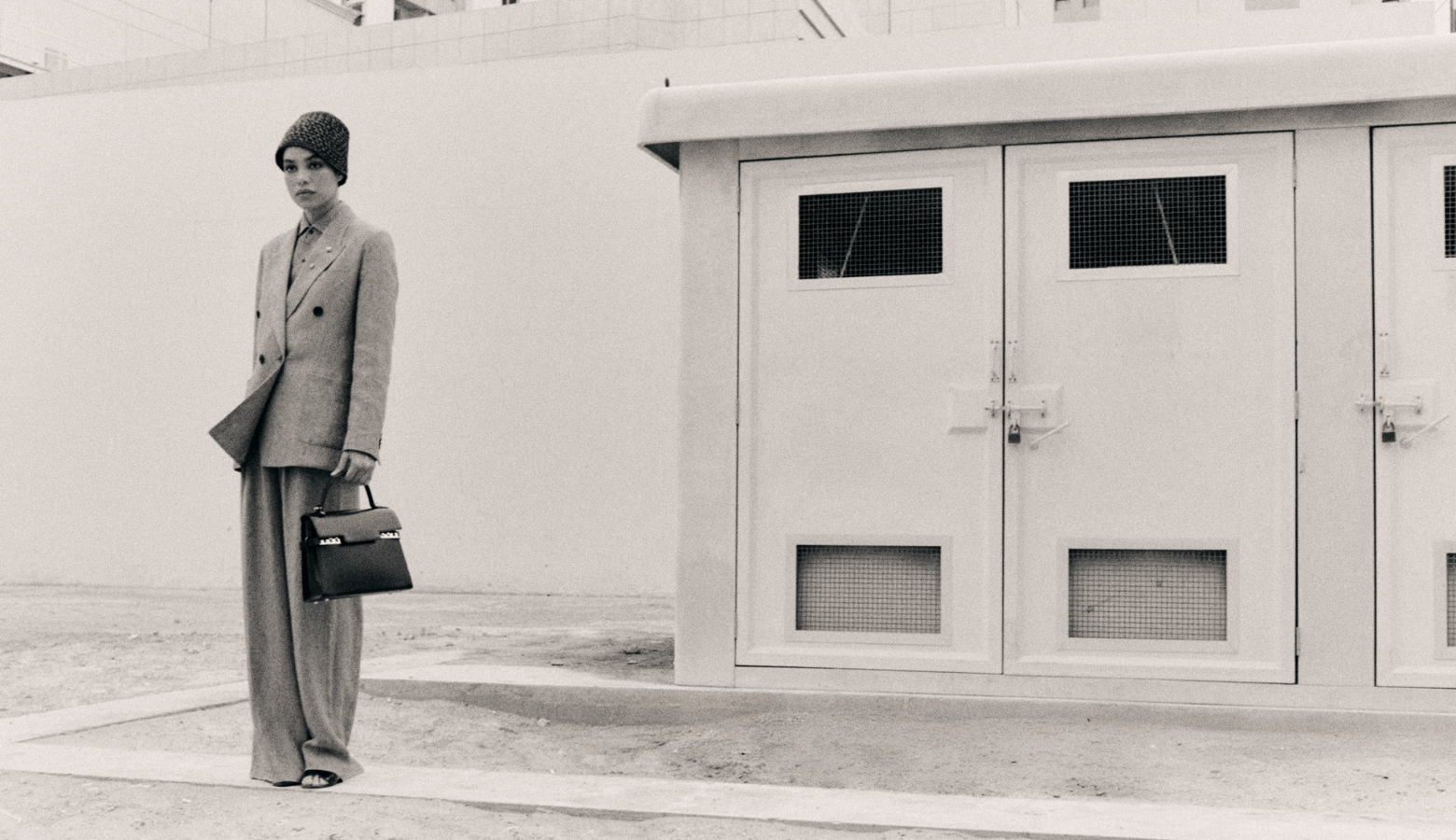
The women from across the wider Arab world – Palestinian, Lebanese, Syrian, Iraqi and more – who have shared their stories with me over these six years have given me something I cannot fully name. A re-education, perhaps. An expansion of what I understand “home” to mean, and what it costs when home is precarious.
This region has broadened my career more than I ever thought possible, brought me a whole new community and a self I recognise more fully than the one I arrived with. That is an enormous debt. And I think the least I owe, in a moment like this one, is honesty about the asymmetry.
I prayed, in that editor’s letter, for a moment to slow down. I have it now, though not in the way any of us would have hoped.
But I don’t want to aestheticise that stillness. The pause I’ve been allowed is a luxury. It is the pause of someone who knows, somewhere underneath everything, that she has options. That there is a plan B. That the worst case, for me, looks very different from the worst case for a Lebanese woman in Beirut, or a Palestinian family watching a ceasefire unravel, or an Iranian family trying to understand what comes next.
What I hope for – what I ask for, from this moment, from this platform, from anyone reading this who grew up in the same comfortable, insulated West that I did – is that we use this time not to retreat into our own fear, but to let it widen us.
Privilege is not a reason for guilt. But it is always a reason for accountability. For turning your gaze outward rather than inward. For asking not just “am I safe?” but “who isn’t, and why, and what does that mean for how I move through the world?”
I’m still here. I’m still learning. And more than anything, I remain grateful to the women of this region who taught me how to see it properly.


