



Newsfeed


Tigerlily Taylor exudes an insouciant cool. Into the studio she strides, sporting her iconic razor-sharp pixie crop. We start shooting, her face card so photogenic it almost feels unfair. She moves with quiet confidence – radiating an effortless up-all-night style – every angle catching light, every look landing. It’s modern muse energy: London nonchalance with a flash of rock-royalty poise. We meet on set of her GRAZIA cover shoot and she welcomes me like an old friend.
“I love your outfit!” she exclaims as soon as I enter the room. Her warmth cuts through the gloss of the shoot – disarming, immediate, and entirely unpretentious.
Her dad is Queen drummer Roger Taylor, but that never stopped her from being able to carve out her own identity. “Both my parents are very, very private,” she tells me. “Obviously we did find ourselves in situations that were probably not the norm, but they were never really in the direct spotlight, and they kept us very protected. It was only really when I started modelling that this changed a bit, because I started to develop my own name.”
Growing up with parents who had separated, Tiger – as her friends and manager call her – found herself growing up experiencing a duality of worlds. “When we would be with dad, we would be travelling and going on tour with him and, you know, the fancy stuff… But I lived with my mum, and it was very much horses, countryside, and just very, very, normal things. I’m really grateful for that; I think it helped me stay very grounded and very normal as a child.
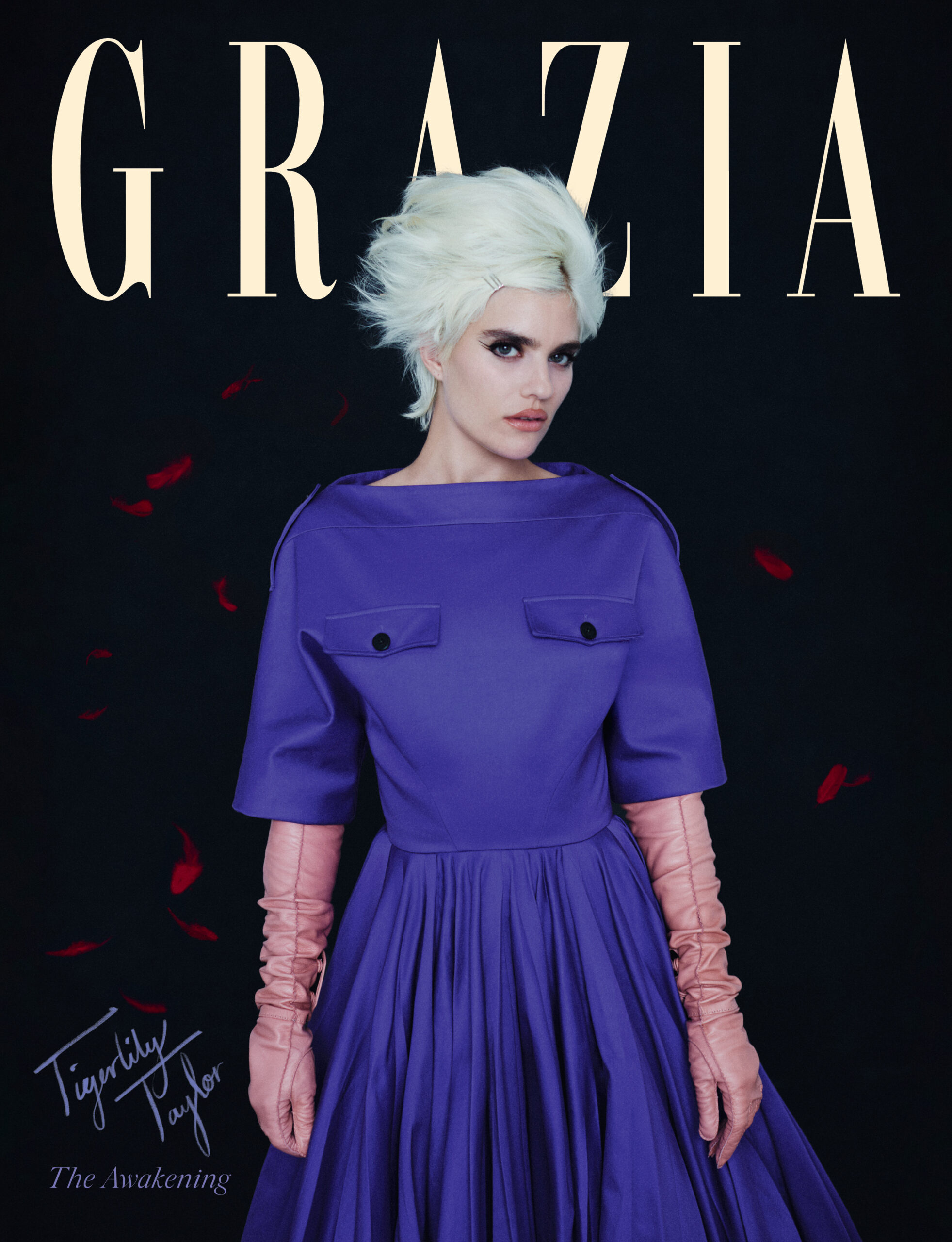
Tiger refuses to fit into a mould where she’s known as any kind of nepo baby, where a patriarchal world would feel a lot more comfortable in its ability to box-tick and label her. “I’m not scared of being associated with my dad’s name,” she continues. “I respect everything he’s done and everything he’s achieved, but both of my parents have always really encouraged me and supported me to do well in my own right.”
Yet if there’s one thing Tiger has learned from navigating legacy, labels and the low hum of expectation, it’s that identity is never something to be handed down – it’s something to be claimed. In an industry still quick to define women by who they belong to, rather than what they build, her insistence on authorship feels quietly radical. And it’s here, between heritage and selfhood, that the conversation naturally turns to feminism – not as a buzzword, but as a lived, daily practice of carving out space on your own terms.
“I’m definitely not a neutral person,” she answers emphatically. “I don’t think I’m neutral in anything I do. I like to have strong opinions, and I think that as a woman it’s so important to be a hardcore feminist – to associate yourself with that phrase and to be proud of that.”
Her confidence is striking. I love it.
“There’s a strange revival of the ‘tradwife’ trend happening on TikTok, which I find bizarre.” She continues. “But I view feminism purely as equality of the sexes, so the lens in which I view things like the tradwife trend, means that I just want women to be adopting this persona for their own purposes, rather than the purposes of your husband or partner. I’ve always been that way, but as I’ve got older, and since studying English literature at university, I’ve identified so much more with feminism. It’s become so integral to my character, and I know I can get a little bit argumentative about it sometimes, but I really feel like it’s my entire personality.”
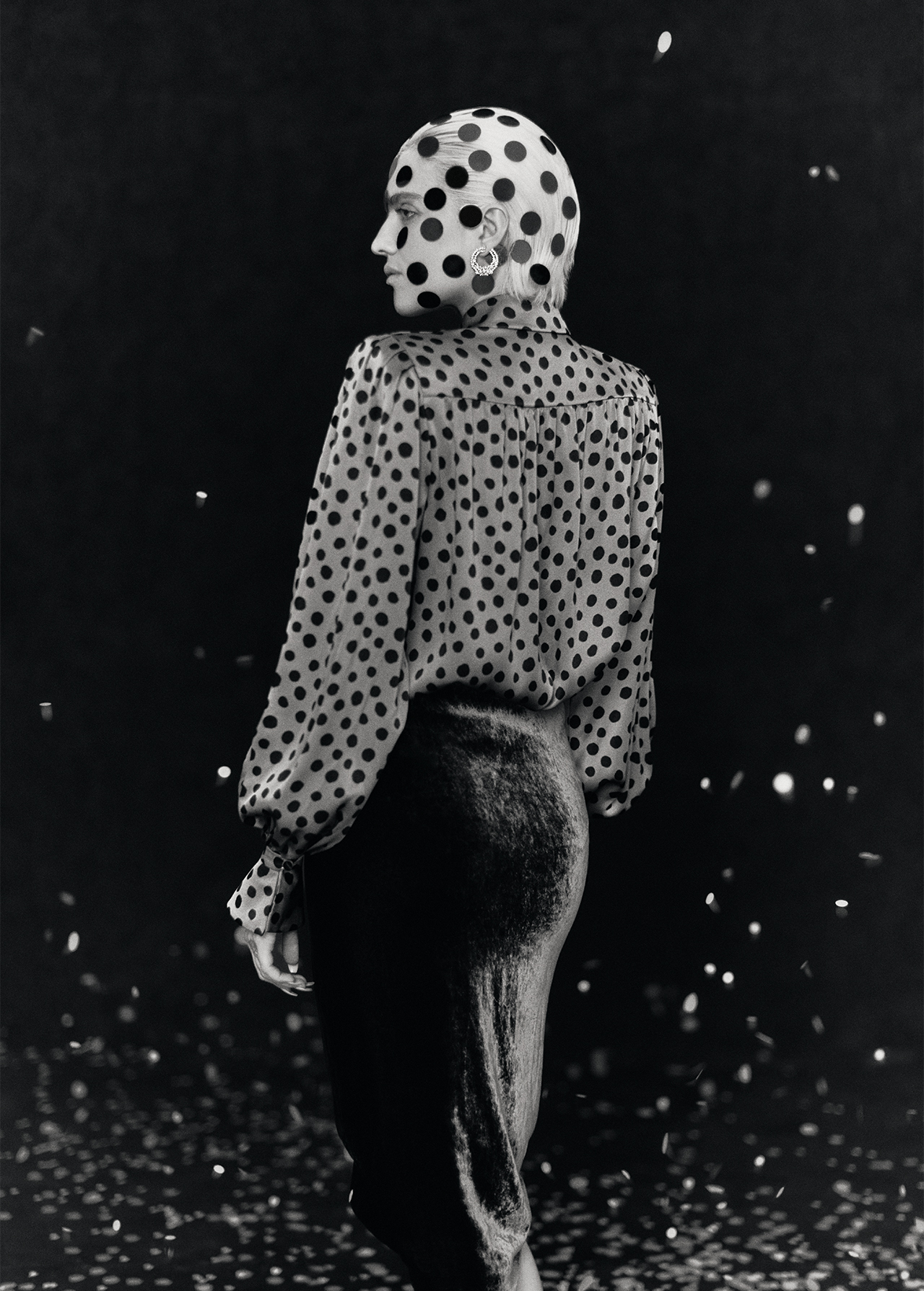
We steer off-piste here, losing ourselves on a long, windy tangent about Simone de Beauvoir and Sylvia Plath’s The Bell Jar – a novel that Tiger read only a few years ago but which left, she says, a permanent imprint. We talk about the claustrophobic fate of outspoken women, about institutionalisation as punishment, about how female sadness was once medicalised into silence. She brings up The Yellow Wallpaper by Charlotte Perkins Gilman (which I write down a note to myself to buy as soon as the interview wraps) and I recommend a podcast by Deborah Frances-White called The Guilty Feminist. I almost forget we’re in an interview, so animated is the exchange – two women volleying book recommendations and battle stories, bonded less by the iPhone voice recording between us than by the shared, unshakeable conviction that women’s stories deserve to take up space.
“We’re basically just always told we’re crazy,” she says, shaking her head. Now in her thirties, she laughs that all she really wants is to be surrounded by women – drawn to their energy, their camaraderie, their resilience – a full-circle evolution from the self-described tomboy who once orbited boys in her youth.
Tiger started her modelling career at the age of 17, entering an industry where the conversation around body and beauty standards was – and still very much is – paramount. “It took me a very long time to feel comfortable in my own body. I was so young and I wasn’t comfortable being on camera; I was very intensely shy, very introverted, anxious and nervous. But I do think, at the same time, it’s taught me unbelievable resilience and a lot of strength. It teaches you to develop a sense of self, in spite of the industry. Only now in my thirties, to be honest, have I become 100 percent comfortable with my body and who I am. It’s a lifelong journey to learn to accept yourself fully as a woman.”
Feminism is often positioned as being in conflict with beauty. There is still a cohort of people out there who believe the two are mutually exclusive. That we can’t be makeup-wearing, fashion-loving girly girls, and also be protesting on the streets, rallying for women’s rights. I ask Tiger where she sits with this at this point in her life, where she is now a couple of years deep into her new-found beauty brand of biodegradable press-on nails, Claws.
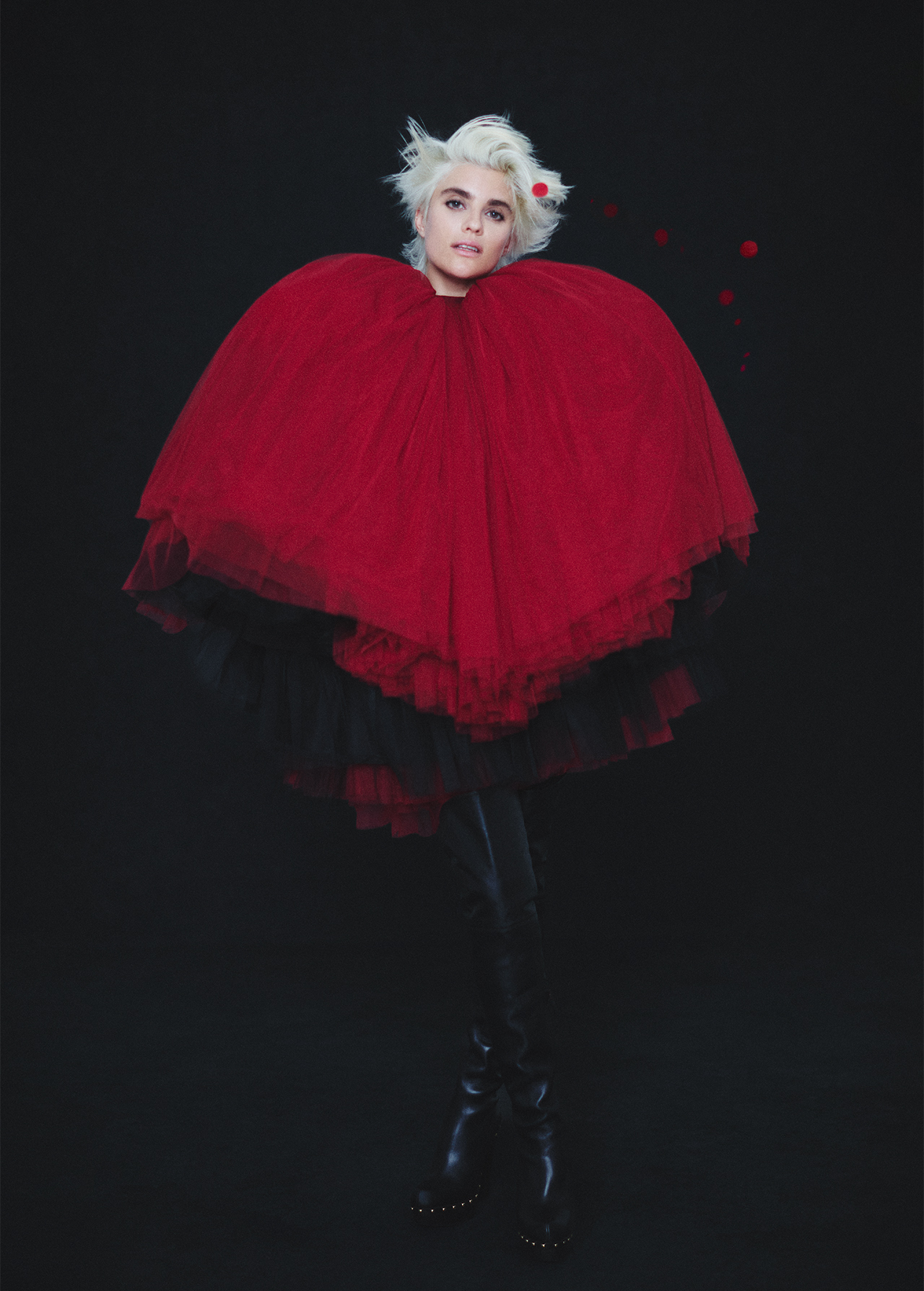
“This is what annoys me when I have a conversation with a man that doesn’t quite understand the concept of feminism. Feminism is about having agency and license over your own image, which is exactly what beauty should be for women. If you choose to be very feminine with your beauty, that’s your choice. If you want to have a more tomboy look, that’s also your choice. As long as its your choice, you’re doing it in an empowered way and you’re not doing anything for the male gaze; I think that’s very feminist.”
Claws by Tiger Taylor was dreamt up in lockdown – born, as so many modern ideas were, from a frustration and a restless itch to rethink the status quo. A longtime devotee of acrylics, Tiger found herself stuck with a grown-out set and no salon in sight. When a friend suggested press-ons, she quickly clocked the convenience – and the cost. “You wear a set, you throw it away,” she says. “They are non-recyclable because they’re under five centimetres, and you can’t actually recycle anything under that measurement.”
What followed was two years of research and development, a deep dive into materials and manufacturers, and a chance meeting with a Brazilian innovator at a sustainable textiles expo who pointed her in the direction of the product she was looking to create. Her early experiments with recycled plastics proved insufficient; the solution had to be biodegradable. Today, every element, from the bioplastic nails and their portable case to the recycled card files, and even biodegradable adhesive tabs, forms part of a completely compostable kit designed to be applied anywhere, anytime.
If Claws sits in a niche of its own, that’s because it had to carve one out. There were no blueprints, no comparable brands – only a conviction that beauty could be both expressive and responsible. The refill model encourages longevity over landfill, a rebuttal to an industry Tiger describes as one of the largest contributors to single-use plastic waste. Beyond the environmental toll, she’s candid about the physical one too: the acetone, the harsh chemicals, the UV exposure. “It’s crazy that people don’t even think about how toxic the nail industry is,” she says. “You wouldn’t go and sit under a sunbed in this day and age, but we’re happy to put our hands under a UV light every other week. I wholeheartedly support nail artists and technicians, because I just think that some of the artistry is just incredible. The industry also provides jobs for so many women across the world, so I don’t want to detract from that, but it’s just an easy product and service to move towards more eco-friendly options.”
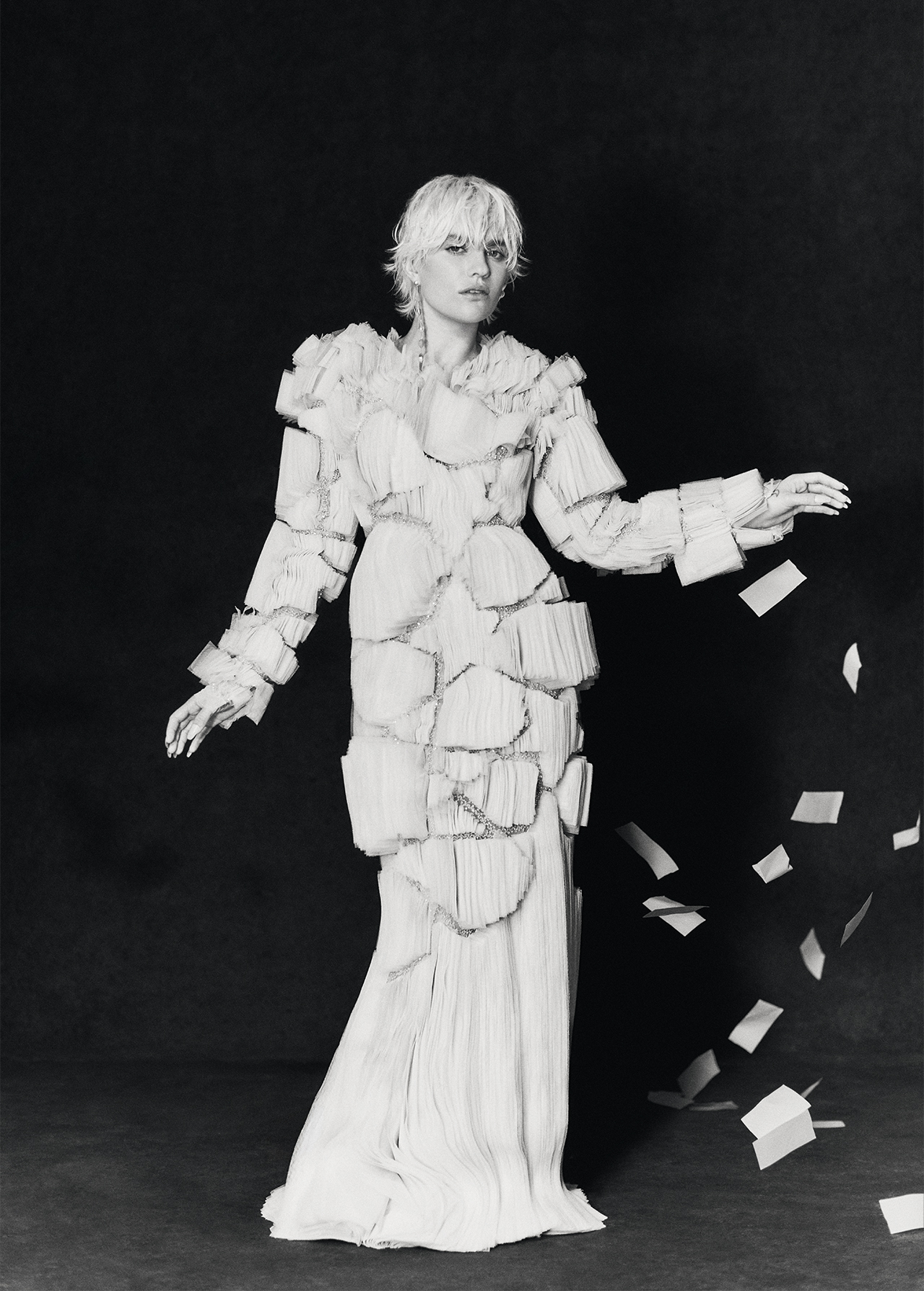
Claws, then, isn’t just a product; it’s a proposition – that glamour and sustainability, femininity and innovation don’t have to exist in opposition. Adornment and empowerment can live in harmony. “It’s just reductive to think of nails as frivolous. Nails are an art form, and what we’re doing with Claws by bringing the sustainability element into it is really important. Look at Stella McCartney,” she muses. “Stella is so innovative with her materials. In her latest runway show she had biodegradable feathers, and I just love that fusion of fashion and science.”
Tiger’s decisions to diversify her career haven’t been coincidental, more planned and calculated. Success, she tells me, has undergone a radical rewrite since hitting her thirties. In her twenties, it glittered in monetary terms: status, security, the external markers we’re taught to chase. Now, it looks different. “Creative success,” she says. “Making something I’m proud of.” What began as a business idea with Claws has evolved into something more conceptual: a vehicle for innovation, experimentation, and material exploration.
“I literally love my thirties,” she beams. “I’m 31 now, and I’ve never felt so relieved. All my friends told me your thirties are the best and not to be scared, and they were right. Your twenties are tumultuous. They’re chaotic. You don’t know who you are. You’re learning everything. You’re going a bit crazy. Being in your 30s just feels like a relief. It’s definitely my best decade yet.”
The shift, she explains, isn’t just professional, it’s internal. A softer metric. Peace, personal acceptance, and empowerment. “Achieving peace in your own life is a form of success,” she reflects, crediting both age and experience for this mindset. For women especially, she believes, self-acceptance is a hard-won milestone, too often overlooked in favour of material gain. Ageing, says Tiger, is not something to resist but to welcome. An empowering process of shedding noise and settling into yourself. “Every person has to go through their own journey. Ageing is a privilege; we must be grateful for that and for our bodies and physical health.”
Tiger answers my questions with a disarming vulnerability and level of self-reflection that feels new and important. In a world quick to define women by lineage or looks, hers is a story that serves as a reminder that selfhood, choice, and curiosity are the ultimate forms of power.


