


Newsfeed
A watch bracelet has a fairly straightforward job: hold the watch to the wrist. Audemars Piguet, however, has other ideas. With its new Royal Oak Joaillerie collection, the Swiss manufacture takes the Royal Oak’s instantly recognisable links and transforms them into necklaces, chokers and cuffs, removing the watch from the equation altogether.It is a bold proposition for a design that has spent more than fifty years defining a timepiece; when Gérald Genta designed the Royal Oak in 1972, the bracelet was integral to its identity. Its tapering links, alternating brushed surfaces and hand-finished chamfers gave steel an unexpected play of light, lending the industrial material something of the character of a cut gemstone. The Royal Oak, in other words, had a jeweller’s sensibility long before precious stones entered the picture.
Audemars Piguet has explored this intersection of watchmaking and jewellery before. Jacqueline Dimier reinterpreted the Royal Oak for women in 1976, while Emmanuel Gueit introduced the Royal Oak Offshore and a line of Royal Oak jewellery in the 1990s. The latest collection, however, takes the concept further. Rather than simply embellishing the watch, it isolates the bracelet’s distinctive geometry, enlarging and repeating its links, then setting them with precious stones to create necklaces, chokers, cuffs and earrings. The watchmaker has been rooted in the Vallée de Joux since 1875, and the landscape of its home region provides the high jewellery collection’s central inspiration. The result unfolds across three distinct expressions of the Royal Oak’s design language.
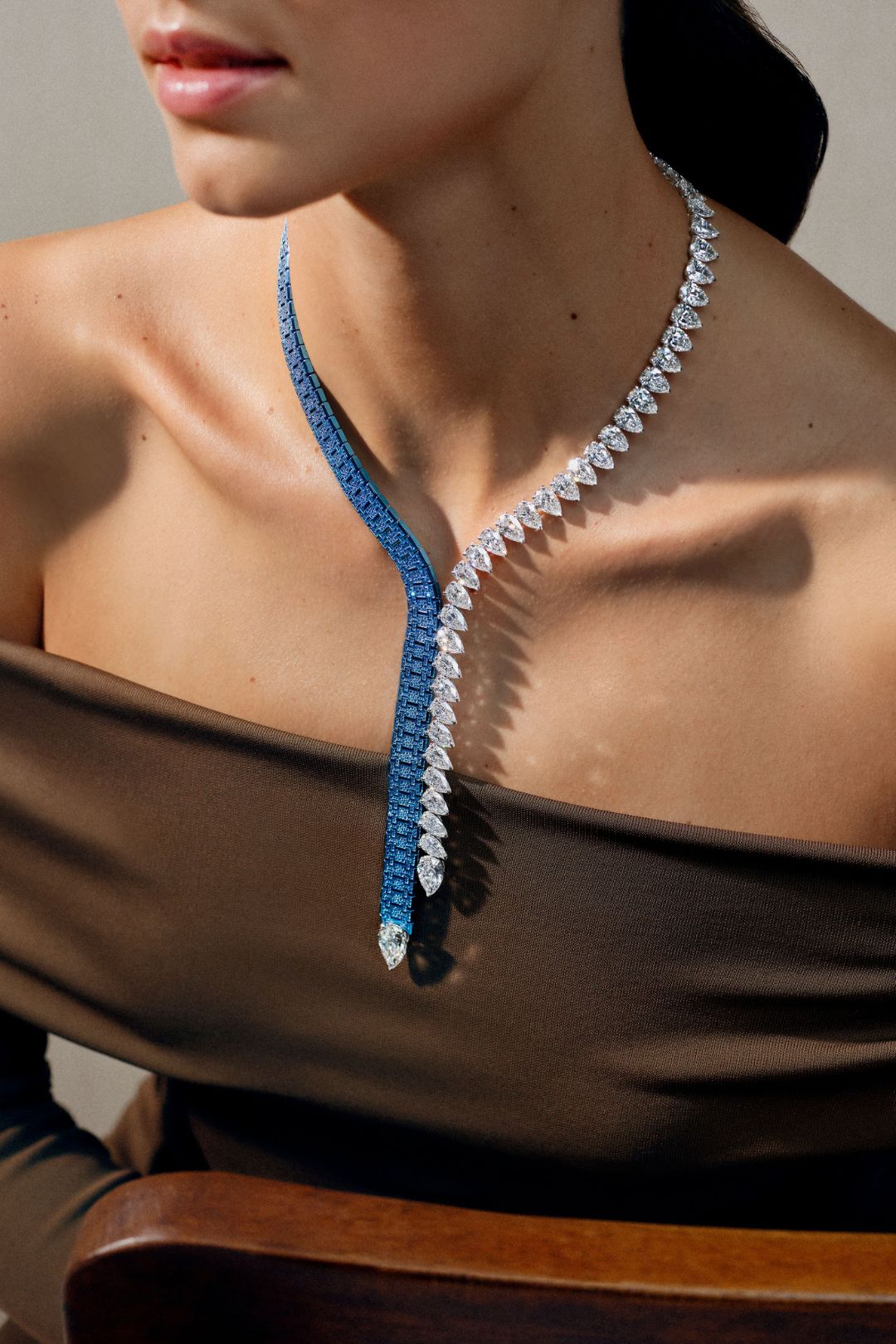
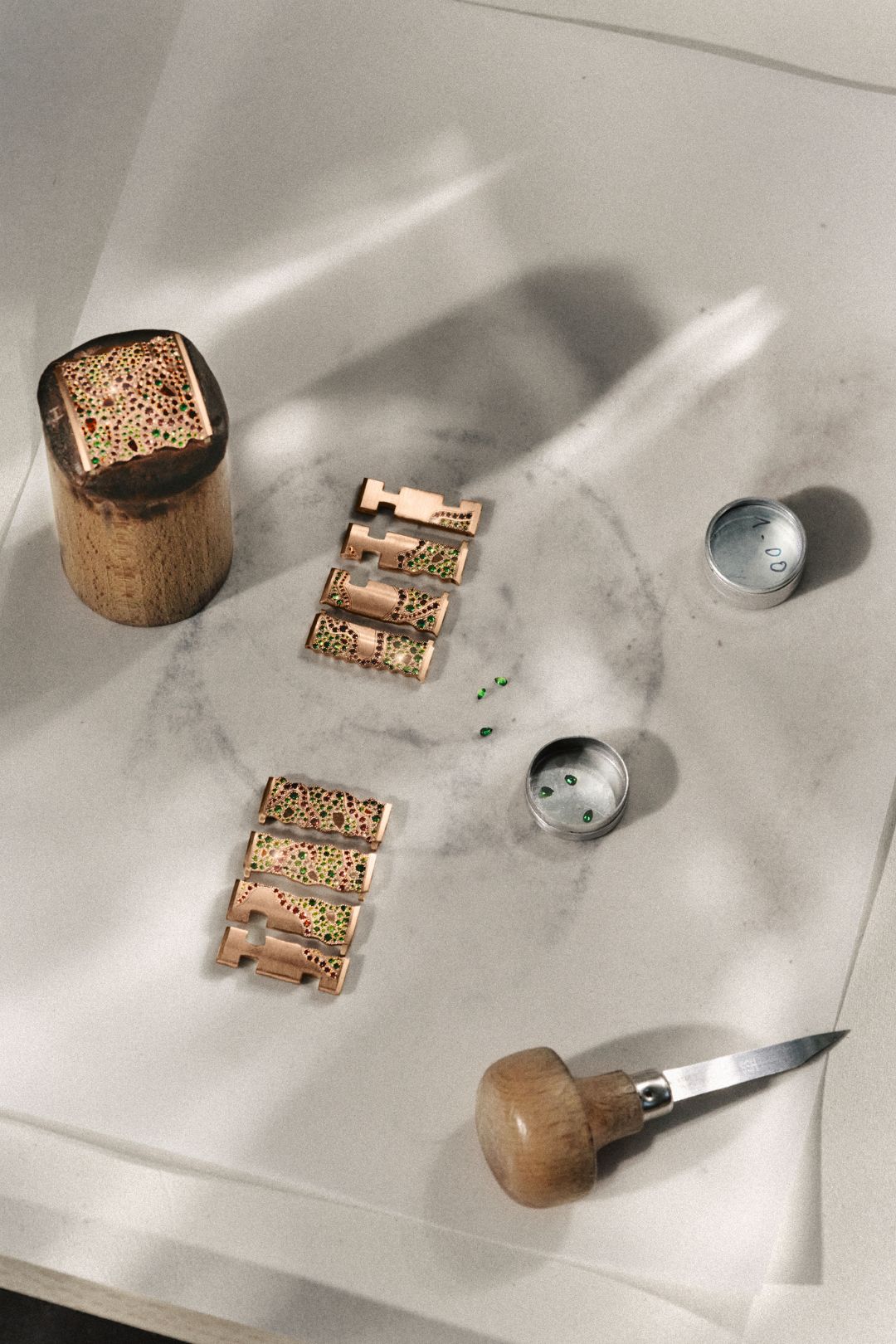
The most illustrative is Dream of Joux, a series of one-of-a-kind cuffs that evoke specific elements of the valley: a frozen lake, a blueberry branch, edelweiss, a leafy tree, a sunburst and a blue moon. Rendered in gold and set with diamonds, sapphires, tsavorites, spessartites and topazes, each piece translates a fragment of the natural world into miniature wearable sculpture.
The accompanying tie necklace is more extravagant still. Its links and studs are covered in 1,670 snow-set blue sapphires, punctuated by cascading pear-shaped diamonds, including a 5-carat centre stone. Here, the Royal Oak’s familiar architecture becomes a framework for colour, texture and light.
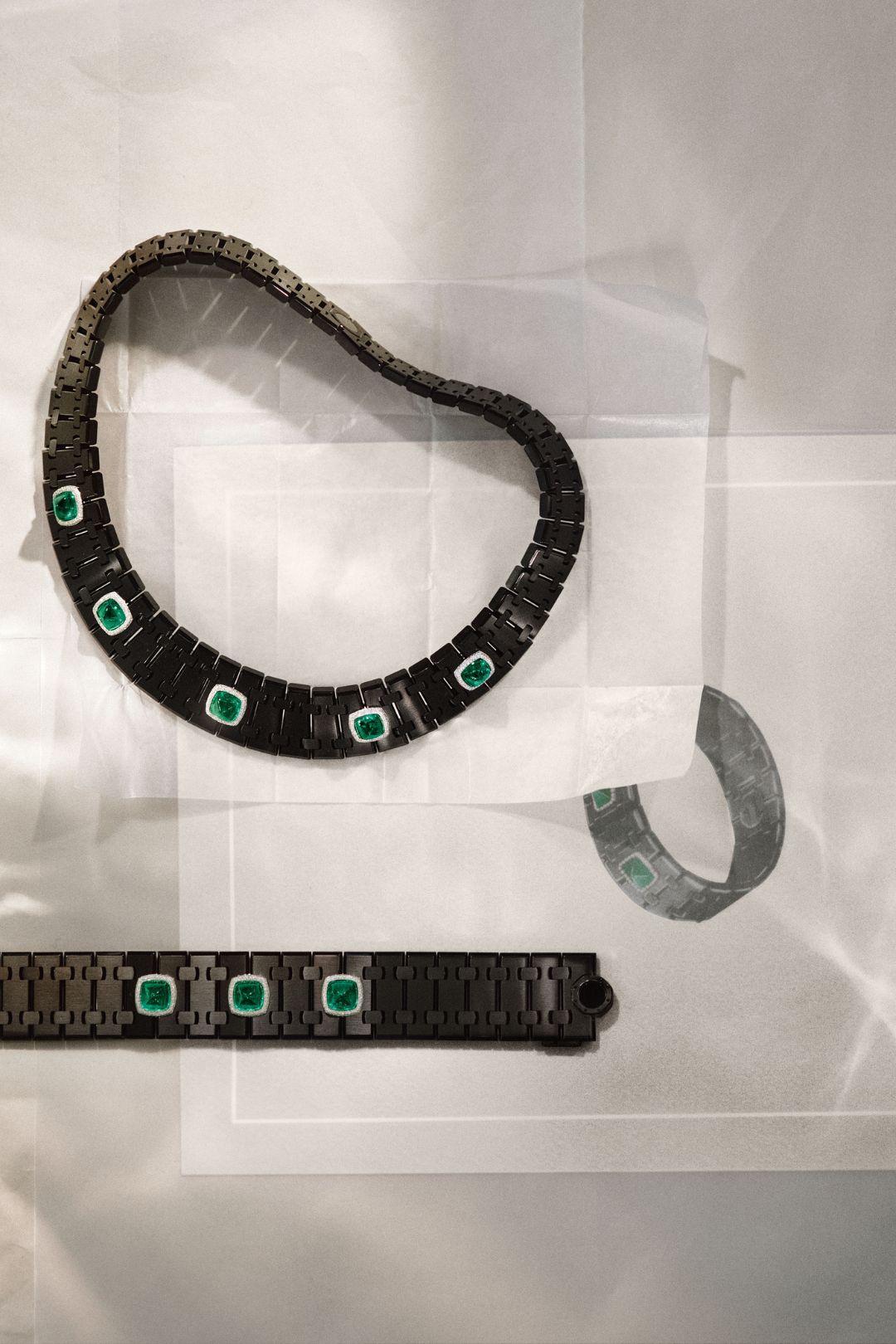
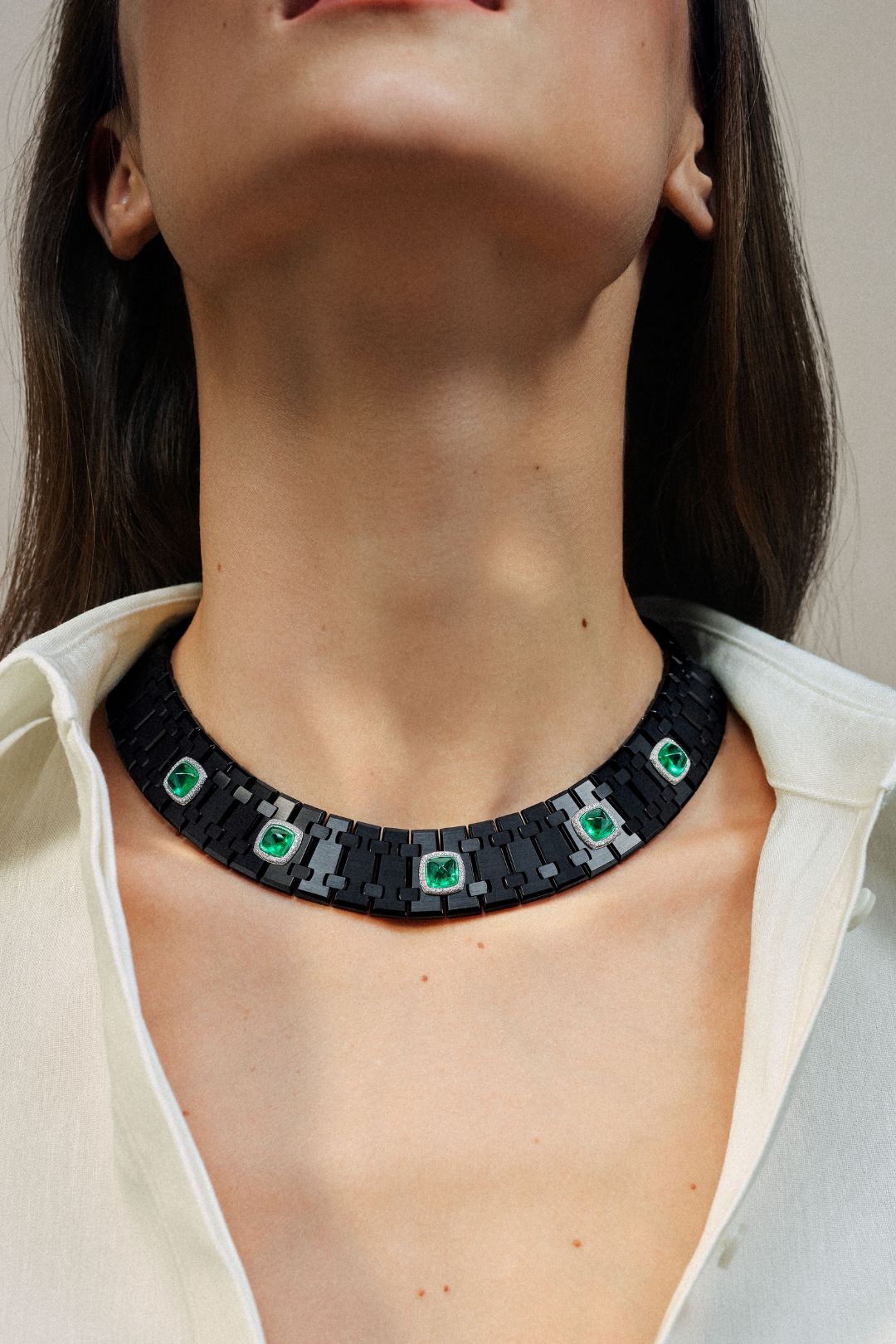
Risoud Eclipse takes a more graphic approach. Black titanium links frame sugarloaf emeralds encircled by diamonds, drawing on the nocturnal atmosphere of the valley and its Risoud Forest. Five emeralds, weighing approximately 16.5 carats in total, anchor the necklace. Of the collection’s three expressions, this is the most assertive: the Royal Oak’s angular geometry feels almost architectural, if not faintly armoured.
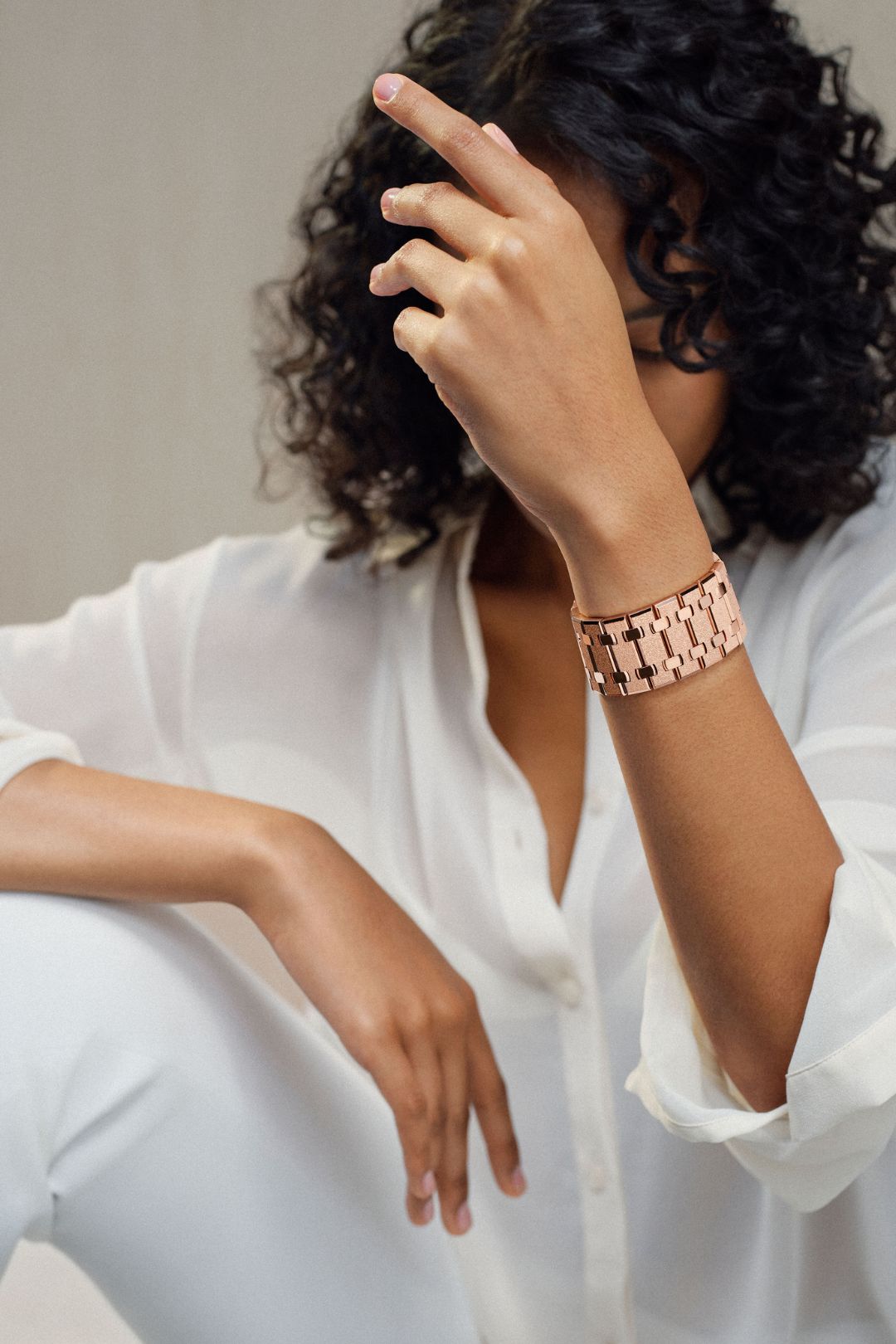
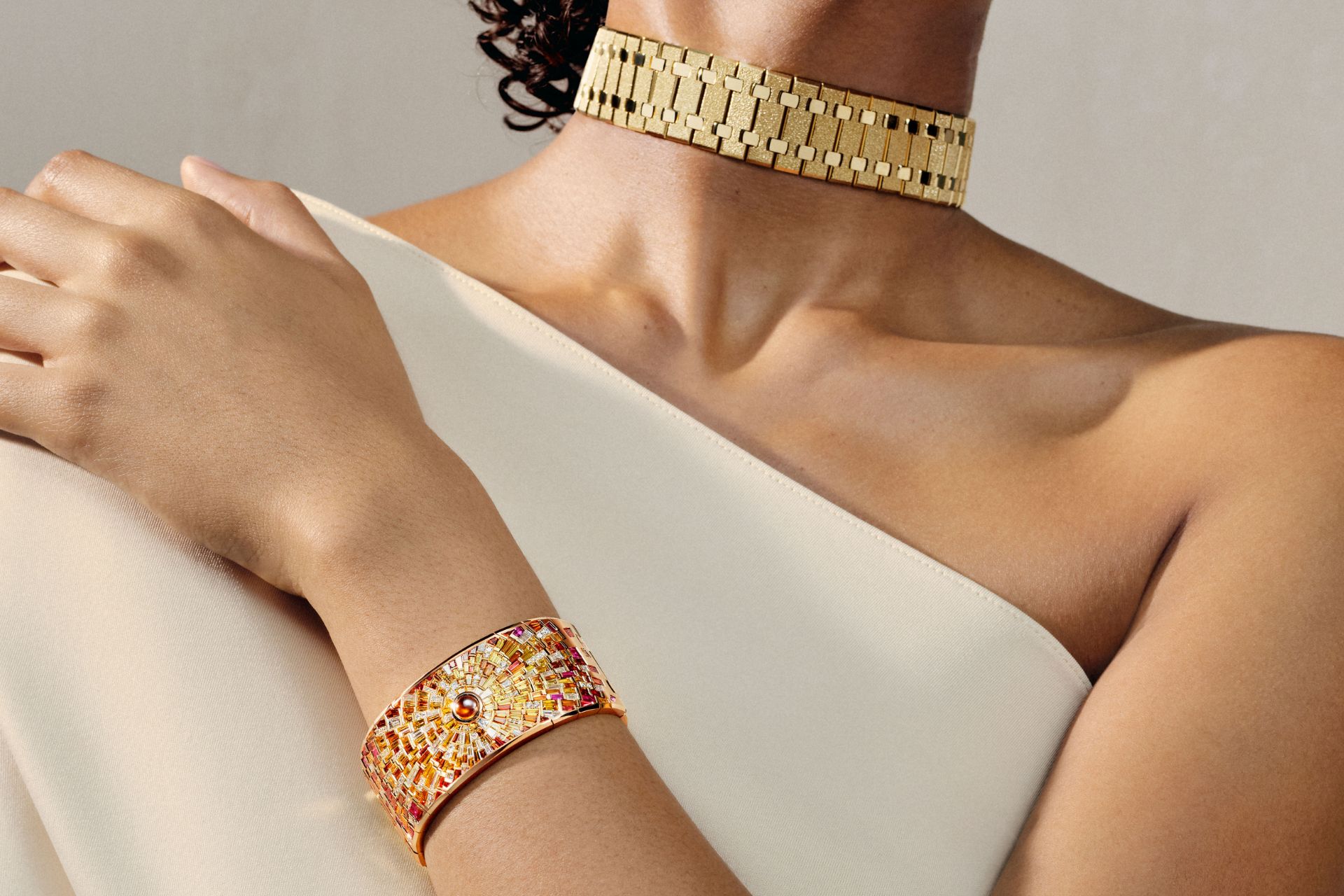
Frosted Gold offers a quieter counterpoint. The chokers and cuffs dispense with coloured gemstones altogether, allowing the textured surfaces of pink, white and yellow gold to take centre stage. Developed with designer Carolina Bucci in 2016, the finish draws on an old Florentine technique in which gold is worked to create a finely hammered, light-catching surface. The effect is less about overt sparkle than the interplay of texture and light.
Chief Executive Officer Ilaria Resta describes the collection as “a gateway to the past and the future”—a fitting way to frame a project that draws on the house’s history while reconsidering what its most recognisable design can become.
The more compelling question is whether the Royal Oak’s familiar geometry can hold its own beyond the watch. On the wrist, the bracelet is inseparable from the object it supports; at the collarbone, it must command attention on its own. Royal Oak Joaillerie makes a persuasive case that it can. Whether the transformation feels like a natural evolution or an altogether different proposition is where the real interest lies.
This story was initially published by GRAZIA Singapore and with permission has been published here.


