










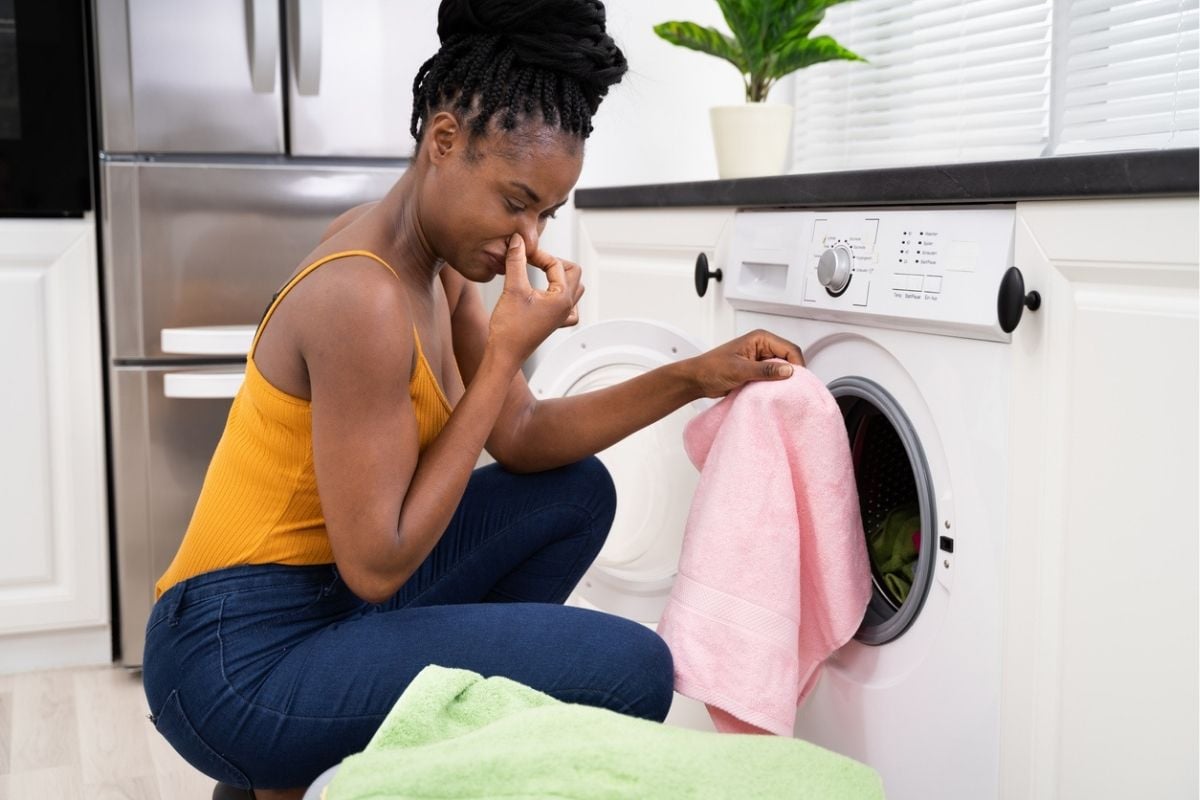
You step out of the shower feeling perfectly clean, reach for a fresh towel, and immediately catch a sour, damp smell that has no business being there. The towel came straight from the linen cupboard. It went through a full wash cycle with plenty of detergent. So why does it smell like it spent the weekend in a gym bag? Most of us have been in this exact spot – and most of us have tried to fix it by pouring in even more product, which, as it turns out, only makes things worse.
What actually causes that lingering funk in freshly laundered towels
Towels work harder than almost anything else in the laundry. Every time you dry off, they absorb water, body oils, and skincare products. They also hold onto detergent and softener far more stubbornly than a typical T-shirt. When loads are too full or the water temperature is too cool, even a good detergent can cling to the fabric and leave behind residue that traps odor.
A peer-reviewed study on household towels found something even more unsettling: bacteria form a biofilm – a thin, sticky layer of microorganisms – inside the loops of terry cloth whenever a towel stays damp. Once those bacteria settle in, they release waste compounds that produce a sour or stale smell on fabric you just washed. That distinctive odor some people describe as a sharp note or a wet-dog whiff? That is bacterial waste, not leftover dirt.
Every time a towel sits crumpled on a bathroom floor, hangs in a steam-filled room, or waits damp in a hamper, you give that biofilm more time to grow. The smell builds quietly until it greets you after every single shower. So is the answer more detergent, more softener, more fragrance boosters? Not even close.
The two-ingredient reset that targets the real problem
The most effective natural method is a straightforward two-step wash using white distilled vinegar and baking soda – and the order matters. Run the towels through a cycle with vinegar first. White distilled vinegar breaks down detergent film and mineral deposits, neutralizes odors, and even acts as a natural fabric softener, leaving towels fluffy rather than stiff. It is especially useful when you regularly use scented detergent, which tends to leave heavier residue.
Then run the towels through a second cycle with baking soda. According to Real Simple, adding half a cup of baking soda directly to the washer drum helps break down residue and eliminate lingering smells. Where vinegar dissolves buildup, baking soda deodorizes and gently boosts cleaning action. Together they restore softness without harsh chemicals and keep musty smells from returning.
For towels that carry a deeper history of gym bags, pool decks, and prolonged dampness, a simple wash may not cut it. In those cases, soaking in hot water with oxygen bleach or diluted hydrogen peroxide gives fibers a deeper reset without the harsh punch of chlorine bleach. But for everyday maintenance, the vinegar-and-baking-soda routine is more than enough.
The habits that keep odors from coming back
Solving the smell once is satisfying. Preventing it from returning is the real goal. Start with how you hang your towels after each use. Hooks may look neat, but they trap fabric into tight folds that block airflow. Towel bars provide more surface area for drying, so spread your towel fully across a bar rather than bunching it on a hook. The increased air circulation helps towels dry faster, which denies bacteria the damp environment they need.
Sun drying adds another layer of protection. Ultraviolet rays naturally neutralize mold and mildew, making a clothesline a surprisingly effective deodorizer and mild disinfectant. When line drying is not an option, a hot dryer cycle with wool dryer balls is the next best thing. Wool dryer balls also soften towels without adding the waxy coating that fabric softener leaves behind – a coating that damages fibers and reduces absorbency over time.
Storage matters too. Make sure towels are completely dry before putting them away, and keep your linen cupboard dry and ventilated. A cramped, steamy bathroom cabinet can reintroduce moisture and odors to towels that were clean moments ago. Wash bath towels every three to four uses, and wash hand towels and gym towels more frequently – sometimes after every use. Use warm or hot water for most loads, unless the care label says otherwise, because hotter water helps dissolve oils and kill bacteria. And avoid overloading the machine: towels need enough room to move freely in the drum so water and detergent can reach every fiber.
Do not overlook the machines themselves. Dirt, mildew, and mineral buildup inside your washer and dryer can transfer smells right back onto clean laundry. Keeping those appliances fresh with regular cleaning cycles is essential. Finally, if towels have thin spots, frayed edges, or a persistent odor that survives every treatment, they may simply be past saving. Gradually upgrading to quick-drying materials like bamboo or waffle weave can help, since these fabrics dry faster and resist mildew more effectively than traditional cotton terry.
Fresh towels, minus the guesswork
The answer to persistently smelly towels is not more product – it is less. Heavy fragrance boosters and excess detergent often make the problem worse by adding layers of residue that trap moisture and bacteria. A simple vinegar-and-baking-soda reset, combined with thorough drying, smart storage, and a clean washing machine, addresses the root cause rather than masking it. Use less detergent, skip softener or use it sparingly, and dry towels completely every time. A small shift in routine is all it takes to make that post-shower moment feel as fresh as it should.