










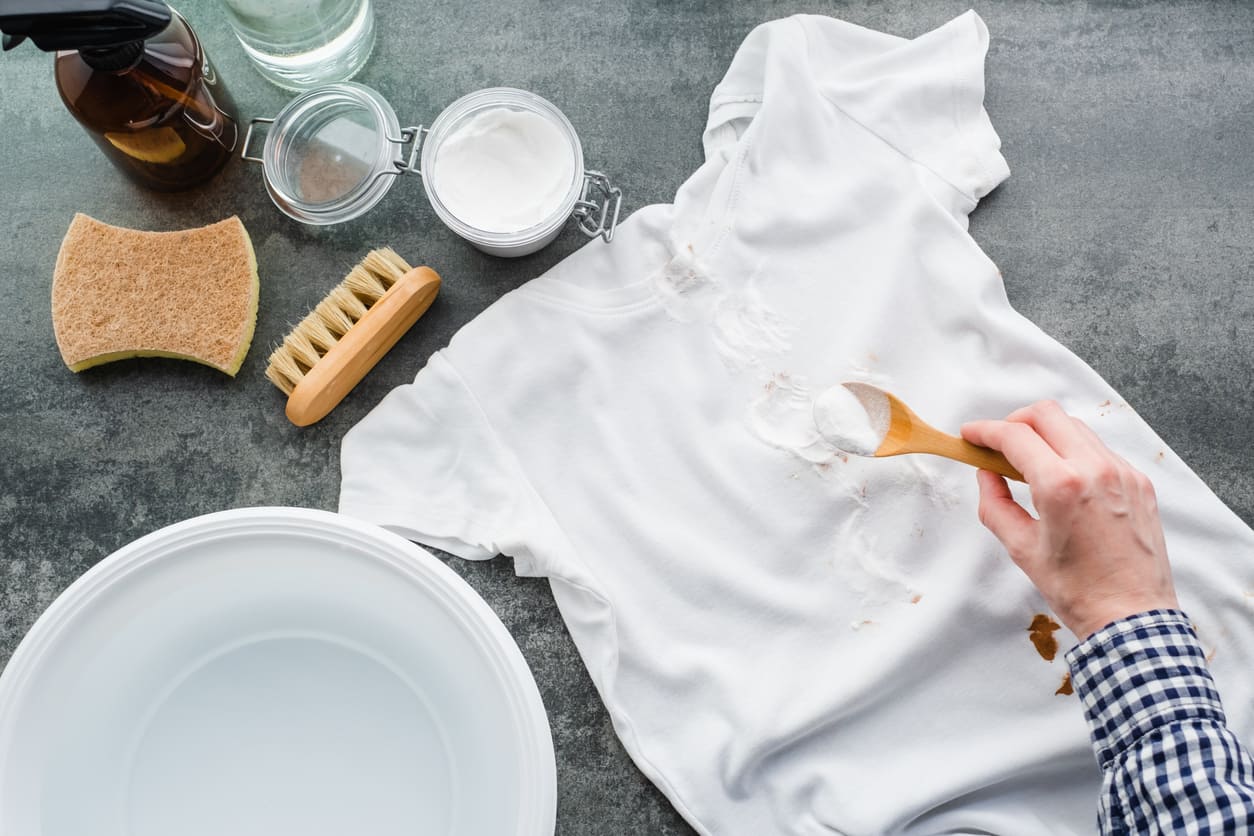
You know that spaghetti sauce dot on your favorite white shirt. The one you swore you would deal with later, except later turned into laundry day, and by then the stain had settled in like it owned the place. Or maybe it is your kid’s pants, sporting a grass stain that quietly turned brown by Tuesday. Perhaps it is the coffee spot on a work blouse you did not even notice until it had already dried in. We have all been there, staring at a garment and wondering whether it is time to demote it to yard-work duty. But before you give up on another piece of clothing, there is a near-free fix hiding in your kitchen cabinets that handles most of these everyday disasters surprisingly well.
Why stains win when you wait
The real enemy is not the stain itself. It is the clock. In the first few minutes after a spill, the mark is easiest to lift. A few hours later, it starts bonding with the fabric fibers, weaving itself into the textile at a molecular level. And after a full wash-and-dry cycle? You may be looking at a permanent souvenir.
That gap between the moment something splatters and the moment you finally toss a load into the machine is where most lost clothes go to die. The problem is not a lack of good products on store shelves. It is that most of us do not treat the stain in time, or we reach for an expensive commercial pre-treater only to realize the bottle ran out two weeks ago. What if the solution cost pennies per batch and took just a few minutes to mix?
Three pantry ingredients, one powerful paste
This homemade pre-treatment paste relies on three ingredients you probably already have on hand, each playing a distinct role.
Original blue Dawn dish soap is the grease-cutting workhorse. It does an excellent job breaking down oily stains like cooking grease, makeup, sunscreen, and motor oil. The recommendation is to stick with the original blue formula rather than scented or specialty versions, as the classic formulation is specifically noted for its stain-fighting reliability.
Hydrogen peroxide acts as the brightener. It helps lift many organic stains such as blood, grass, fruit juice, wine, and sweat. It is inexpensive, easy to find, and a little goes a long way.
Baking soda is what turns the mixture from a runny liquid into something that actually stays put. It thickens the paste so it clings to fabric instead of running off, while also providing a little extra cleaning power and mild scrubbing action when gently worked into the stain.
Stir all three together gently until you have a thick, smooth paste similar to toothpaste. If it is too thick, add a few drops of peroxide. If it is too thin, stir in a little more baking soda. The consistency matters because a thicker formula is especially useful for greasy food stains, larger stained areas, and many common household messes that benefit from extra contact time before laundering.
One important note: hydrogen peroxide gradually loses strength once it is mixed with other ingredients, so this paste works best when it is fresh. A small batch that lasts a week or two is ideal. When it runs out, mixing another takes only a couple of minutes.
How to use it without ruining your clothes
Using your finger or an old soft toothbrush, work a small amount of paste directly into the stain. You do not need a thick layer – just enough to coat the stained area. For older or tougher stains, let the paste sit for 30 to 60 minutes before washing. If a stain is especially stubborn, it is generally better to repeat the treatment than to leave peroxide on colored fabrics overnight, which could affect the dye.
Here is the step most people skip, and it is arguably the most critical: before tossing the garment into the dryer, make sure the stain is completely gone. Dryer heat can permanently set whatever remains. If there is still a shadow of the mark, repeat the treatment and wash again before drying.
This paste is designed as a laundry pre-treatment, which means it is built for home use. If you are out to dinner or sitting in a meeting when disaster strikes, a commercial stain pen wins that round. It is compact, clean, and ready immediately. The smart play is to carry one in your bag for first aid on the spot, then give the stain a thorough treatment with this paste once you are back home.
It is also worth noting that enzyme-based commercial stain removers may still have the edge on certain protein-heavy stains like dairy, egg, or baby formula. For the vast majority of everyday messes, though, this simple homemade version handles an impressive variety.
The pennies-per-batch takeaway
You do not need a cabinet full of specialty sprays to keep your wardrobe intact. Three ordinary ingredients, a couple of minutes of mixing, and a little attention to timing can rescue most of the stains that send clothes to the donation pile prematurely. The paste costs almost nothing, works on everything from muddy knees to wine splashes, and gives you a real alternative to products that charge a premium for similar results. The next time a stain lands, you will know exactly what to reach for – and it will already be in your kitchen.


