










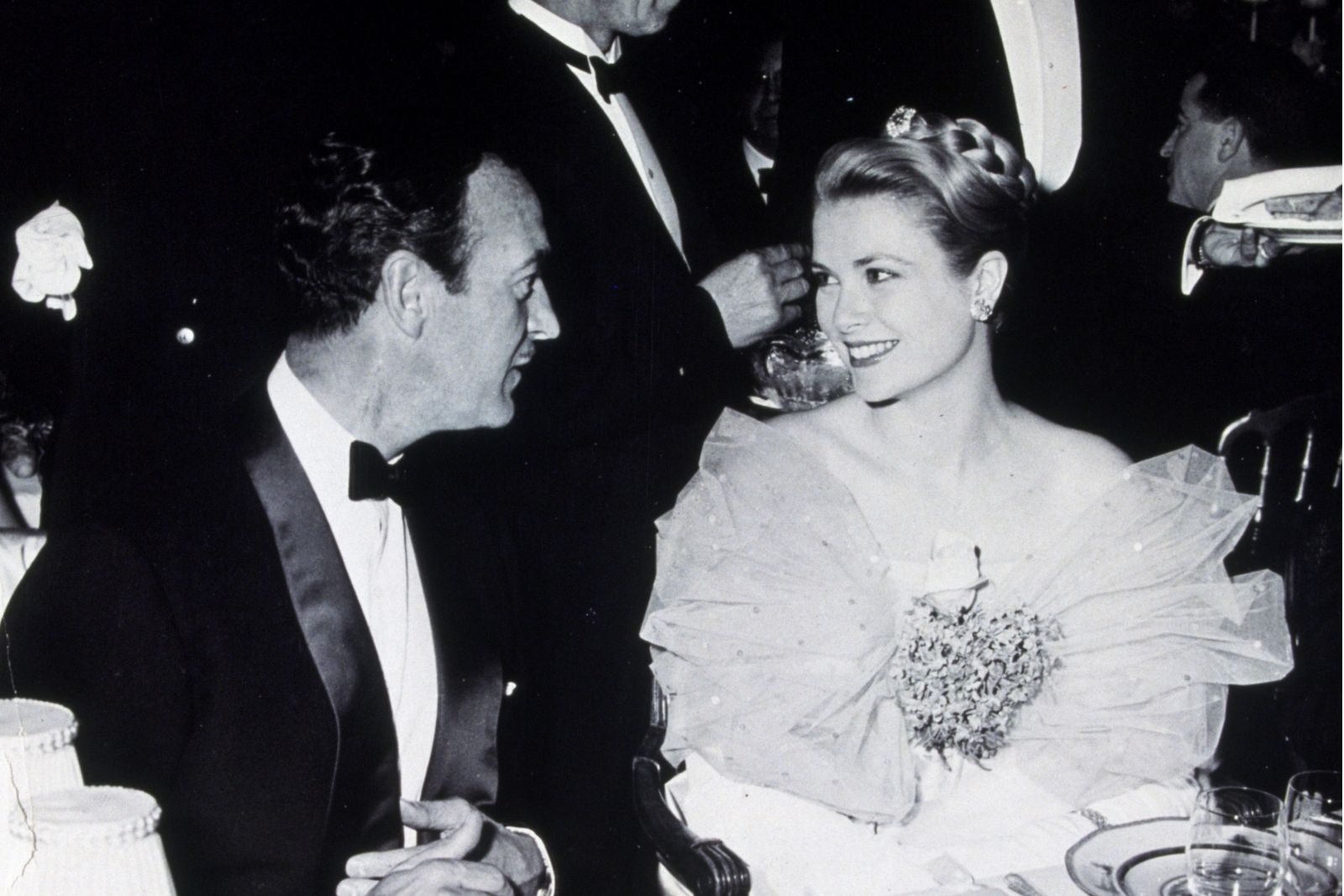
We all have a mental image of what a princess should look like on a red carpet. A sweeping gown, a knowing smile, jewelry that catches every flashbulb. But when you scroll through decades of charity-gala photographs from Monaco, one woman keeps stopping you mid-swipe – and it is never who you expect. Before the modern royal style wars, before influencer culture co-opted couture, there was an Oscar-winning actress who traded Hollywood for a throne and, in doing so, wrote the definitive playbook for formal dressing that no crowned head has managed to surpass.
How a Hollywood star turned a fundraiser into fashion’s most exclusive night
The Monaco Red Cross Gala was founded after Prince Louis II established the Monegasque Red Cross in 1948. Under his successor, Prince Rainier III, the event gained social cachet, but it remained a relatively modest affair. Everything changed in April 1956 when Rainier married Grace Kelly, already an immense star, an Oscar laureate, a muse of Alfred Hitchcock, and an absolute reference in elegance. Two years later, in May 1958, she was named president of the Monegasque Red Cross – the first woman to hold the position.
Her former press attaché, Nadia Lacoste, once recalled that Grace instantly brought a sense of magic and femininity to the court. That magic proved lasting. Under her leadership the charity ball changed dimension entirely: celebrities, aristocrats, and major fortunes flocked to Monaco, drawn as much by the nobility of the cause as by the radiance of its princess. Could any single person really reshape an institution so completely? The photographic record answers with a resounding yes.
From cinched waists to feathered hems – the gowns that defined three decades
Tracking Grace’s Red Cross Gala appearances from the late 1950s to the early 1980s is like leafing through a living encyclopedia of fashion history. Her earliest looks favored fitted silhouettes: in 1958 she entered the Sporting Club de Monaco in a pale strapless dress adorned with a delicate floral motif. The following year she chose a bare-shouldered bustier style that served as the perfect frame for the spectacular Cartier diamond necklace she had received as a wedding gift from Prince Rainier. By 1960 she was already pushing boundaries with a draped, square-neckline gown paired with a simple pearl necklace – a combination that felt strikingly modern for the era. In 1961, she pivoted again, selecting a body-skimming silhouette inspired by the Indian sari, complete with a boat neckline and luminous colors.
The mid-1960s brought more volume and ornamentation. A 1963 creation broke from her earlier cinched lines with a bloused waist and structured sleeves, crowned by a diamond necklace resting directly on the décolleté. In 1964 she wore a gown combining lace and silk, its lace bodice flowing into a full skirt and matched with a short jacket, while a Cartier brooch of diamonds and rubies – echoing Monaco’s flag – decorated her hair. Then came the legendary pieces. In 1968, alongside surgeon Christiaan Barnard just months after the world’s first successful heart transplant, Grace wore the famous Bayadère dress by Marc Bohan for Dior, crafted in chiffon striped with pink, orange, and yellow and embellished with pearls and rhinestones at the collar. A year later she debuted what many consider her finest Red Cross look: a white gown by Marc Bohan with a clean, pared-back cut elevated by feathers delicately placed at the wrists and hem. She loved that dress so much she wore it again for a celebrated cover of Jours de France in 1973.
Grace had been a client of Christian Dior from the early days of her marriage, but her relationship with Marc Bohan, artistic director of the house from 1961 to 1989, proved a decisive turning point. Florence Müller, curator of the 2019 exhibition Grace of Monaco, Princess of Dior, noted that the princess’s dresses were made from lightweight fabrics such as silk jersey, crêpe georgette, tulle, panne velvet, and guipure, with chiffon reigning supreme. Müller explained that Bohan’s chiffon creations honored Grace’s natural poise and light step, while ostrich feathers, ruffles, and ruching appeared only as subtle touches to highlight a gesture or frame a face. Floral motifs ran through many of her embroidered or printed gowns, reflecting her love of gardens and nature – a passion she cultivated at her Roc Agel property in the hills above Monaco.
Cape dresses, color theory, and the art of understated power
The 1970s introduced a looser, more bohemian vocabulary. In 1971, sharing the room with Elizabeth Taylor – who opted for dramatic diamond and emerald jewels – Grace countered with quiet confidence: a light-toned dress embroidered with flowers on the front and cinched by a silk belt. By 1973, when daughter Caroline made her gala debut, both mother and daughter were dressed by Dior. Grace chose a long, sunny yellow gown with ruffles, billowing sleeves, and a knotted sash at the waist. That same decade she embraced the cape dress, a silhouette she helped popularize among royals. In 1974 – the year Prince Albert made his first gala appearance – she wore a fluid chiffon cape dress. In 1976 a spectacular red version fulfilled a double symbolic role, honoring both the Red Cross and the principality’s colors, while Caroline stood beside her in contrasting white.
Grace also proved a master of chromatic storytelling. In 1977 she paired a relatively simple white dress with a turquoise-print stole, perfectly coordinated with a diamond-and-turquoise parure. A peach cape dress in 1978 anticipated silhouettes that remain staples of royal wardrobes to this day. Her 1980 return to white – a Marc Bohan creation featuring petal-like bodice detailing and an asymmetric hem – became iconic enough for multiple official portraits. And in 1981, with Julio Iglesias as the guest of honor, she signaled the incoming opulence of a new decade in a dramatic yellow ensemble of matching gown and stole. It would be one of her final major fashion statements at the gala.
A legacy no tiara can buy
Grace Kelly’s tragic death on September 14, 1982, following a car accident, ended an extraordinary chapter. Months later, Prince Albert took over the charitable mission. Today, Charlène of Monaco continues the tradition as vice-president of the Monegasque Red Cross since 2022, and the 77th edition of the gala is set for July 18, 2026. Yet more than seven decades after its creation, the event’s DNA still belongs to the woman who understood that philanthropy and fashion could amplify each other. What we can take away from her quarter-century of gala dressing is disarmingly simple: true style is not about spectacle but about consistency, intention, and knowing exactly when a single strand of pearls speaks louder than every diamond in the vault.


