










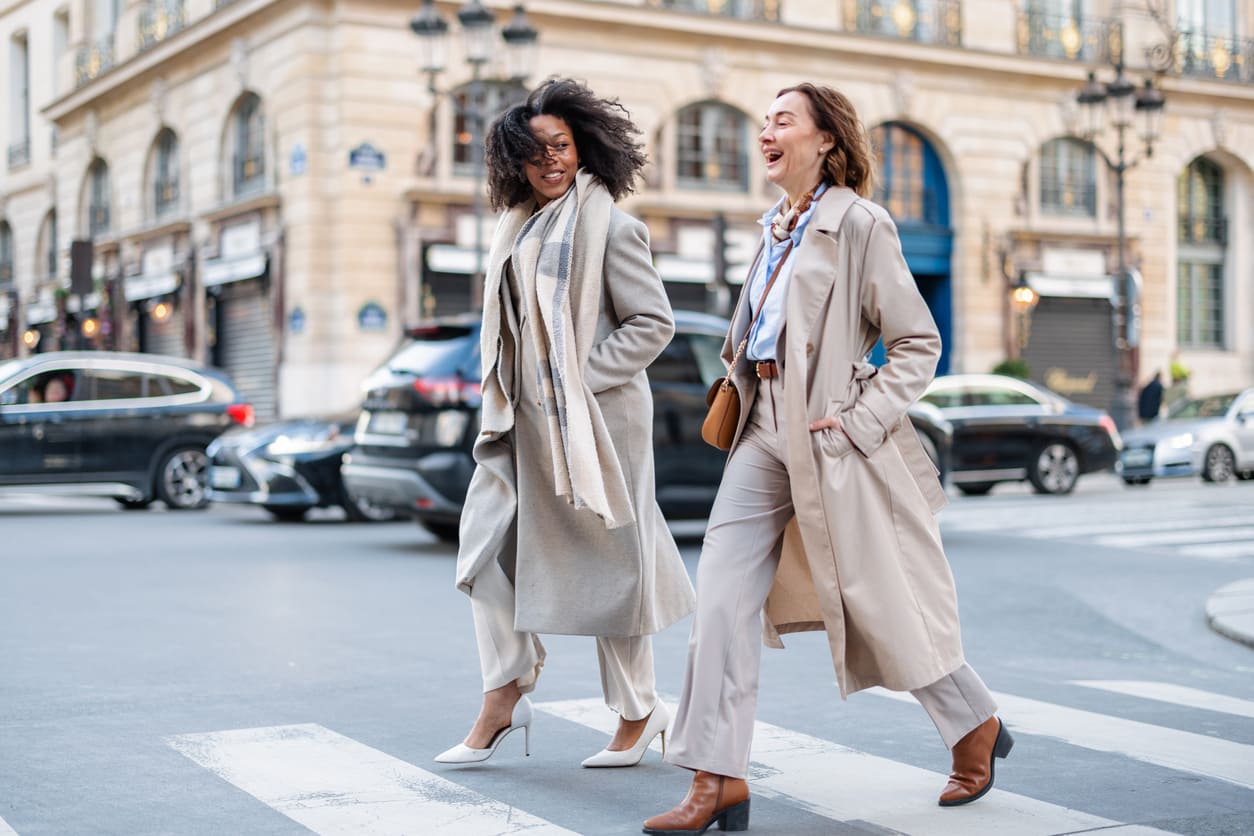
You probably think you know what a Parisian woman wears. Or what separates an L.A. look from a New York one. We all carry these mental shortcuts – the trench-clad Frenchwoman, the denim-obsessed Californian, the all-black Manhattanite. But talk to people who actually live in these cities and you will hear something surprising: the stereotypes are crumbling, and what remains underneath is far more interesting than any mood board ever captured. Women across seven cities and two continents reveal that the real wardrobe DNA of a place is shaped less by cliché and more by climate, transit, generational tradition, and the simple question of how hard your day is going to be.
Why the old style labels no longer stick
Fashion month may still revolve around New York, London, Milan, and Paris, but the industry’s center of gravity has been shifting for years. Global trends now emerge from Copenhagen, Shanghai, Seoul, and Sydney. Major luxury houses have staged runway shows in Rio de Janeiro, Dakar, and Los Angeles. Designers like Campillo, Diotima, Gaurav Gupta, and Phan Huy have built their practices in Mexico, Jamaica, India, and Vietnam respectively, proving that creative power is no longer confined to a handful of Western capitals.
Chloe King, fashion director at Saks Global and a well-known street style figure, notes that real residents of cities like Paris or Milan push back against the monolithic labels outsiders assign them. French people she knows insist they are a diverse fashion community, not a single aesthetic. When King first traveled to Copenhagen for work, she expected either ultra-minimalism or the print-happy Ganni archetype. Instead she found nuance – and women who were thrilled to see someone wearing color, a reminder that micro communities exist within every city and often serve as unexpected points of connection.
What people really reach for, city by city
In New York, two forces pull in opposite directions. King, who grew up in Boston and moved to the city a few years after college following a stint in sports marketing, describes the first as pragmatism. Getting through the day demands sturdy shoes, a parka, maybe a baseball cap – functional pieces that anchor everything else. The second force is performance. The density and intensity of the city push people to dial up who they are. Amy Smilovic, founder of Tibi and a New Yorker since the early 1990s, believes environment is the single biggest determinant of personal style. For her, the quintessential New York garment is a blazer – specifically Tibi’s Liam Blazer. She describes it as an emblem of ambition for younger wearers and a second skin for those who have been in the city long enough to stop trying.
Los Angeles tells a different story. Its roots in the entertainment industry give everyday dressing a cinematic quality, according to born-and-raised Angelino Meeka Hossain, who cites Sharon Stone’s sharp suiting in Basic Instinct as a personal blueprint. Yet the climate and beach culture tilt the city toward ease. Hossain considers jeans and a light knit the prototypical L.A. outfit, and the preferred denim silhouette shifts by neighborhood. The Eastside leans oversized and acid-washed. West Hollywood is tailored and polished. Venice favors boho-chic loose fits that still carry a premium price tag. In Silver Lake, vintage oversized denim dominates thrift-store hauls, while Melrose draws shoppers to brands like Khaite, Toteme, Staud, and Sporty & Rich. A citywide wellness culture ensures activewear appears across every zip code.
London’s contribution, meanwhile, springs from its prestigious fashion schools and a punk-rock spirit that lives on in its vintage scene. Orlagh McCloskey, co-founder and creative director of Rixo, moved to the city from Derry, Ireland, as a student and was immediately drawn to secondhand shops stocked with bold 1970s pieces. Paired with the heyday of the British high street – Topshop, Miss Selfridge, Next – those finds encouraged resourceful experimentation rather than label-driven dressing. Foundational London pieces include the trench coat, Chelsea boots, and animal print. U.K. customers, McCloskey observes, gravitate toward bright, emotional prints and are unafraid to reach for a dress rather than defaulting to jeans and a top.
The quieter codes that define Milan, Paris, Copenhagen, and Madrid
Milanese style, according to Margherita Maccapani Missoni, is always elegant yet conceals its richness at first glance – much like the city’s architecture, which hides lush interior gardens behind understated facades. Tamu McPherson, founder of All the Pretty Birds, noticed three things when she relocated to Milan from the United States in 2005: Italians excel at mixing and matching, they coordinate meticulously (a cashmere jumper always complements the print dress beneath it), and they own a dedicated piece of outerwear for every occasion. A typical Milanese outfit might pair a fine cardigan with a pencil skirt and kitten heels, though more relaxed silhouettes like barrel pants and ballerina flats have entered the rotation. White trousers worn in winter remain a distinctly chic Milanese move.
In Paris, Chloé Harrouche, founder of the brand Loulou de Saison, which she launched in 2019, describes the local approach as the opposite of effortless. Every element – cut, fabric, proportion – is carefully considered to achieve balance. Proportion is central: a slightly oversized trench coat paired with fitted denim, comfort engineered to produce elegance in movement. King, who worked alongside a majority-French team at The Webster, noticed a rich interior life to Parisian dressing that contrasts sharply with New York’s more outward performance.
Copenhagen takes Scandinavian minimalism and loosens the reins. Compared to Stockholm’s posh, structured neutrals in black, white, gray, and beige, Copenhagen keeps that tonal base but layers on color, prints, and relaxed proportions. Biking as the primary mode of transport visibly shapes wardrobes – one pant leg folded up, elastics around the ankle, balloon pants gathered at the hem for practicality. Cowboy boots with mini skirts or Adidas pants in summer is, as one local puts it, distinctly Copenhagen. Voluminous outerwear, knit scarves, and hair clips appear year-round.
Madrid rounds out the picture with what the Flabelus founder, de los Mozos, calls classic elegance that always conveys effort. A typical look pairs jeans or trousers with a bold patterned top and a strong tailored jacket. The Spanish love volume in sleeves, plus details like ruffles, fringe, lace-up ties, stripes, and polka dots to make classic pieces feel singular. Grandmothers in their 80s and 90s still sit in stylish cafes in impeccable suits, transmitting that devotion to dressing well across generations. Brands like MarÀvic, Maria de la Orden, and Coosy embody the local preference for uniqueness over price. As Madrid grows more international, residents are taking even bigger risks, swapping a weekday blazer-and-trousers uniform for yellow pants and a bright orange top on the weekend without missing a beat.
What all of this actually tells us
The takeaway is surprisingly simple. City style is real, but it is not a costume you can copy from a Pinterest board. It is shaped by how you get to work, how unpredictable your weather is, what your grandmother wore, and whether your city rewards blending in or standing out. The most universal thread connecting New York to Madrid to Copenhagen is that locals dress for the actual texture of their daily lives – and that specificity is exactly what makes each place feel distinct. If you want to dress like you belong somewhere, pay attention not to the clichés but to the practical, inherited, and deeply personal choices people make before they walk out the door.


