










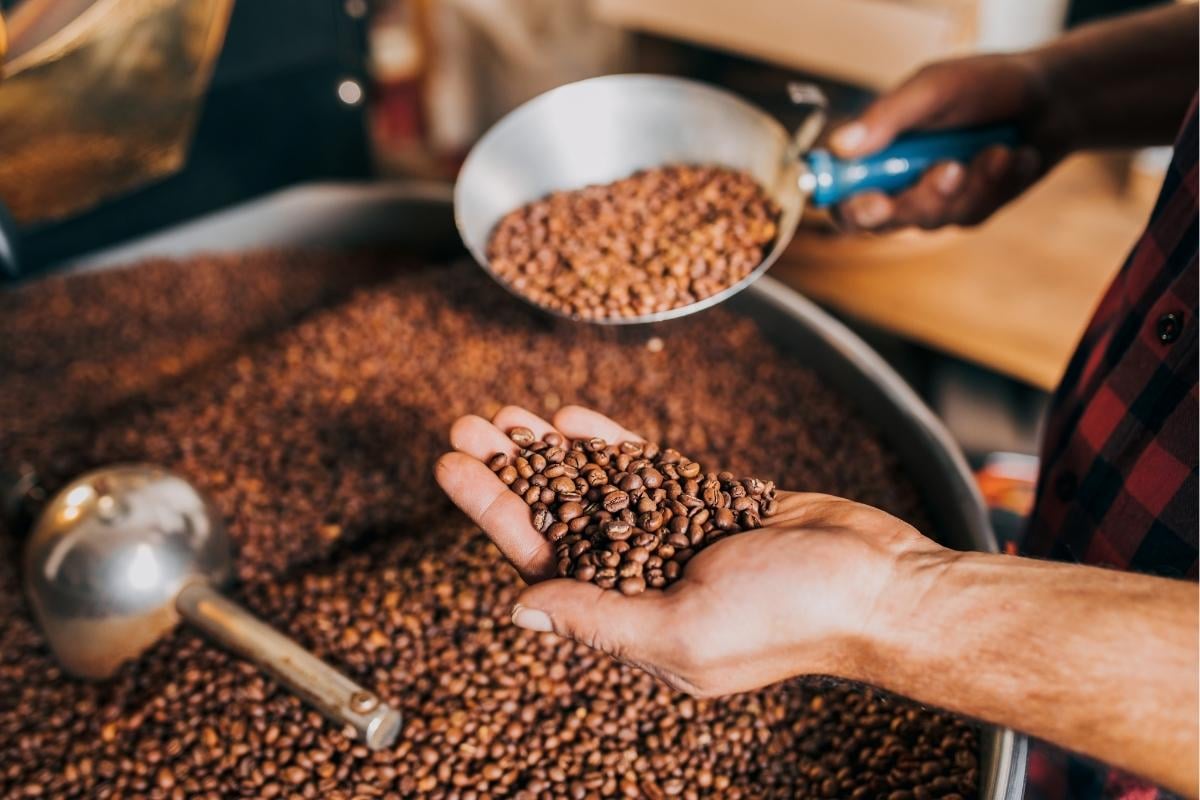
You probably didn’t think twice about that morning latte. You brewed it, sipped it, and scraped the soggy grounds into the trash without a second glance. Millions of us do the same thing every single day. But what if that damp, discarded pile of coffee waste could end up reinforcing the buildings we live and work in – and spare the planet a couple of serious headaches in the process? A team of engineers at RMIT University has been exploring exactly that possibility, and their early results suggest your used coffee grounds might have a surprisingly robust second life.
Two environmental problems hiding in plain sight
When organic waste like spent coffee grounds ends up in landfill, it doesn’t just sit there quietly. As RMIT University engineer Rajeev Roychand explained when the research was published in 2023, disposing of organic waste is a genuine environmental challenge because it releases large amounts of greenhouse gases, including methane and carbon dioxide, both of which drive climate change. So every bin bag stuffed with coffee remnants is quietly contributing to the very crisis we’re all trying to solve.
At the same time, there’s a completely separate problem unfolding beneath our feet. The construction industry’s appetite for natural sand – typically extracted from river beds and banks around the world – is enormous and growing. RMIT engineer Jie Li pointed out that this ongoing extraction carries a significant environmental toll. The supply of sand is finite, and the ecological damage caused by mining it is both critical and long-lasting. So here we are, burying organic material that poisons the atmosphere while simultaneously stripping the earth of a resource we’re running out of. Could one solution possibly address both?
That is precisely the question the RMIT team set out to answer. Their circular-economy approach aims to keep organic waste out of landfill while also preserving natural resources like sand. It sounds almost too tidy, but the science behind it is surprisingly concrete – pun fully intended.
How coffee grounds become a building material
If you’ve ever tried mixing garden compost into a craft project, you already know that raw organic matter and structural strength don’t usually go hand in hand. The same principle applies here. Organic products like coffee grounds can’t simply be tossed into a concrete mix because they leak chemicals that weaken the building material’s strength. Straight substitution would give you a crumblier, less reliable product – the opposite of what any engineer wants.
The RMIT team found a workaround by transforming the coffee waste before it ever touches cement. Using low energy levels, they heated the grounds to over 350 °C (around 660 °F) while depriving the material of oxygen. This heat treatment is called pyrolyzing, and it fundamentally changes what the coffee waste is at a molecular level. The process breaks down organic molecules, producing a porous, carbon-rich charcoal known as biochar. Unlike raw grounds, biochar can form bonds with the cement matrix, effectively incorporating itself into the structure rather than undermining it.
Think of it this way: the coffee grounds go in soft and chemically problematic, and they come out as a charcoal-like substance that actually wants to lock arms with cement. That transformation is the key step that makes the whole concept viable. Without pyrolysis, the idea would remain a well-meaning fantasy. With it, used coffee waste becomes a genuine candidate for partial sand replacement in concrete mixes.
What we still don’t know – and what comes next
Before you start stockpiling your morning grounds for the nearest construction site, there’s an important caveat. The researchers themselves cautioned that they still need to assess the long-term durability of their coffee-enhanced cement product. Promising early results are not the same as proven performance over years of real-world wear and tear.
The team is now working on testing how the hybrid coffee-cement performs under a range of stressors, including freeze and thaw cycles, water absorption, and abrasions, among many others. These are the kinds of brutal, repetitive forces that buildings, sidewalks, and bridges endure over decades, and any new material has to survive them convincingly before it can be adopted at scale.
RMIT engineer Shannon Kilmartin-Lynch acknowledged that the research is still in its early stages, but described the findings as an innovative way to greatly reduce the amount of organic waste heading to landfill. Kilmartin-Lynch also noted that the inspiration behind the work, from an Indigenous perspective, involves Caring for Country – ensuring a sustainable life cycle for all materials and keeping waste out of landfill to minimize environmental impact. That philosophy of cyclical responsibility, rather than linear disposal, is what gives this research its broader significance.
Your coffee habit, reframed
Here is what you know now that you didn’t before. A group of engineers has demonstrated that pyrolyzing spent coffee grounds into biochar can create a material capable of bonding with cement, potentially replacing a portion of the natural sand we’re mining at unsustainable rates. The process could simultaneously tackle greenhouse gas emissions from organic landfill waste and reduce the ecological damage of sand extraction. The research still has hurdles to clear, but the underlying science is sound and the ambition is real. Next time you dump those grounds in the trash, just know they might be worth far more than you think.