










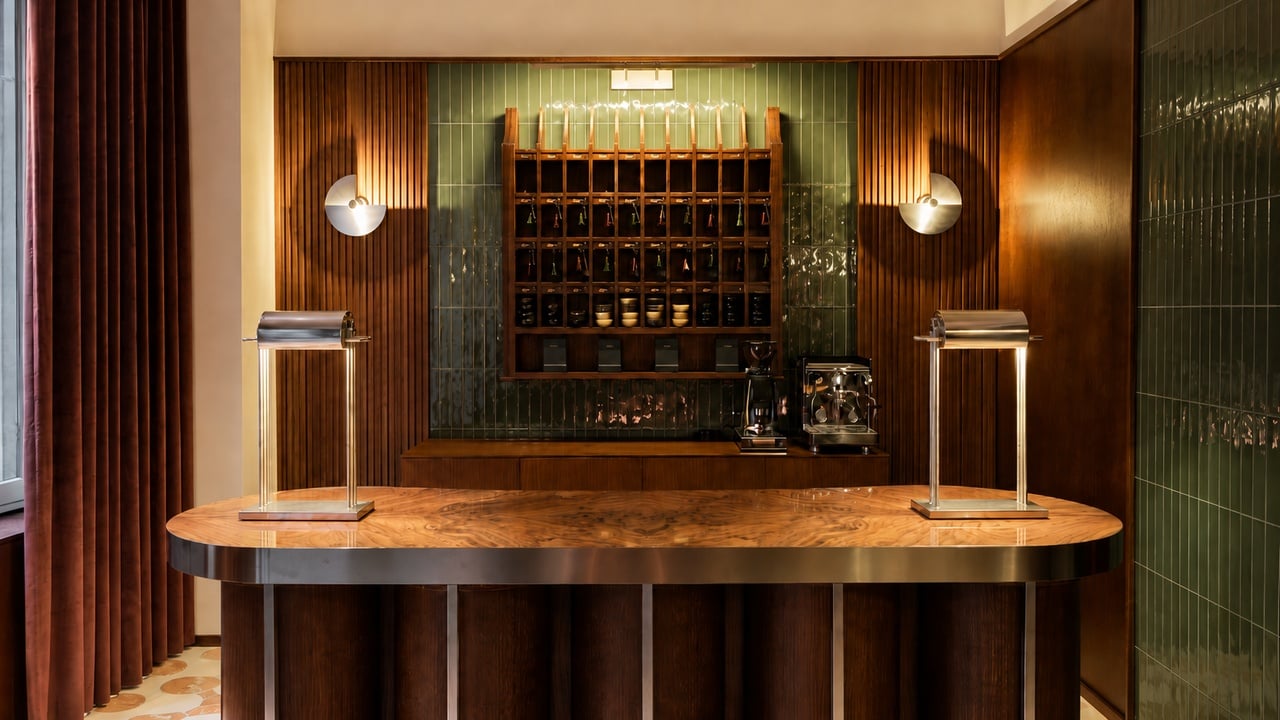
The lights have come back on behind a doorway just off Milan’s Duomo, one modeled on the entrance of an aristocratic palazzo, and with them a name that had been resting in the city’s archives since the age of carriages. Satinine Milano 1883 has reopened after decades of silence, carrying a past that is entirely true and beautifully documented, the kind every young maison dreams of borrowing. Crossing its threshold feels like opening a letter sealed more than a century ago and finding the ink still fresh.
From a Belle Époque Palazzo to Sophia Loren
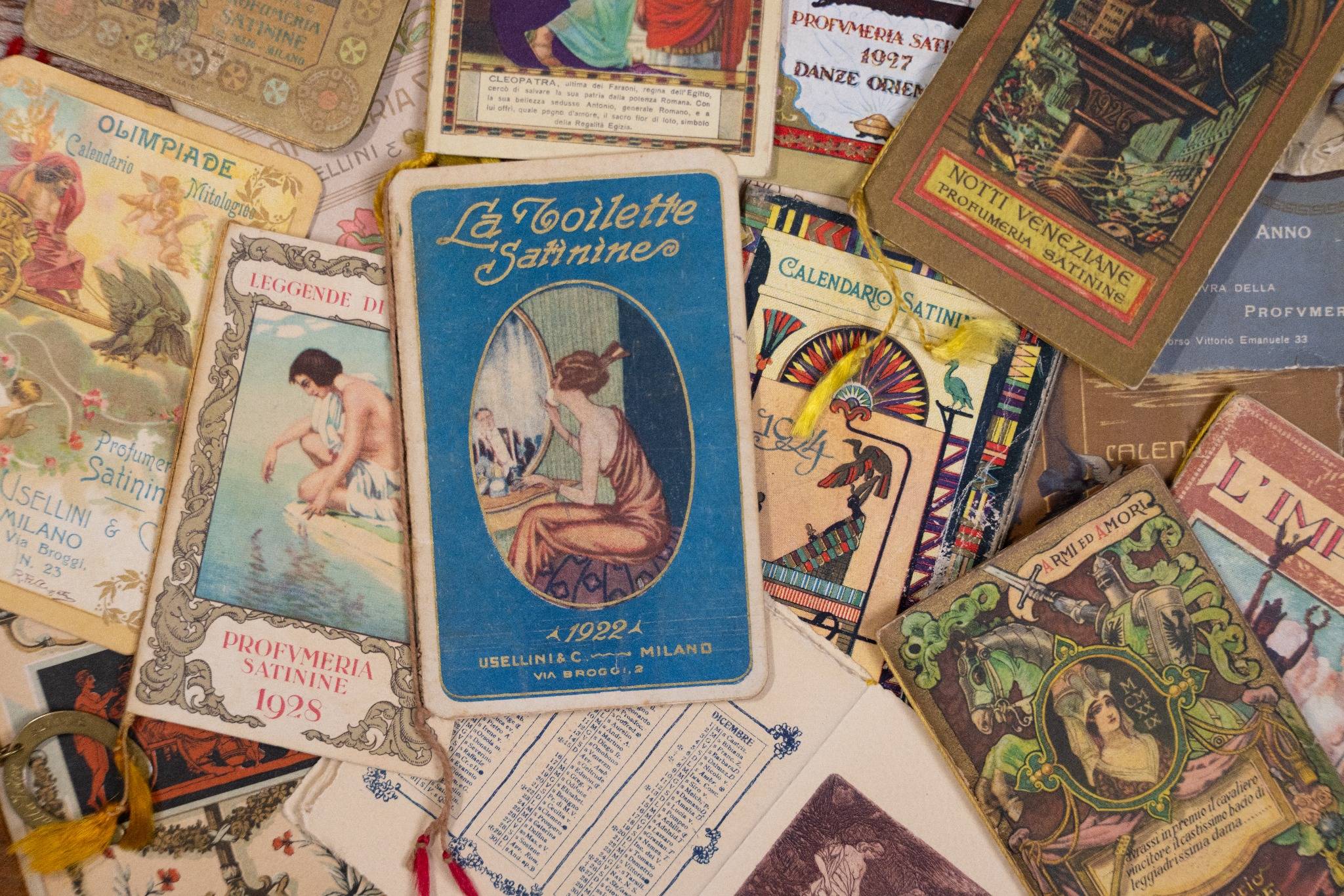
Lorenzo Usellini opened his perfume atelier in 1883, in a Milan enchanted by the Belle Époque, and by 1910 he had raised a palazzo on Via Broggi where laboratory and family lived under the same roof, the way painters once lived above their studios. Working beside his son Carlo Antonio, a chemist of rare talent, he composed the fragrances that carried the name far beyond Italy in the early Thirties, the sultry Orchidea Nera and the aristocratic Caccia alla Volpe, poured into flacons by the celebrated Vetrerie Bormioli.
Cinema entered the ledger in 1958, when Sophia Loren, freshly celebrated at Venice for The Black Orchid, lent her face to the perfume sharing the film’s title. The resurrection belongs to Andrea Galletti, a Milanese entrepreneur who traced the house through decades of paper and glass before co-founding Profumieri Milano with Ridgely Cinquegrana, former president of Loewe. Together they inherited an archive of some 150 surviving objects, now displayed like relics behind glass, and a laboratory in the Dergano district where every formula is composed in-house. The boutique itself, christened Officina, was conceived by interior designer Mara Bragagnolo as a passage through Milanese memory, in Lombard terracotta, oak paneling and cathedral glass, while Martina Frattura shaped a light so soft it deserves its own adjective, satin.
A Catalogue Written Like Literature
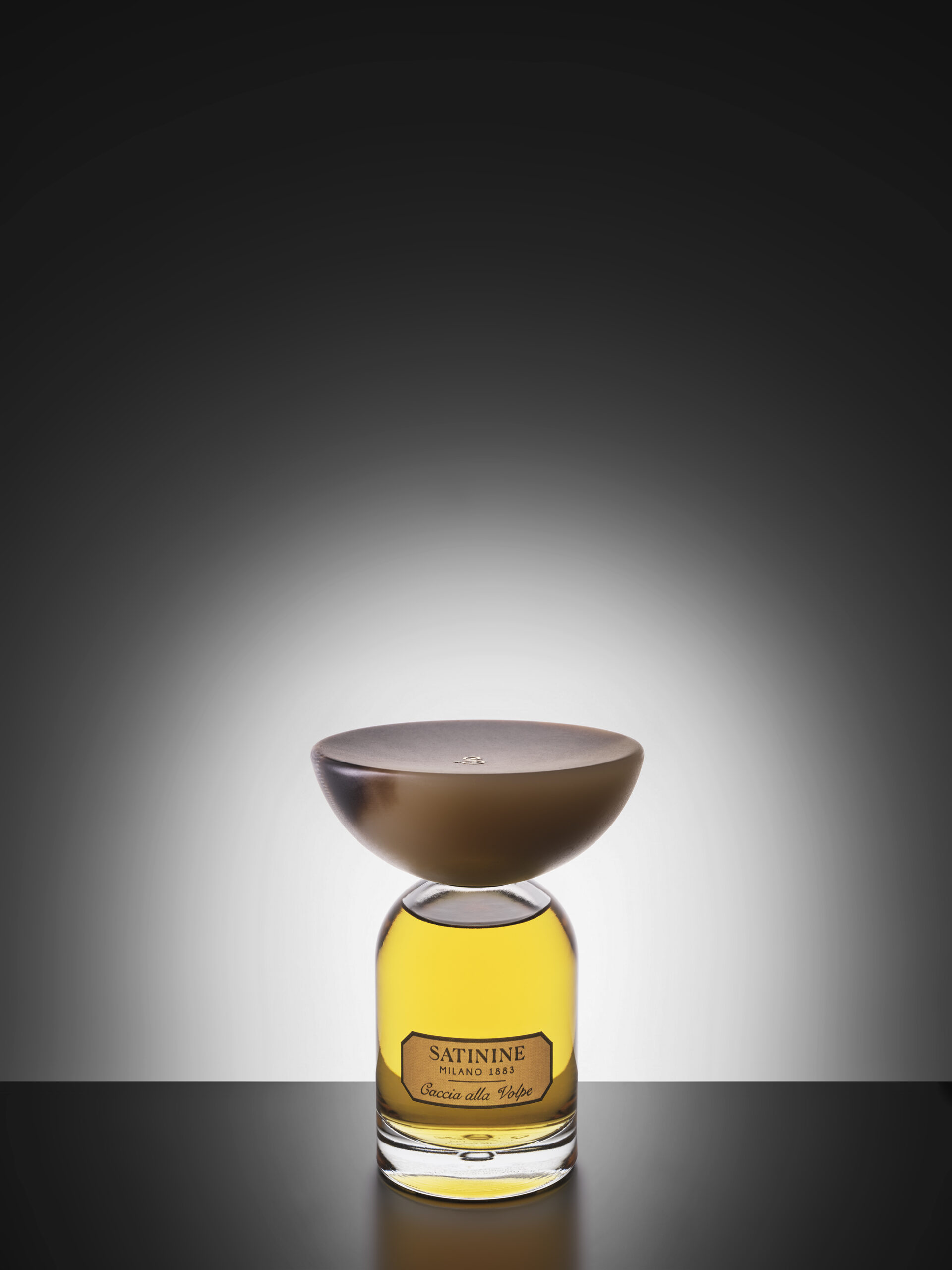
Italo Calvino once imagined a dandy chasing a vanished perfume from salon to salon, and the reborn catalogue reads like a sequel he would have savored. Caccia alla Volpe still rides through leather and spice with patrician composure, though its formula, once rich in animal essences, has been rewritten through green chemistry, leaving the fox to survive purely as legend. Bugia Bianca translates a white lie into fragrance, all salt on summer skin and a romance both parties will politely deny. Caffè Corretto distills the very Italian art of correcting espresso with a drop of spirit, turning morning ritual into gourmand mischief. And Amor Fati bottles the Stoic invitation to love one’s fate, gratitude rendered fruity and spiced, a philosophy Marcus Aurelius would have recognized, if never worn.


