










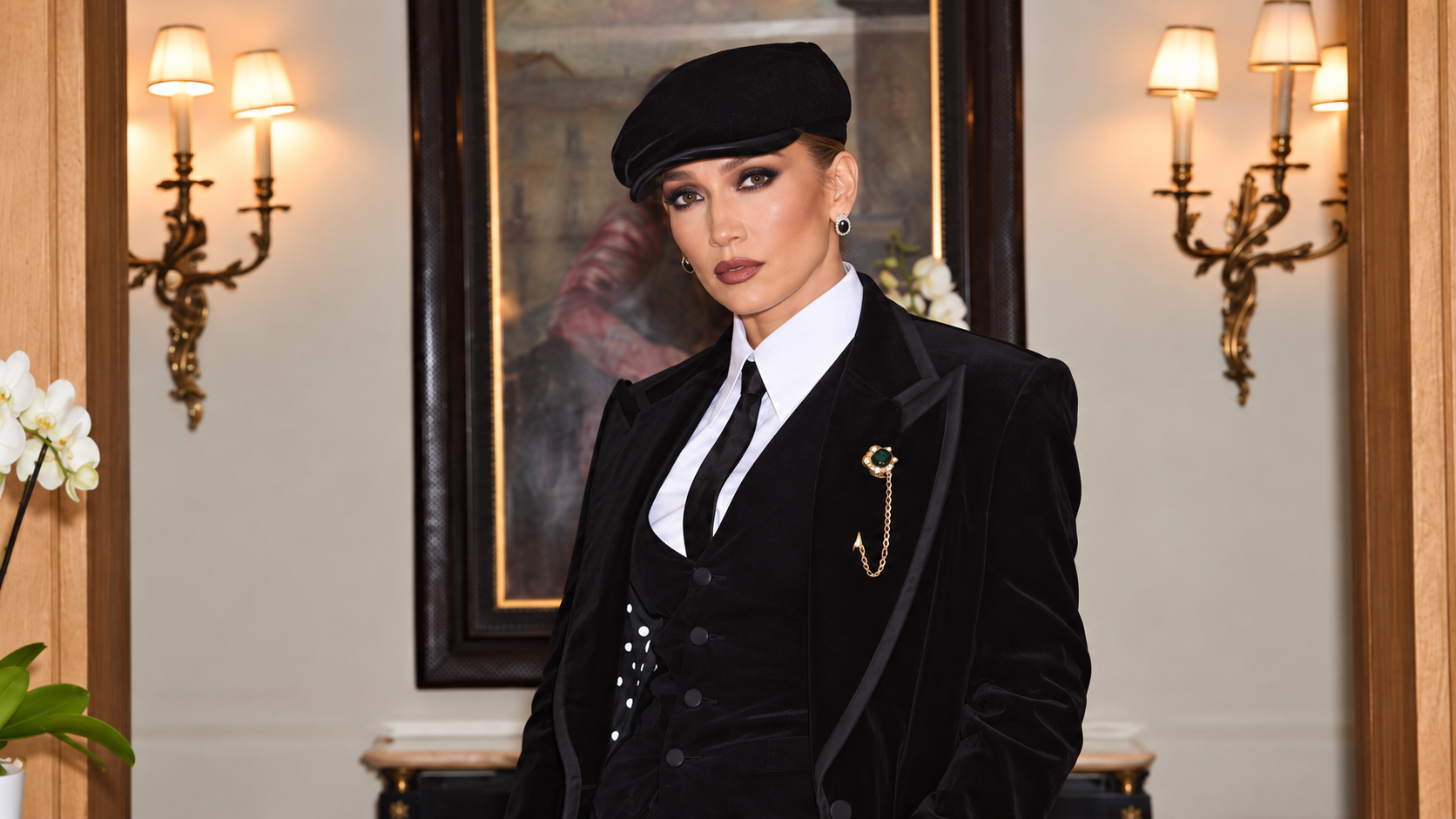
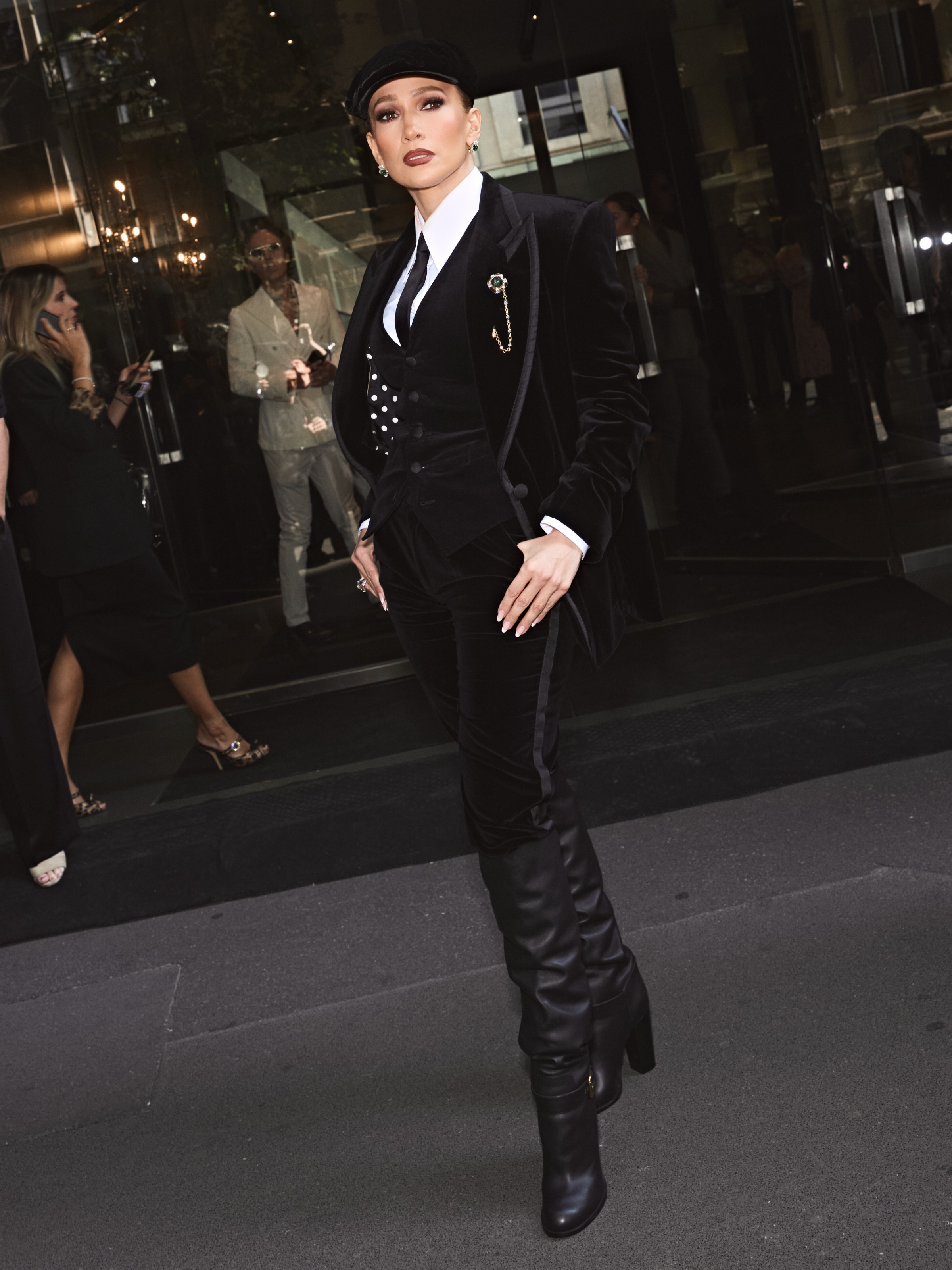
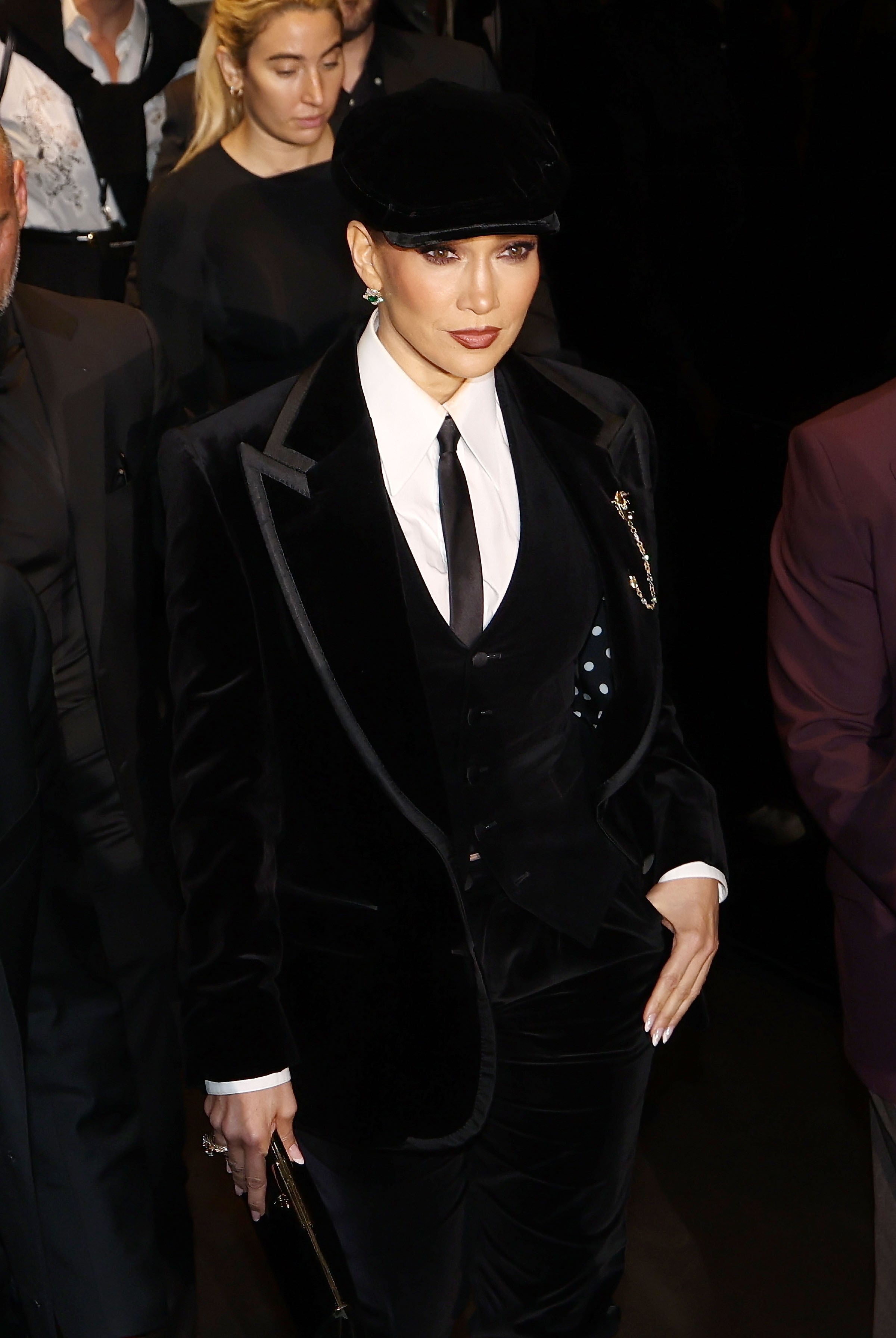
Well before the doors opened on Saturday, the crowd outside the Dolce & Gabbana show had filled the sidewalk, waving signs for the K-pop star Choi San and the Japanese actor Hikaru Iwamoto. As the guests began streaming out, the noise narrowed into a single chant, two syllables long. Jennifer Lopez had arrived in dark velvet, the suit cut close and finished with a matching cap, worn with equestrian boots that suggested she might leave the whole thing on horseback. She took her seat and watched the models with the concentration of a woman taking notes, which is roughly what a week in Milan asks of anyone who intends to be photographed in it.
Her Thomas Shelby Fantasy, in Velvet
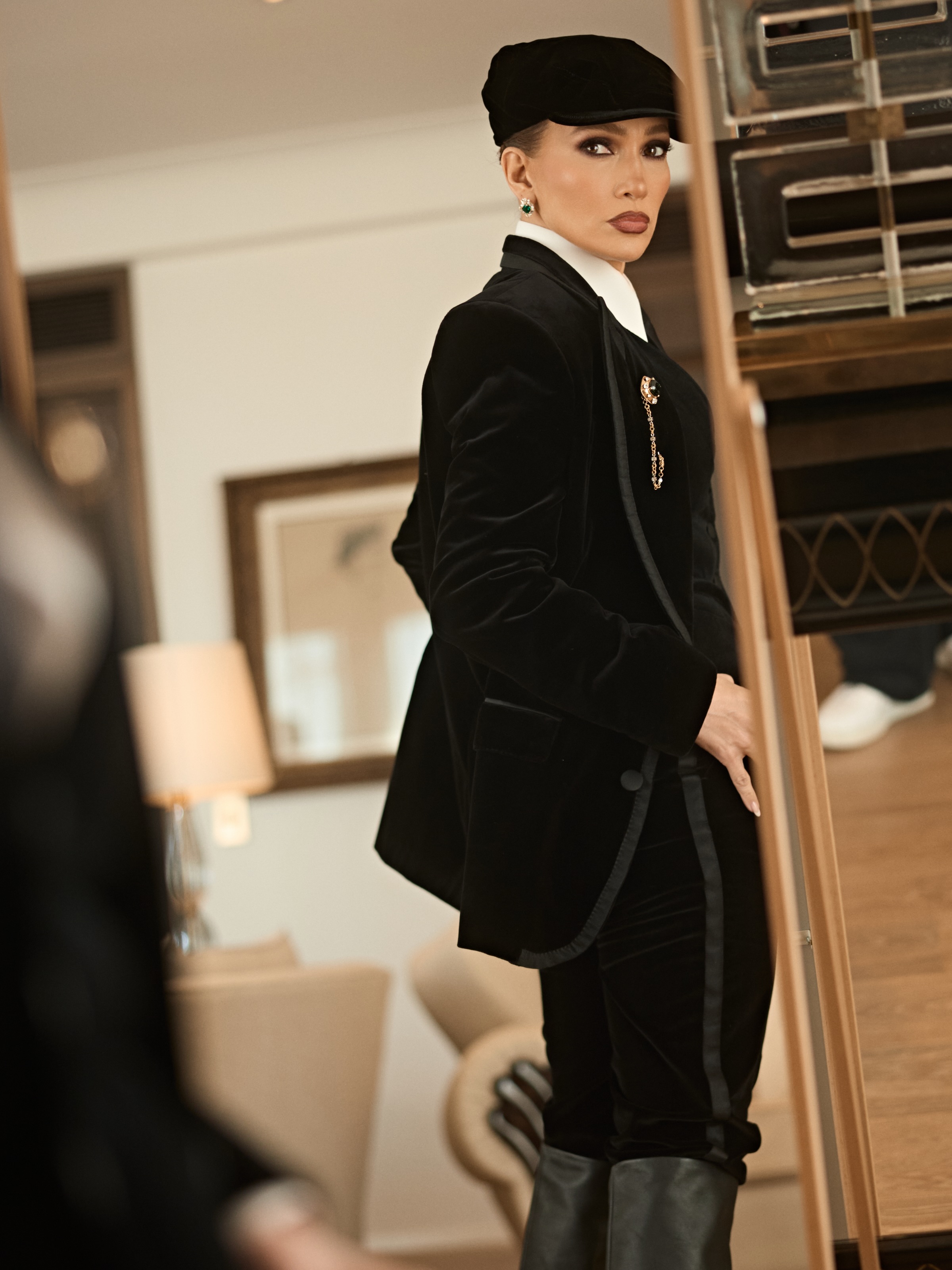
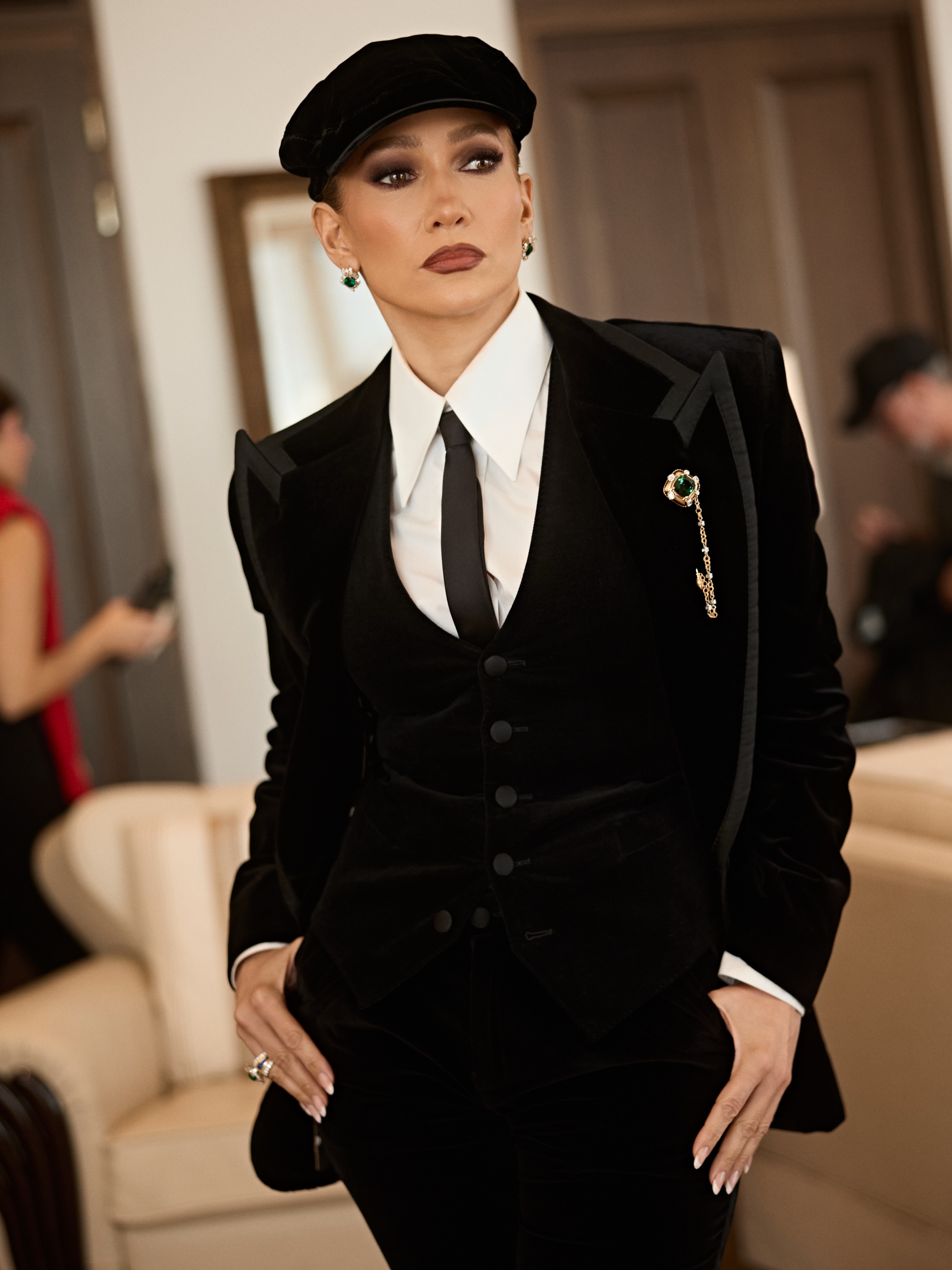
Her bond with the house goes back far enough that her presence in the front row reads as family business. The suit came in three pieces over a white shirt with a thin black tie, and the velvet cap sat low enough to cover her hair entirely. She named the reference herself, captioning the look “Living my Thomas Shelby fantasy,” which placed the outfit somewhere between a Milan runway and the smoky Birmingham of Peaky Blinders. Earlier in the week she had appeared alongside Domenico Dolce and Stefano Gabbana in a strapless black tulle gown scattered with sequins, making Saturday’s tailoring feel like a deliberate change of key. On the runway one piece seemed cut for exactly her register, a trailing animal print cape with a hood, gold detailing and a faux fur trim, the sort of garment that asks for a staircase and an audience.
Sicily, Handed Down a Generation
 The collection arrived as a
trousseau moving from grandmother to granddaughter, the house’s
Sicilian codes shifted onto younger shoulders. Nubby tweed suits
came trimmed in leopard, bloomers and bra tops were cut from
checked tablecloth print and worn over sheer stockings, while lace
slips carried fringe and beads. The designers paired glossy denim
with gardening boots, holding on to the black dresses and lingerie
shapes that built their name. Anyone who has seen Visconti’s
The Leopard recognizes the Sicilian logic at work, where a
family holds its position by letting everything around it change.
By the time the applause reached the street, the inheritance had
quietly changed hands, wearing leopard and answering to a new
name.
The collection arrived as a
trousseau moving from grandmother to granddaughter, the house’s
Sicilian codes shifted onto younger shoulders. Nubby tweed suits
came trimmed in leopard, bloomers and bra tops were cut from
checked tablecloth print and worn over sheer stockings, while lace
slips carried fringe and beads. The designers paired glossy denim
with gardening boots, holding on to the black dresses and lingerie
shapes that built their name. Anyone who has seen Visconti’s
The Leopard recognizes the Sicilian logic at work, where a
family holds its position by letting everything around it change.
By the time the applause reached the street, the inheritance had
quietly changed hands, wearing leopard and answering to a new
name.


