










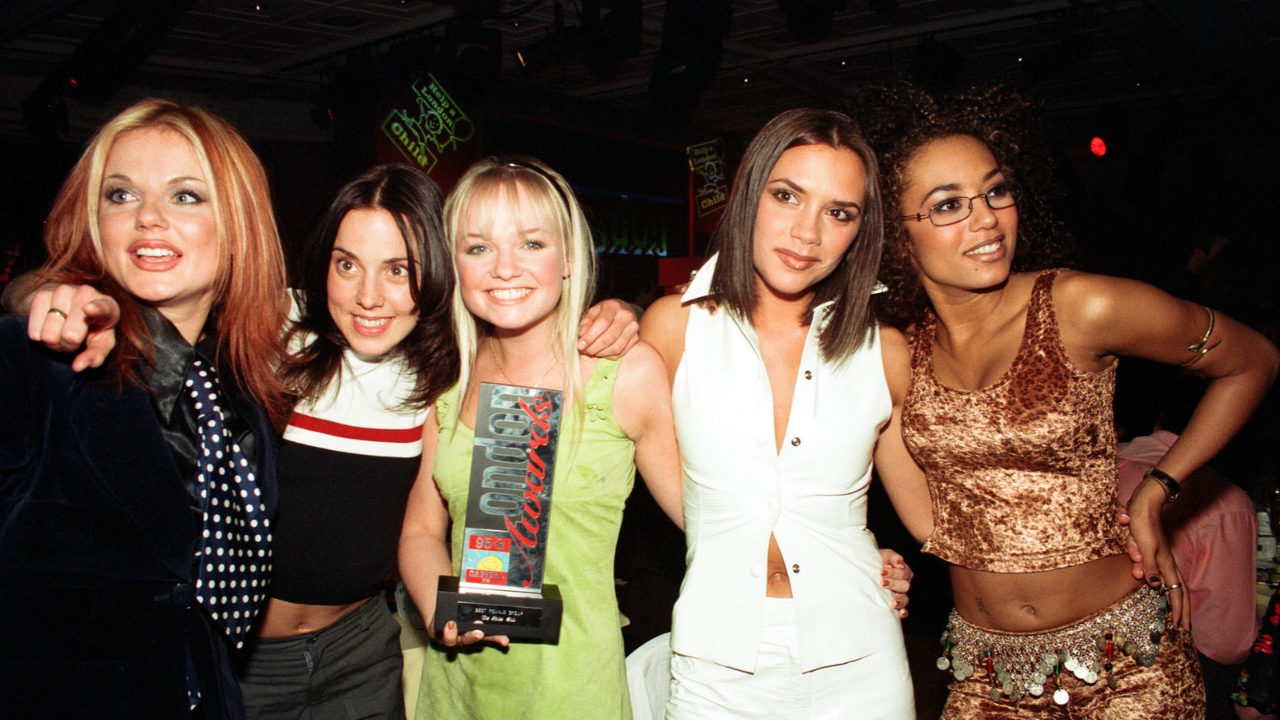
Thirty years ago this month, a debut album came into the world and shook up the pop scene forever. Spice, the debut album by the Spice Girls, served as the formal introduction to Mel B, Mel C, Emma Bunton, Geri Halliwell, and Victoria Beckham. Or, as they would be forever known after Top of the Pops magazine christened them – Scary, Sporty, Baby, Ginger, and Posh.
Spice crash-landed onto a male-dominated music scene, then ruled by Britpop bands like Oasis, Blur, and Pulp. With its melodic, danceable pop, and lyrics that celebrated female empowerment, friendship, and fun, the Spice Girls heralded in a new era of pop. Today, they remain one of the most successful girl groups of all time, having sold more than 100 million records worldwide.
To celebrate thirty years of the Spice Girls, we’re diving into their biggest hits, the stories behind them, and the impact they’ve had on pop culture.

“Wannabe”
“Wannabe” was the song that kicked everything off for the Spice Girls. Released as their debut single in 1996, it introduced the world to the joyful, powerful, and bouncy music the group would become synonymous with. But it wasn’t originally supposed to be their first release. Virgin Records wanted “Say You’ll Be There” to lead the way, believing it was a safer commercial bet. But Scary and Ginger, who saw “Wannabe” as the perfect introduction to their personalities and girl-power philosophy, stood their ground. Pop music would never be the same again.
“Say You’ll Be There”
While the record label didn’t get its way when it came to releasing “Say You’ll Be There” first, the song followed “Wannabe” as their second single and enjoyed almost as much success, reaching No. 3 on the US Billboard Hot 100. It was a more musically polished, R&B-influenced track, proving that the girls were neither one-hit wonders nor limited to one sound.
“Stop”
“Stop”, an up-tempo and heavily Motown-influenced sound, with lyrics that included “You’ve crossed the line so you’re gonna have to turnaround.” continued the Spice Girls’ reputation as purveyors of romantic respect and empowerment. From July 1996, with “Wannabe,” to December 1997, with “Too Much,” the group achieved an unbroken run of six No. 1 singles. “Stop” ended that streak, peaking at No. 2 in March 1998. Since then, however, the track has become their third-most-streamed single on Spotify. Thank you very much.
https://www.instagram.com/reel/DfRbUWNIzEg/?utm_source=ig_web_copy_link&obrf=MzRlODBiNWFlZA==&srtk=MzRlODBiNWFlZA==
“Spice Up Your Life”
One of the most fun tracks in the Spice Girls’ discography, “Spice Up Your Life,” the lead single from their second album, Spiceworld, encouraged listeners to spread positivity, infusing flamenco, salsa, and pop into one high-tempo, drum-heavy track.
“2 Become 1”
A slower, R&B-influenced ballad, “2 Become 1” subverted traditional pop themes with a message encouraging listeners to practice safe sex (“Be a little bit wiser, baby. Put it on, put it on”). Speaking to The Guardian, Mel C said: “It’s a beautiful song and it had an important message. I expect it went over the heads of a lot of our young fans. But to be a young girl band mostly shouting and being a bit chaotic, and then to have a safe-sex message in your song, I feel very proud of that now.”
“Who Do You Think You Are”
Released after “2 Become 1,” “Who Do You Think You Are” was an upbeat, infectious earworm, heavily featuring the supreme vocals of Mel C. While it didn’t reach the US Billboard Hot 100, it spent three weeks at No. 1 in the UK. Its iconic status was further cemented when Geri Halliwell wore her legendary Union Jack minidress (actually a tea towel her sister sewed onto a Gucci shift) while performing a medley of “Wannabe” and “Who Do You Think You Are” at the 1997 Brit Awards.
“Viva Forever”
“Viva Forever” was released shortly after Geri Halliwell’s departure from the group in 1998, turning the downtempo, Latin-inspired ballad into a sort of swansong. Originally intended as a romantic track about a brief holiday romance, its lyrics, “Do you still remember how we used to be?“, took on a new meaning in the context of the group’s eventual split.


